

trinta-réis-pequeno vs trinta-réis-grande
Sternula superciliaris versus Phaetusa simplex
Jogue um quiz com trinta-réis-pequeno e trinta-réis-grande
 trinta-réis-pequeno
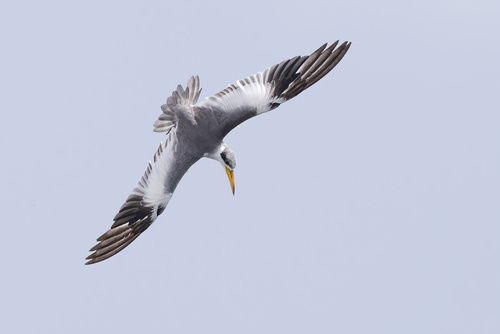 trinta-réis-grande
Em resumo
A maneira mais confiável de separar o trinta-réis-pequeno do trinta-réis-grande é pelo tamanho e estrutura: o trinta-réis-grande é muito maior, com um bico amarelo notavelmente maciço e cauda curta, enquanto o trinta-réis-pequeno é pequeno e delicado, com um bico amarelo proporcionalmente menor. Os juvenis de trinta-réis-pequeno não possuem a touca preta dos adultos, aparecendo marrons e brancos, enquanto os juvenis de trinta-réis-grande não são descritos em detalhes, mas espera-se que sejam maiores e estruturalmente distintos. Ambas as espécies têm bicos e pés amarelos, asas superiores cinza-prateadas e partes inferiores brancas, mas a impressão geral em campo é strikingly diferente devido ao tamanho e proporções. A sobreposição de habitat é comum, especialmente em colônias de reprodução, então atenção cuidadosa à estrutura e plumagem relacionada à idade é essencial.
Dicas de identificação
- O tamanho é o separador mais rápido: O trinta-réis-grande é quase duas vezes mais longo e várias vezes mais pesado que o trinta-réis-pequeno. Se você ver ambos juntos, a diferença é inconfundível. O tamanho sozinho pode eliminar a confusão na maioria dos casos.
- Estrutura do bico: O trinta-réis-grande tem um bico amarelo enorme, profundo e largo que domina sua cabeça, enquanto o bico do trinta-réis-pequeno é esbelto e fino. Isso é visível mesmo à distância com binóculos.
- Comprimento e forma da cauda: O trinta-réis-grande tem uma cauda relativamente curta para seu tamanho corporal, fazendo-o parecer mais robusto. O trinta-réis-pequeno é mais aerodinâmico e delicado, com uma cauda proporcionalmente mais longa.
- Plumagem juvenil: Os juvenis de trinta-réis-pequeno são marrons e brancos e não possuem a touca preta, então podem ser confundidos com outros trinta-réis pequenos, mas não devem ser confundidos com o muito maior trinta-réis-grande. Se você ver um trinta-réis pequeno marron e sem touca, é um juvenil de trinta-réis-pequeno.
- Coroa e padrão facial: Ambos os adultos têm uma coroa e nuca pretas, mas o trinta-réis-pequeno também tem uma linha ocular preta. No trinta-réis-grande não em reprodução, a coroa e a testa tornam-se mais claras, o que pode tornar o padrão da cabeça menos distinto.
- Cor dos pés: Ambos têm pés amarelos, então isso não é um separador útil.
- Estilo de voo: O trinta-réis-grande parece mais pesado e menos ágil em voo, com batidas de asas mais lentas. O trinta-réis-pequeno é rápido e leve, típico de trinta-réis pequenos.
- Padrão das asas: Nenhum padrão distintivo das asas superiores é descrito para ambas as espécies, então concentre-se na estrutura e tamanho em voo.
- Colônias mistas: Ambas as espécies frequentemente nidificam juntas, então a comparação direta é possível. Sempre verifique o pássaro maior e mais robusto com o bico maciço (trinta-réis-grande) em comparação com o trinta-réis pequeno e delicado (trinta-réis-pequeno).
- Sobreposição de habitat: Não confie no habitat para separação, pois ambos usam ambientes semelhantes.
- Mudanças sazonais: Na estação não reprodutiva, a coroa e a testa do trinta-réis-grande tornam-se mais claras, o que pode fazê-lo parecer menos marcante que o trinta-réis-pequeno.
- Sem dimorfismo sexual forte: Nenhuma diferença entre os sexos é descrita para ambas as espécies.
- Vocalizações: Não descritas nas fontes; não confie na voz para separação.
- Dicas contextuais: Se você ver um grupo de trinta-réis de tamanhos dramaticamente diferentes juntos, você provavelmente está olhando para ambas as espécies—use a comparação direta para melhores resultados.
- Quando em dúvida: Se o pássaro parecer pequeno, com bico fino e ágil, é provavelmente um trinta-réis-pequeno. Se parecer grande, pesado e tiver um enorme bico amarelo, é um trinta-réis-grande.
Tamanho
O trinta-réis-grande é dramaticamente maior, medindo cerca de 38 cm de comprimento e pesando cerca de 235 g, em comparação com os 23–25 cm e 40–57 g do trinta-réis-pequeno. Essa diferença de tamanho é óbvia em comparação direta ou quando vistos juntos em colônias mistas. O bico do trinta-réis-grande não é apenas mais longo, mas muito mais profundo e robusto, dominando sua cabeça, enquanto o bico do trinta-réis-pequeno é fino e delicado. O trinta-réis-grande também parece mais volumoso e de corpo mais pesado, com uma cauda mais curta em relação ao seu tamanho.
Plumagem
- Juvenis: Os juvenis de trinta-réis-pequeno são marrons e brancos e não possuem a touca preta dos adultos, fazendo-os parecer bastante diferentes dos adultos e potencialmente confusos à distância. Os juvenis de trinta-réis-grande não são descritos em detalhes, mas seu tamanho e volume muito maiores ainda devem ser aparentes.
- Adultos (reprodução): Ambas as espécies têm uma coroa e nuca pretas, partes inferiores e testa brancas, asas cinza-prateadas e bico e pés amarelos. No entanto, o bico do trinta-réis-grande é conspicuamente maior e mais profundo. As partes superiores do trinta-réis-grande são descritas como cinzas, com secundárias e coberturas primárias brancas, e um corpo inferior branco; as lore também são brancas. O trinta-réis-pequeno tem uma linha ocular preta que se estende da touca, que pode ser menos pronunciada no trinta-réis-grande.
- Não reprodução: Os adultos de trinta-réis-grande em plumagem não reprodutiva mostram uma coroa e testa mais claras, o que pode fazê-los parecer menos marcantes que o trinta-réis-pequeno.
Comportamento
Ambas as espécies forrageiam pairando e pegando peixes da superfície da água, frequentemente vistas voando baixo sobre rios e lagos. Em colônias de reprodução, podem nidificar próximas, às vezes até mesmo dentro de grupos mistos. O trinta-réis-grande, devido ao seu tamanho, parece mais poderoso e menos ágil em voo em comparação com o voo rápido e leve do trinta-réis-pequeno. Ambas as espécies defendem agressivamente seus ninhos, mas o tamanho maior do trinta-réis-grande pode tornar suas exibições defensivas mais conspícuas.
Habitat
Ambas as espécies usam habitats semelhantes: rios, bancos de areia, lagos de água doce e ocasionalmente lagoas costeiras e campos de arroz. Frequentemente nidificam juntas em bancos de areia e praias de ilhas. O habitat sozinho não é um separador confiável, pois ambos podem ser encontrados nos mesmos lugares, especialmente durante a estação de reprodução.
trinta-réis-pequeno · trinta-réis-grande · Minhas aves difíceis