

Charrancito Amazónico vs Charrán Picudo
Sternula superciliaris frente a Phaetusa simplex
Juega un quiz con Charrancito Amazónico y Charrán Picudo
 Charrancito Amazónico
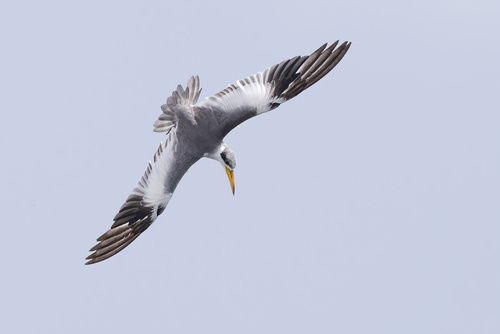 Charrán Picudo
En breve
La forma más confiable de separar el Charrancito Amazónico del Charrán Picudo es por tamaño y estructura: el Charrán Picudo es mucho más grande, con un notable pico amarillo masivo y una cola corta, mientras que el Charrancito Amazónico es pequeño y delicado con un pico amarillo proporcionalmente más pequeño. Los Charrancitos Amazónicos juveniles carecen de la capucha negra del adulto, apareciendo marrones y blancos, mientras que los Charrán Picudo juveniles no se describen en detalle pero se espera que sean más grandes y estructuralmente distintivos. Ambas especies tienen picos y patas amarillas, alas superiores gris plateado y partes inferiores blancas, pero la impresión general en el campo es notablemente diferente debido al tamaño y las proporciones. La superposición de hábitats es común, especialmente en colonias de cría, por lo que la atención cuidadosa a la estructura y el plumaje relacionado con la edad es esencial.
Consejos de identificación
- El tamaño es el separador más rápido: El Charrán Picudo mide casi el doble de largo y varias veces más pesado que el Charrancito Amazónico. Si ves ambos juntos, la diferencia es inconfundible. El tamaño por sí solo puede descartar confusiones en la mayoría de los casos.
- Estructura del pico: El Charrán Picudo tiene un pico amarillo enorme, profundo y ancho que domina su cabeza, mientras que el pico del Charrancito Amazónico es esbelto y fino. Esto es visible incluso a distancia con binoculares.
- Longitud y forma de la cola: El Charrán Picudo tiene una cola relativamente corta para su tamaño corporal, lo que lo hace parecer más robusto. El Charrancito Amazónico es más aerodinámico y delicado, con una cola proporcionalmente más larga.
- Plumaje juvenil: Los Charrancitos Amazónicos juveniles son marrones y blancos y carecen de la capucha negra, por lo que pueden confundirse con otros pequeños charranes, pero no deben confundirse con el mucho más grande Charrán Picudo. Si ves un pequeño charrán marrón y sin capucha, es un Charrancito Amazónico juvenil.
- Corona y patrón facial: Ambos adultos tienen una corona y nuca negras, pero el Charrancito Amazónico también tiene una línea ocular negra. En el Charrán Picudo no reproductor, la corona y la frente se vuelven más pálidas, lo que puede hacer que el patrón de la cabeza sea menos distintivo.
- Color de las patas: Ambos tienen patas amarillas, por lo que esto no es un separador útil.
- Estilo de vuelo: El Charrán Picudo parece más pesado y menos ágil en vuelo, con batidos de alas más lentos. El Charrancito Amazónico es rápido y ligero, típico de los pequeños charranes.
- Patrón de alas: No se describen patrones distintivos en las alas superiores para ninguna de las especies, así que enfócate en la estructura y el tamaño en vuelo.
- Colonias mixtas: Ambas especies a menudo anidan juntas, por lo que la comparación directa es posible. Siempre verifica el ave más grande y robusta con el pico masivo (Charrán Picudo) frente al pequeño y delicado charrán (Charrancito Amazónico).
- Superposición de hábitats: No confíes en el hábitat para la separación, ya que ambos utilizan entornos similares.
- Cambios estacionales: En la temporada no reproductiva, la corona y la frente del Charrán Picudo se vuelven más pálidas, lo que puede hacer que parezca menos marcadamente definido que el Charrancito Amazónico.
- Sin dimorfismo sexual fuerte: No se describen diferencias entre sexos para ninguna de las especies.
- Vocalizaciones: No se describen en las fuentes; no confíes en la voz para la separación.
- Pistas contextuales: Si ves un grupo de charranes de tamaños dramáticamente diferentes juntos, es probable que estés mirando ambas especies; usa la comparación directa para obtener los mejores resultados.
- Cuando tengas dudas: Si el ave parece pequeña, con pico fino y ágil, es probable que sea un Charrancito Amazónico. Si parece grande, pesada y tiene un enorme pico amarillo, es un Charrán Picudo.
Tamaño
El Charrán Picudo es dramáticamente más grande, midiendo alrededor de 38 cm de longitud y pesando alrededor de 235 g, en comparación con los 23–25 cm y 40–57 g del Charrancito Amazónico. Esta diferencia de tamaño es obvia en comparación directa o cuando se ven juntos en colonias mixtas. El pico del Charrán Picudo no solo es más largo, sino también mucho más profundo y robusto, dominando su cabeza, mientras que el pico del Charrancito Amazónico es fino y delicado. El Charrán Picudo también parece más voluminoso y con un cuerpo más pesado, con una cola más corta en relación a su tamaño.
Plumaje
- Juveniles: Los Charrancitos Amazónicos juveniles son marrones y blancos y carecen de la capucha negra del adulto, lo que los hace parecer bastante diferentes de los adultos y potencialmente confusos a distancia. Los Charrán Picudo juveniles no se describen en detalle, pero su tamaño y volumen mucho mayores deberían ser aún evidentes.
- Adultos (reproductores): Ambas especies tienen una corona y nuca negras, partes inferiores y frente blancas, alas gris plateado y pico y patas amarillas. Sin embargo, el pico del Charrán Picudo es conspicuamente más grande y profundo. Las partes superiores del Charrán Picudo se describen como grises, con secundarias y cobertoras primarias blancas, y un cuerpo inferior blanco; los loretes también son blancos. El Charrancito Amazónico tiene una línea ocular negra que se extiende desde la capucha, que puede ser menos pronunciada en el Charrán Picudo.
- No reproductores: Los adultos del Charrán Picudo en plumaje no reproductor muestran una corona y frente más pálidas, lo que puede hacer que parezcan menos marcadamente definidos que el Charrancito Amazónico.
Comportamiento
Ambas especies forrajean al flotar y recoger peces de la superficie del agua, a menudo vistos volando bajo sobre ríos y lagos. En colonias de cría, pueden anidar en estrecha proximidad, a veces incluso dentro de grupos mixtos. El Charrán Picudo, debido a su tamaño, parece más poderoso y menos ágil en vuelo en comparación con el vuelo rápido y ligero del Charrancito Amazónico. Ambas especies defienden agresivamente sus nidos, pero el mayor tamaño del Charrán Picudo puede hacer que sus exhibiciones defensivas sean más conspicuas.
Hábitat
Ambas especies utilizan hábitats similares: ríos, bancos de arena, lagos de agua dulce y, ocasionalmente, lagunas costeras y campos de arroz. Frecuentemente anidan juntas en bancos de arena y playas de islas. El hábitat por sí solo no es un separador confiable, ya que ambos pueden encontrarse en los mismos lugares, especialmente durante la temporada de cría.