

lagopo-ruivo vs lagopo-cinzento
Lagopus lagopus versus Lagopus muta
Jogue um quiz com lagopo-ruivo e lagopo-cinzento
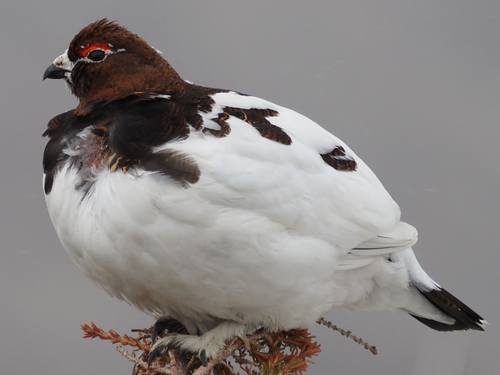 lagopo-ruivo
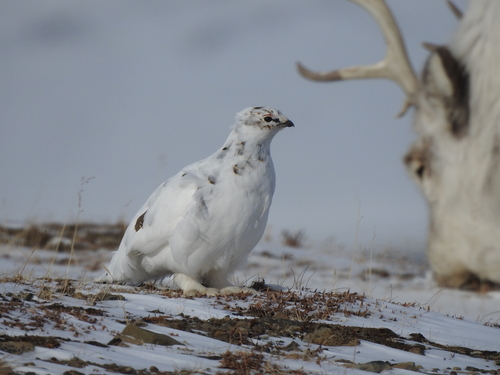 lagopo-cinzento
Em resumo
A marca de campo mais confiável entre o lagopo-ruivo e o lagopo-cinzento é a presença de uma faixa ocular preta (lores) nos machos de lagopo-cinzento durante o inverno, que está ausente no lagopo-ruivo. O lagopo-ruivo também é visivelmente maior e tem um bico mais grosso, enquanto o lagopo-cinzento é mais esbelto e tipicamente encontrado em habitats mais altos e áridos. No verão, os machos de lagopo-ruivo apresentam um pescoço e peito marrom avermelhado mais ricos, enquanto os machos de lagopo-cinzento são mais cinzentos na parte superior. Ambas as espécies são brancas no inverno, exceto pelas penas externas da cauda, que são pretas, mas as diferenças estruturais e de habitat são frequentemente fundamentais em campo. As plumagens juvenis e imaturas não estão claramente separadas nas notas, então concentre-se nas diferenças entre adultos e sazonais.
Dicas de identificação
- Faixa ocular preta no inverno: Apenas o macho de lagopo-cinzento mostra uma linha preta entre o olho e o bico em plumagem de inverno completa; o lagopo-ruivo nunca mostra essa marca. Esta é a melhor marca de campo em condições de neve.
- Espessura do bico: O lagopo-ruivo tem um bico visivelmente mais grosso e largo, enquanto o bico do lagopo-cinzento é mais esbelto e delicado. Isso é visível de perto ou em boa luz.
- Tamanho e volume: O lagopo-ruivo é maior e mais volumoso em geral, com um peito mais profundo e um pescoço mais longo. O lagopo-cinzento parece mais compacto e leve.
- Plumagem de verão dos machos: Os machos de lagopo-ruivo têm um pescoço e peito marrom avermelhado rico, enquanto os machos de lagopo-cinzento são mais cinzentos na parte superior e não apresentam os tons avermelhados. Ambos têm asas e partes inferiores brancas.
- Padrão da barriga das fêmeas: As fêmeas de lagopo-ruivo frequentemente mostram penas marrons misturadas na barriga branca, enquanto as fêmeas de lagopo-cinzento são geralmente mais limpas e brancas na parte inferior.
- Cor da cauda: Ambos têm penas externas da cauda pretas em todas as estações, mas o restante da cauda tende a parecer completamente preta no lagopo-ruivo.
- Combs oculares vermelhos: Ambas as espécies têm combs oculares vermelhos nos machos, mas os de lagopo-ruivo são maiores e mais proeminentes na época de reprodução. As fêmeas têm combs muito menores ou menos visíveis.
- Habitat: O lagopo-ruivo é encontrado em tundras arbustivas, florestadas ou de baixa altitude; o lagopo-cinzento está em áreas alpinas mais altas, rochosas e áridas. Se você vê ptarmigan acima da linha da árvore, é mais provável que seja o lagopo-cinzento.
- Comportamento: Os machos de lagopo-ruivo são mais agressivos na defesa do território e cuidado da prole. Os machos de lagopo-cinzento se exibem mais com chamadas e perseguições aéreas, mas raramente lutam fisicamente.
- Voo: Ambas as espécies têm asas curtas e arredondadas e voam baixo, mas o lagopo-ruivo parece mais pesado em voo.
- Plumagem juvenil/imatura: Nenhuma diferença única de padrão de voo ou asa é descrita para aves jovens; ambas se assemelham a adultos.
- Vocalizações: Se você ouvir um ronco gutural ou a distinta chamada arrastada 'grude-na-tela', é o lagopo-cinzento. As chamadas do lagopo-ruivo não são descritas aqui.
- Contexto sazonal: No inverno, concentre-se na faixa ocular preta para os machos de lagopo-cinzento; no verão, procure por tons avermelhados versus cinzentos e tamanho do bico.
- Sobreposição geográfica: Ambas as espécies podem ocorrer na mesma região geral, mas seus habitats preferidos raramente se sobrepõem de perto.
- Composição do bando: O lagopo-ruivo forma bandos maiores no outono, especialmente fêmeas e jovens se movendo para áreas mais baixas; o lagopo-cinzento é mais sedentário ou se move distâncias mais curtas.
Tamanho
O lagopo-ruivo é cerca de 10% maior que o lagopo-cinzento, com uma massa corporal típica em torno de 650 g contra 610 g para o lagopo-cinzento. O lagopo-ruivo mede 35–44 cm de comprimento com uma envergadura de 60–65 cm, enquanto o lagopo-cinzento tem 34–36 cm de comprimento com uma envergadura de 54–60 cm. O lagopo-ruivo parece mais volumoso e com peito mais profundo, com um bico mais grosso e largo, em comparação com o lagopo-cinzento, que é mais esbelto e compacto.
Plumagem
- Inverno (adultos, ambos os sexos): Ambas as espécies são quase todas brancas com penas externas da cauda pretas, mas o macho de lagopo-cinzento mostra uma linha preta distinta entre o olho e o bico (lores), que o lagopo-ruivo não possui. A fêmea de lagopo-cinzento e ambos os sexos de lagopo-ruivo não têm essa faixa ocular preta.
- Verão (machos em reprodução): Os machos de lagopo-ruivo são marmoreados em marrom com um pescoço e peito avermelhados, cauda preta e asas/partes inferiores brancas. Os machos de lagopo-cinzento têm partes superiores mais cinzentas, asas e partes inferiores brancas, e não apresentam os ricos tons avermelhados. Ambos têm combs oculares vermelhos, mas os de lagopo-ruivo são mais proeminentes.
- Fêmeas: Ambas são semelhantes em padrão, mas as fêmeas de lagopo-ruivo têm mais marrom misturado nas penas brancas da barriga.
- Aves imaturas: As notas indicam que se assemelham a adultos; nenhuma marca única de asa ou voo juvenil é descrita para ambas as espécies.
Comportamento
Ambas as espécies são terrestres e territoriais durante a reprodução, com machos realizando exibições aéreas e no solo. Os machos de lagopo-ruivo são notavelmente agressivos na defesa do território e da prole, às vezes até assumindo o cuidado dos filhotes se a fêmea morrer. Os machos de lagopo-cinzento também se exibem com voos aéreos e chamadas distintas, mas conflitos físicos são raros. O lagopo-ruivo forma bandos maiores no outono, com fêmeas e jovens migrando mais longe do que os machos.
Habitat
O lagopo-ruivo prefere florestas de bétula e salgueiro, charnecas e tundra abaixo da linha da árvore, frequentemente em áreas de baixa altitude mais vegetadas. O lagopo-cinzento é encontrado em elevações mais altas em habitats mais áridos, rochosos e expostos, tipicamente acima da linha da árvore. O contexto do habitat é uma pista forte: se a ave estiver em tundra arbustiva, florestada ou de baixa altitude, é mais provável que seja o lagopo-ruivo; se estiver em terreno alpino rochoso e aberto, o lagopo-cinzento é o preferido.
Voz
As notas detalham apenas as vocalizações do lagopo-cinzento: os machos emitem roncos guturais e estalos, e uma chamada distinta arrastada durante exibições aéreas. A voz do lagopo-ruivo não é descrita aqui, então a vocalização é apenas um separador confiável se você ouvir as chamadas descritas do lagopo-cinzento.