

カラフトライチョウ 対 ライチョウ
Lagopus lagopus 対 Lagopus muta
カラフトライチョウとライチョウのクイズ
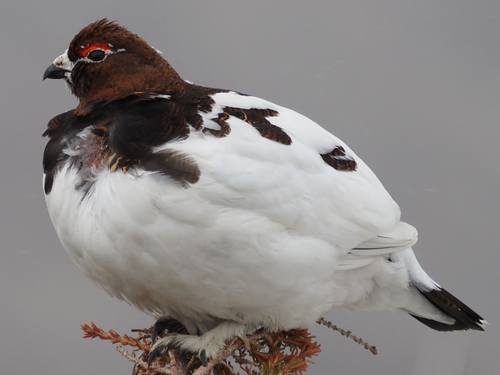 カラフトライチョウ
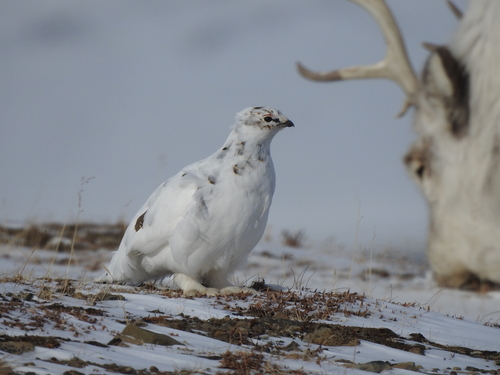 ライチョウ
要点
The most reliable field mark between Willow Ptarmigan and Rock Ptarmigan is the presence of a black eye stripe (lores) in male Rock Ptarmigan during winter, which is absent in Willow Ptarmigan. Willow Ptarmigan is also noticeably larger and has a thicker bill, while Rock Ptarmigan is more slender and typically found in higher, more barren habitats. In summer, Willow Ptarmigan males show a richer brown, reddish neck and breast, whereas Rock Ptarmigan males are greyer above. Both species are white in winter except for their black outer tail feathers, but the structural and habitat differences are often key in the field. Juvenile and immature plumages are not distinctly separated in the notes, so focus on adult and seasonal differences.
識別のコツ
- Black eye stripe in winter: Only male Rock Ptarmigan shows a black line between the eye and bill in full winter plumage; Willow Ptarmigan never shows this mark. This is the single best field mark in snowy conditions.
- Bill thickness: Willow Ptarmigan has a noticeably thicker, broader bill, while Rock Ptarmigan's bill is more slender and delicate. This is visible at close range or in good light.
- Size and bulk: Willow Ptarmigan is larger and bulkier overall, with a deeper chest and longer neck. Rock Ptarmigan appears more compact and lighter.
- Summer male plumage: Willow Ptarmigan males have a rich reddish-brown neck and breast, while Rock Ptarmigan males are greyer above and lack the reddish tones. Both have white wings and underparts.
- Female belly pattern: Female Willow Ptarmigan often show brown feathers mixed into the white belly, while Rock Ptarmigan females are generally cleaner white below.
- Tail color: Both have black outer tail feathers in all seasons, but the rest of the tail is more likely to appear all black in Willow Ptarmigan.
- Red eye combs: Both species have red eye combs in males, but Willow's are larger and more prominent in the breeding season. Females have much smaller or less visible combs.
- Habitat: Willow Ptarmigan is found in shrubby, forested, or lowland tundra; Rock Ptarmigan is in higher, rockier, more barren alpine areas. If you see ptarmigan above the tree line, Rock is more likely.
- Behavior: Willow Ptarmigan males are more aggressive in territory defense and brood care. Rock Ptarmigan males display more with calls and aerial chases but rarely fight physically.
- Flight jizz: Both species have short, rounded wings and fly low, but Willow Ptarmigan looks heavier in flight.
- Juvenile/immature plumage: No unique flight or wing pattern differences are described for young birds; both resemble adults.
- Vocalizations: If you hear a guttural snore or the distinctive 'stick-on-fence' rasping call, it's Rock Ptarmigan. Willow's calls are not described here.
- Seasonal context: In winter, focus on the black eye stripe for Rock males; in summer, look for reddish vs. grey tones and bill size.
- Geographic overlap: Both species can occur in the same general region, but their preferred habitats rarely overlap closely.
- Flock composition: Willow Ptarmigan forms larger flocks in autumn, especially females and young moving to lower ground; Rock Ptarmigan is more sedentary or moves shorter distances.
大きさ
Willow Ptarmigan is about 10% larger than Rock Ptarmigan, with a typical body mass around 650 g versus 610 g for Rock Ptarmigan. Willow Ptarmigan measures 35–44 cm in length with a 60–65 cm wingspan, while Rock Ptarmigan is 34–36 cm long with a 54–60 cm wingspan. Willow Ptarmigan appears bulkier and deeper-chested, with a thicker, broader bill, compared to the more slender and compact Rock Ptarmigan.
羽色
- Winter (adults, both sexes): Both species are nearly all white with black outer tail feathers, but male Rock Ptarmigan shows a distinct black line between the eye and bill (lores), which Willow Ptarmigan lacks. Female Rock Ptarmigan and both sexes of Willow Ptarmigan lack this black eye stripe.
- Summer (breeding males): Willow Ptarmigan males are marbled brown with a reddish neck and breast, black tail, and white wings/underparts. Rock Ptarmigan males have greyer upperparts, white wings and underparts, and lack the rich reddish tones. Both have red eye combs, but Willow's are more prominent.
- Females: Both are similar in pattern, but Willow females have more brown mixed into the white belly feathers.
- Immature birds: Notes indicate they resemble adults; no unique juvenile wing or flight marks are described for either species.
行動
Both species are ground-dwelling and territorial during breeding, with males performing aerial and ground displays. Willow Ptarmigan males are notably aggressive in defending territory and brood, sometimes even taking over chick care if the female dies. Rock Ptarmigan males also display with aerial flights and distinctive calls, but physical conflicts are rare. Willow Ptarmigan forms larger flocks in autumn, with females and young migrating farther than males.
生息環境
Willow Ptarmigan prefers birch and willow forests, moorlands, and tundra below the tree line, often in more vegetated, lower elevation areas. Rock Ptarmigan is found at higher elevations in more barren, rocky, and exposed habitats, typically above the tree line. Habitat context is a strong clue: if the bird is in shrubby, wooded, or lowland tundra, Willow is more likely; if in rocky, open, alpine terrain, Rock is favored.
声
The notes only detail Rock Ptarmigan's vocalizations: males give guttural snores and rattles, and a distinctive rasping call during aerial displays. Willow Ptarmigan's voice is not described here, so vocalization is only a reliable separator if you hear the Rock Ptarmigan's described calls.