

white-rumped spinetail vs silver-backed needletail
Zoonavena sylvatica versus Hirundapus cochinchinensis
Jogue um quiz com white-rumped spinetail e silver-backed needletail
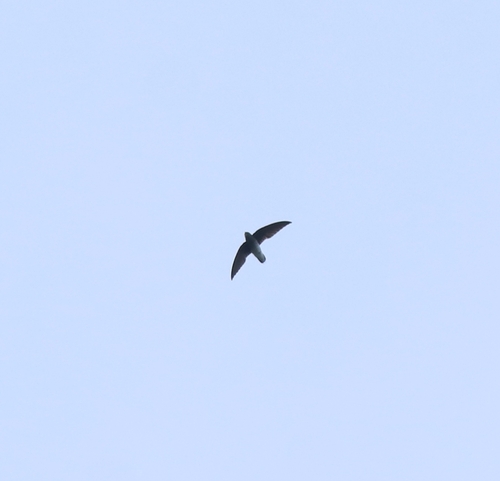 white-rumped spinetail
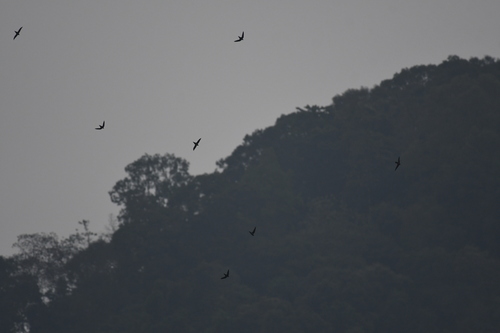 silver-backed needletail
Em resumo
A marca de campo mais confiável para separar o white-rumped spinetail do silver-backed needletail é a presença de uma distinta mancha branca no ventre ou na cauda do spinetail, que está ausente no needletail. Ambas as espécies são andorinhas com estrutura geral semelhante, mas o spinetail é muito menor e geralmente é visto sobre corpos d'água florestais, enquanto o needletail é uma andorinha grande e poderosa das florestas do Sudeste Asiático. Se você ver uma andorinha com um ventro branco proeminente nas Ghats Ocidentais ou florestas próximas, é quase certamente um white-rumped spinetail. Em contraste, uma andorinha muito maior, sem ventro branco e encontrada mais a leste, é provavelmente um silver-backed needletail.
Dicas de identificação
- Mancha branca no ventro/cauda: Procure uma mancha branca distinta no ventro ou na cauda; esta está presente em todas as idades do white-rumped spinetail e ausente no silver-backed needletail. Esta é a marca de campo mais confiável.
- Tamanho geral: Se você tem uma noção de escala, o silver-backed needletail é muito maior e mais pesado (80g) do que o pequeno spinetail. Em bandos mistos de andorinhas, o needletail se destacará por seu volume.
- Estilo de voo: O needletail é uma andorinha poderosa e de voo rápido, frequentemente parecendo mais forte e direta. O spinetail, sendo menor, pode parecer mais leve e ágil, especialmente quando forrageando baixo sobre corpos d'água florestais.
- Distribuição geográfica: O white-rumped spinetail é encontrado apenas nas Ghats Ocidentais, Bangladesh e Nepal, enquanto o silver-backed needletail é encontrado no Sudeste Asiático, Sumatra, Java e Taiwan. Se você estiver na Índia ou no Nepal, o spinetail é provável; mais a leste, suspeite do needletail.
- Preferência de habitat: Os spinetails estão intimamente ligados a corpos d'água florestais, enquanto os needletails são mais generalistas dentro das florestas do Sudeste Asiático.
- Uniformidade da plumagem: Além do ventro branco, o spinetail é escuro acima e abaixo, semelhante ao needletail. Não confie na coloração sutil das costas, pois as costas 'prateadas' do needletail não são uma mancha branca bem definida e podem ser difíceis de ver em campo.
- Sem ventro branco no needletail: Se você ver uma andorinha sem vestígios de branco no ventro ou na cauda, especialmente no Sudeste Asiático, você provavelmente está olhando para um silver-backed needletail.
- Sem marcas específicas de idade nas asas superiores: Nenhuma das espécies é relatada como apresentando padrões distintivos de asas superiores juvenis ou imaturas que ajudariam na separação.
- Visões empoleiradas são raras: Ambas as espécies são quase sempre vistas em voo, então concentre-se nas marcas de voo e na silhueta.
- Confusão potencial com House Swift: O spinetail pode se assemelhar a uma house swift, mas o ventro branco é diagnóstico para o spinetail.
- Sem pistas vocais fornecidas: As vocalizações não são descritas nas fontes, então não confie em chamadas para separação.
- Sexos semelhantes: Nenhum dimorfismo sexual é notado para qualquer uma das espécies, então todas as marcas de campo se aplicam a ambos os sexos.
- Cuidado com a iluminação: Em luz fraca, o ventro branco do spinetail pode ser menos óbvio, mas ainda deve ser visível na maioria das condições.
- Pistas contextuais: Se você ver uma andorinha pequena sobre um lago florestal nas Ghats Ocidentais com um ventro branco, é quase certamente um spinetail. Uma andorinha muito maior e uniforme no Sudeste Asiático é o needletail.
- Evite confusão com outros needletails: Apenas o silver-backed needletail está na comparação; outros needletails podem ter marcas de campo diferentes.
Tamanho
O silver-backed needletail é dramaticamente maior e mais pesado do que o white-rumped spinetail, com uma massa adulta de cerca de 80 gramas [wikidata], em comparação com o spinetail muito menor (sem massa precisa disponível, mas todas as fontes concordam que é uma andorinha pequena). Essa diferença de tamanho é impressionante em comparação direta: o needletail é uma andorinha robusta e poderosa, enquanto o spinetail é notavelmente pequeno e mais leve em voo.
Plumagem
A principal diferença de plumagem é a mancha branca no ventro ou na cauda do white-rumped spinetail, visível de baixo e atrás em voo em todas as plumagens. O silver-backed needletail não possui esse ventro branco e, em vez disso, tem um corpo inferior e costas mais uniformes e escuras, às vezes com um brilho prateado ou pálido nas costas, mas não uma mancha branca bem definida. Nenhum padrão específico de idade nas asas superiores é descrito para qualquer uma das espécies nas notas disponíveis, então este ventro branco é a marca mais consistente em todas as idades e estações. Ambas as espécies, de outra forma, mostram a silhueta típica de andorinha e plumagem escura, mas o ventro branco do spinetail é único e diagnóstico.
Comportamento
O white-rumped spinetail é frequentemente visto voando baixo sobre corpos d'água dentro de florestas, tipicamente nas Ghats Ocidentais, Bangladesh e Nepal. Ele tende a ficar perto de áreas florestais e água. O silver-backed needletail é uma andorinha forte e de voo rápido das florestas do Sudeste Asiático, às vezes aparecendo como um vagante em ilhas. Ambas as espécies são insetívoras aéreas, mas o tamanho maior e o voo mais poderoso do needletail podem fazê-lo parecer mais volumoso e mais forte no ar.
Habitat
O white-rumped spinetail é restrito às florestas das Ghats Ocidentais, Bangladesh e Nepal, e é frequentemente visto sobre corpos d'água dentro dessas florestas. O silver-backed needletail habita florestas em todo o Sudeste Asiático, Sumatra, Java e Taiwan, e é um vagante raro em outros lugares. Seus intervalos normalmente não se sobrepõem, então o contexto geográfico é uma forte pista: spinetail no subcontinente indiano, needletail mais a leste.
white-rumped spinetail · silver-backed needletail · Minhas aves difíceis