

beija-flor-azul-de-rabo-branco vs green hermit
Florisuga mellivora versus Phaethornis guy
Jogue um quiz com beija-flor-azul-de-rabo-branco e green hermit
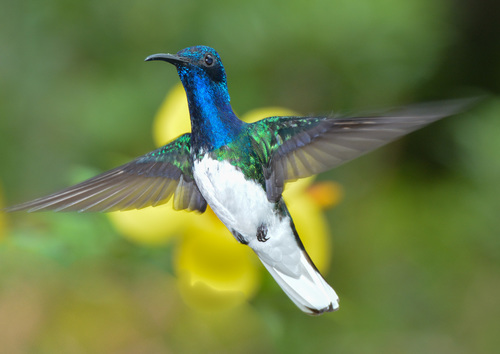 beija-flor-azul-de-rabo-branco
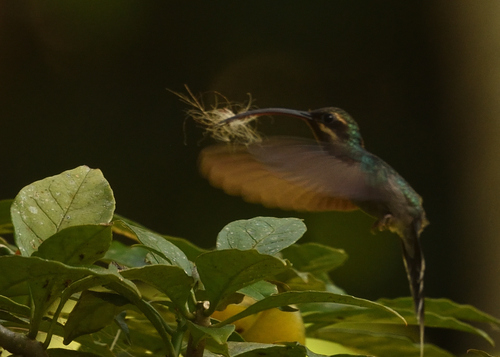 green hermit
Em resumo
A maneira mais confiável de separar o beija-flor-azul-de-rabo-branco do green hermit é pela estrutura e postura geral: o jacobin é um beija-flor compacto, de bico curto e reto, com uma barriga e cauda brancas marcantes, enquanto o hermit tem um bico longo, curvado e uma cauda longa, com uma máscara escura e listras faciais cor de canela. Os jacobins imaturos podem ser variáveis, mas nunca mostram o padrão facial distinto do hermit ou o bico longo e curvado. Em voo, a cauda longa e afilada do hermit e os movimentos lentos e ondulantes contrastam com o voo mais curto e direto do jacobin. Ambas as espécies ocorrem em regiões sobrepostas, mas o hermit está ligado ao sub-bosque denso da floresta, enquanto o jacobin é mais frequentemente visto nas bordas da floresta e mais alto na copa.
Dicas de identificação
- Formato e comprimento do bico: O green hermit sempre tem um bico longo e fortemente curvado, avermelhado; o beija-flor-azul-de-rabo-branco tem um bico reto, curto e preto. Esta é a verificação estrutural mais rápida.
- Padrão facial: Apenas o green hermit mostra uma máscara escura ao redor do olho, contornada por listras cor de canela acima e abaixo, e uma linha cor de canela na garganta. O beija-flor-azul-de-rabo-branco de qualquer idade nunca mostra listras faciais ou uma máscara.
- Formato e comprimento da cauda: O green hermit tem uma cauda longa e afilada com pontas brancas nas penas centrais, frequentemente balançadas em exibição. O jacobin tem uma cauda mais curta; os machos têm uma cauda predominantemente branca com pontas pretas, enquanto as fêmeas e imaturos têm mais verde e azul na cauda, mas nunca a forma ou padrão do hermit.
- Plumagem (machos adultos): O macho do beija-flor-azul-de-rabo-branco é inconfundível: cabeça e peito azul-escuro, barriga e cauda brancas, faixa na nuca branca e costas verde-brilhante. O macho do green hermit é verde-escuro acima, com rabo azul-esverdeado, parte inferior escura e não tem branco na barriga ou na nuca.
- Plumagem (fêmeas/imaturos): As fêmeas/imaturos de jacobin são variáveis, mas geralmente mostram partes superiores verdes, garganta azul-esverdeada ou bronzeada, e barriga branca; nunca uma máscara ou listras cor de canela. As fêmeas do hermit são cinza-escuro abaixo, com um bico e cauda longos, e sempre mostram as listras faciais.
- Estilo de voo: O jacobin é direto e rápido, frequentemente alto na copa; o hermit é mais lento, com um voo ondulante, semelhante a uma mariposa, próximo ao solo ou em sub-bosques densos.
- Postura empoleirada: O hermit parece magro e alongado, com um bico e cauda longos; o jacobin é compacto, ereto e de bico curto.
- Contexto de habitat: O hermit está quase sempre em sub-bosque denso da floresta, especialmente perto da água; o jacobin é mais provável de ser encontrado nas bordas da floresta, clareiras ou jardins, frequentemente mais alto.
- Vocalizações: O hermit emite um alto 'zurk' ou 'swark' em leks; o jacobin emite notas finas e altas 'tseee' e chamadas mais suaves.
- Agressão e comportamento: O jacobin é mais agressivo em alimentadores ou árvores floridas, frequentemente perseguindo outros pássaros; o hermit é mais solitário, movendo-se ao longo de uma linha de armadilha.
- Impressão de tamanho: O hermit é mais longo, mas mais leve e mais esbelto; o jacobin é mais curto, mas mais robusto.
- Movimento da cauda: O hermit frequentemente balança suas longas penas centrais da cauda durante a exibição; o jacobin não faz isso.
- Padrão da asa superior: Não há marcas distintivas na asa superior para nenhuma das espécies nas fontes, então confie na estrutura e no padrão facial para imaturos.
- Diferenças sexuais: A fêmea do hermit tem um bico e cauda ainda mais longos que o macho, e é cinza-escuro abaixo; a fêmea do jacobin é variável, mas nunca é cinza-escuro e nunca tem listras faciais.
- Sobreposição de distribuição: Ambas podem ocorrer em Trinidad e partes do norte da América do Sul, então não use apenas a distribuição para separação—confie na estrutura e no padrão facial.
Tamanho
O beija-flor-azul-de-rabo-branco é ligeiramente maior no geral, com machos atingindo 11–12 cm de comprimento e pesando 7,4–9,0 g, enquanto o green hermit é mais longo (13,5 cm), mas muito mais leve (cerca de 4,9–6,3 g). O jacobin parece mais robusto e forte, especialmente em campo, enquanto o hermit é esbelto, com uma cauda e bico proporcionalmente mais longos. O corpo mais longo do hermit é acentuado pelo seu bico longo e curvado e penas centrais da cauda alongadas, fazendo-o parecer mais magro que o jacobin compacto.
Plumagem
As plumagens juvenis e imaturas são as mais propensas a causar confusão. Os jacobins imaturos são variáveis: alguns se assemelham a fêmeas com partes superiores verdes e gargantas azul-esverdeadas, mas geralmente mostram mais branco na cauda do que as fêmeas, e não têm listras faciais. As fêmeas imaturas podem mostrar tons bronzeados na garganta e peito e ter menos branco na cauda. Em contraste, o green hermit de todas as idades (e ambos os sexos) mostra uma máscara escura ao redor do olho, contornada por listras cor de canela acima e abaixo, e uma linha cor de canela no centro da garganta—essas listras faciais são únicas entre essas duas espécies e estão presentes mesmo em aves jovens. O hermit é principalmente verde-escuro acima (macho) ou cinza-escuro abaixo (fêmea), com um rabo azul-esverdeado e penas centrais da cauda com pontas brancas. O macho do jacobin é inconfundível com cabeça e peito azul-escuro, barriga e cauda brancas, e uma faixa na nuca branca; fêmeas e imaturos são mais variáveis, mas nunca mostram o padrão facial do hermit ou o bico longo e curvado.
Comportamento
O beija-flor-azul-de-rabo-branco é mais provável de ser visto se alimentando em flores na copa ou nas bordas da floresta, frequentemente perseguindo outros beija-flores de forma agressiva. Ele tende a pairar ou sair rapidamente de poleiros. O green hermit é um alimentador clássico de 'trapline', movendo-se metódicamente através do sub-bosque denso, frequentemente perto da água, e é mais secreto. Os hermits se exibem em leks comunitários, balançando suas longas penas centrais da cauda, e seu voo é mais lento e mais ondulante em comparação com os movimentos diretos e rápidos do jacobin.
Habitat
O beija-flor-azul-de-rabo-branco é encontrado do México ao norte da América do Sul, incluindo Trinidad e Tobago, e é mais frequentemente visto em habitats semi-abertos: bordas de floresta, clareiras e crescimento secundário alto, frequentemente alto na copa. O green hermit é mais restrito ao sub-bosque denso e úmido da floresta, especialmente perto de riachos e em áreas montanhosas ou pré-montanhosas, e evita o crescimento secundário quando há habitat melhor disponível. Em Trinidad, ambos podem ocorrer, mas o hermit está muito mais ligado à floresta interior e ao sub-bosque, enquanto o jacobin é mais provável de ser encontrado nas bordas e jardins.
Voz
O beija-flor-azul-de-rabo-branco não é altamente vocal, mas sua canção é uma série de notas únicas agudas ('tseee...tseee...'), e as chamadas incluem notas curtas 'tsik' e notas mais longas 'sweet'. A chamada principal do green hermit é um alto 'zurk', e em leks os machos emitem um 'swark' repetido. As chamadas do hermit são geralmente mais ásperas e penetrantes, enquanto as do jacobin são mais finas e agudas.
beija-flor-azul-de-rabo-branco · green hermit · Minhas aves difíceis