

Motmot

Witnekkolibrie vs Groene heremietkolibrie

Florisuga mellivora versus Phaethornis guy

Speel een quiz met Witnekkolibrie en Groene heremietkolibrie
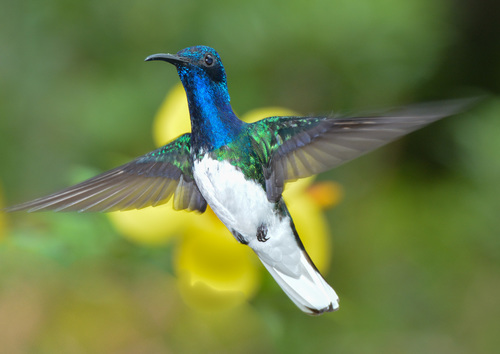
Witnekkolibrie (Florisuga mellivora) Witnekkolibrie
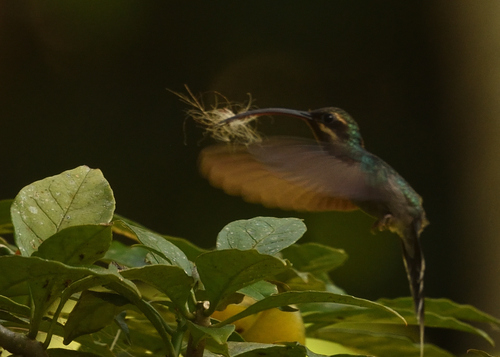
Groene heremietkolibrie (Phaethornis guy) Groene heremietkolibrie

Media

Laden…

Kort gezegd

The most reliable way to separate White-necked Jacobin from Green Hermit is by overall structure and posture: the jacobin is a compact, short-billed, straight-billed hummingbird with a striking white belly and tail, while the hermit is long-billed, decurved, and long-tailed with a dark mask and buff face stripes. Immature jacobins can be variable, but never show the hermit's distinctive facial pattern or long, decurved bill. In flight, the hermit's long, tapered tail and slow, swooping movements contrast with the jacobin's shorter, more direct flight. Both species occur in overlapping regions, but the hermit is tied to dense forest undergrowth, while the jacobin is more often seen at forest edges and higher in the canopy.

Herkenningstips

  1. Bill shape and length: Green Hermit always has a long, strongly decurved reddish bill; White-necked Jacobin has a straight, short, black bill. This is the quickest structural check.
  2. Facial pattern: Only Green Hermit shows a dark mask through the eye, bordered by buff stripes above and below, and a buff line down the throat. White-necked Jacobin of any age never shows facial stripes or a mask.
  3. Tail shape and length: Green Hermit has a long, tapered tail with white tips on the central feathers, often wiggled in display. Jacobin has a shorter tail; males have a mostly white tail with black tips, while females and immatures have more green and blue in the tail, but never the hermit's shape or pattern.
  4. Plumage (adult males): Male White-necked Jacobin is unmistakable: dark blue head and chest, white belly and tail, white nape band, and bright green back. Green Hermit male is dark green above, blue-green rump, sooty below, and lacks any white on the belly or nape.
  5. Plumage (females/immatures): Female/immature jacobins are variable but generally show green upperparts, blue-green or bronzy throat, and white belly; never a mask or buff stripes. Female hermits are sooty gray below, with a long bill and tail, and always show the facial stripes.
  6. Flight style: Jacobin is direct and rapid, often high in the canopy; hermit is slower, with swooping, moth-like flight close to the ground or in dense undergrowth.
  7. Perched posture: Hermit appears lanky and elongated, with a long bill and tail; jacobin is compact, upright, and short-billed.
  8. Habitat context: Hermit is almost always in dense forest undergrowth, especially near water; jacobin is more likely at forest edges, clearings, or gardens, often higher up.
  9. Vocalizations: Hermit gives a loud 'zurk' or 'swark' at leks; jacobin gives thin, high 'tseee' notes and softer calls.
  10. Aggression and behavior: Jacobin is more aggressive at feeders or flowering trees, often chasing other birds; hermit is more solitary, moving along a trapline.
  11. Size impression: Hermit is longer but lighter and more slender; jacobin is shorter but bulkier.
  12. Tail movement: Hermit often wiggles its long central tail feathers during display; jacobin does not.
  13. Upperwing pattern: No distinctive upperwing marks for either species in the sources, so rely on structure and facial pattern for immatures.
  14. Sex differences: Female hermit has an even longer bill and tail than male, and is sooty gray below; female jacobin is variable, but never sooty gray and never with facial stripes.
  15. Range overlap: Both can occur in Trinidad and parts of northern South America, so do not use range alone for separation—rely on structure and facial pattern.

Grootte

White-necked Jacobin is slightly larger overall, with males reaching 11–12 cm in length and weighing 7.4–9.0 g, while Green Hermit is longer (13.5 cm) but much lighter (about 4.9–6.3 g). The jacobin appears stockier and more robust, especially in the field, whereas the hermit is slender, with a proportionally longer tail and bill. The hermit's longer body is accentuated by its long, decurved bill and elongated central tail feathers, making it look lankier than the compact jacobin.

Verenkleed

Juvenile and immature plumages are most likely to cause confusion. Immature White-necked Jacobins are variable: some resemble females with green upperparts and blue-green throats, but typically show more white in the tail than females, and lack any facial stripes. Immature females may show bronzy tones on the throat and chest and have less white in the tail. In contrast, Green Hermit of all ages (and both sexes) shows a dark mask through the eye, bordered by buff stripes above and below, and a buff line down the center of the throat—these facial stripes are unique among these two species and are present even in young birds. The hermit is mainly dark green above (male) or sooty gray below (female), with a blue-green rump and white-tipped central tail feathers. The jacobin male is unmistakable with a dark blue head and chest, white belly and tail, and a white nape band; females and immatures are more variable but never show the hermit's facial pattern or long, decurved bill.

Gedrag

White-necked Jacobin is more likely to be seen feeding at flowers in the canopy or at forest edges, often aggressively chasing other hummingbirds. It tends to hover or sally out from perches. Green Hermit is a classic 'trapline' feeder, moving methodically through dense undergrowth, often near water, and is more secretive. Hermits display at communal leks, wiggling their long central tail feathers, and their flight is slower and more swooping compared to the jacobin's direct, rapid movements.

Habitat

White-necked Jacobin is found from Mexico to northern South America, including Trinidad and Tobago, and is most often seen in semi-open habitats: forest edges, clearings, and tall second growth, often high in the canopy. Green Hermit is more restricted to dense, humid forest undergrowth, especially near streams and in hilly or premontane areas, and avoids secondary growth when better habitat is available. In Trinidad, both can occur, but the hermit is much more tied to interior forest and undergrowth, while the jacobin is more likely at edges and gardens.

Geluid

White-necked Jacobin is not highly vocal, but its song is a series of high-pitched single notes ('tseee...tseee...'), and calls include short 'tsik' and longer 'sweet' notes. Green Hermit's main call is a loud 'zurk', and at leks males give a repeated 'swark'. The hermit's calls are generally harsher and more piercing, while the jacobin's are thinner and higher-pitched.

Stuur een betere beschrijving

Gebruik dezelfde onderdelen als de vergelijking. Je tekst staat meteen live.

The most reliable way to separate White-necked Jacobin from Green Hermit is by overall structure and posture: the jacobin is a compact, short-billed, straight-billed hummingbird with a striking white belly and tail, while the hermit is long-billed, decurved, and long-tailed with a dark mask and buff face stripes. Immature jacobins can be variable, but never show the hermit's distinctive facial pattern or long, decurved bill. In flight, the hermit's long, tapered tail and slow, swooping movements contrast with the jacobin's shorter, more direct flight. Both species occur in overlapping regions, but the hermit is tied to dense forest undergrowth, while the jacobin is more often seen at forest edges and higher in the canopy.

  1. Bill shape and length: Green Hermit always has a long, strongly decurved reddish bill; White-necked Jacobin has a straight, short, black bill. This is the quickest structural check.
  2. Facial pattern: Only Green Hermit shows a dark mask through the eye, bordered by buff stripes above and below, and a buff line down the throat. White-necked Jacobin of any age never shows facial stripes or a mask.
  3. Tail shape and length: Green Hermit has a long, tapered tail with white tips on the central feathers, often wiggled in display. Jacobin has a shorter tail; males have a mostly white tail with black tips, while females and immatures have more green and blue in the tail, but never the hermit's shape or pattern.
  4. Plumage (adult males): Male White-necked Jacobin is unmistakable: dark blue head and chest, white belly and tail, white nape band, and bright green back. Green Hermit male is dark green above, blue-green rump, sooty below, and lacks any white on the belly or nape.
  5. Plumage (females/immatures): Female/immature jacobins are variable but generally show green upperparts, blue-green or bronzy throat, and white belly; never a mask or buff stripes. Female hermits are sooty gray below, with a long bill and tail, and always show the facial stripes.
  6. Flight style: Jacobin is direct and rapid, often high in the canopy; hermit is slower, with swooping, moth-like flight close to the ground or in dense undergrowth.
  7. Perched posture: Hermit appears lanky and elongated, with a long bill and tail; jacobin is compact, upright, and short-billed.
  8. Habitat context: Hermit is almost always in dense forest undergrowth, especially near water; jacobin is more likely at forest edges, clearings, or gardens, often higher up.
  9. Vocalizations: Hermit gives a loud 'zurk' or 'swark' at leks; jacobin gives thin, high 'tseee' notes and softer calls.
  10. Aggression and behavior: Jacobin is more aggressive at feeders or flowering trees, often chasing other birds; hermit is more solitary, moving along a trapline.
  11. Size impression: Hermit is longer but lighter and more slender; jacobin is shorter but bulkier.
  12. Tail movement: Hermit often wiggles its long central tail feathers during display; jacobin does not.
  13. Upperwing pattern: No distinctive upperwing marks for either species in the sources, so rely on structure and facial pattern for immatures.
  14. Sex differences: Female hermit has an even longer bill and tail than male, and is sooty gray below; female jacobin is variable, but never sooty gray and never with facial stripes.
  15. Range overlap: Both can occur in Trinidad and parts of northern South America, so do not use range alone for separation—rely on structure and facial pattern.

White-necked Jacobin is slightly larger overall, with males reaching 11–12 cm in length and weighing 7.4–9.0 g, while Green Hermit is longer (13.5 cm) but much lighter (about 4.9–6.3 g). The jacobin appears stockier and more robust, especially in the field, whereas the hermit is slender, with a proportionally longer tail and bill. The hermit's longer body is accentuated by its long, decurved bill and elongated central tail feathers, making it look lankier than the compact jacobin.

Juvenile and immature plumages are most likely to cause confusion. Immature White-necked Jacobins are variable: some resemble females with green upperparts and blue-green throats, but typically show more white in the tail than females, and lack any facial stripes. Immature females may show bronzy tones on the throat and chest and have less white in the tail. In contrast, Green Hermit of all ages (and both sexes) shows a dark mask through the eye, bordered by buff stripes above and below, and a buff line down the center of the throat—these facial stripes are unique among these two species and are present even in young birds. The hermit is mainly dark green above (male) or sooty gray below (female), with a blue-green rump and white-tipped central tail feathers. The jacobin male is unmistakable with a dark blue head and chest, white belly and tail, and a white nape band; females and immatures are more variable but never show the hermit's facial pattern or long, decurved bill.

White-necked Jacobin is more likely to be seen feeding at flowers in the canopy or at forest edges, often aggressively chasing other hummingbirds. It tends to hover or sally out from perches. Green Hermit is a classic 'trapline' feeder, moving methodically through dense undergrowth, often near water, and is more secretive. Hermits display at communal leks, wiggling their long central tail feathers, and their flight is slower and more swooping compared to the jacobin's direct, rapid movements.

White-necked Jacobin is found from Mexico to northern South America, including Trinidad and Tobago, and is most often seen in semi-open habitats: forest edges, clearings, and tall second growth, often high in the canopy. Green Hermit is more restricted to dense, humid forest undergrowth, especially near streams and in hilly or premontane areas, and avoids secondary growth when better habitat is available. In Trinidad, both can occur, but the hermit is much more tied to interior forest and undergrowth, while the jacobin is more likely at edges and gardens.

White-necked Jacobin is not highly vocal, but its song is a series of high-pitched single notes ('tseee...tseee...'), and calls include short 'tsik' and longer 'sweet' notes. Green Hermit's main call is a loud 'zurk', and at leks males give a repeated 'swark'. The hermit's calls are generally harsher and more piercing, while the jacobin's are thinner and higher-pitched.

Wijzigingen weggooien?

Je hebt niet-opgeslagen wijzigingen. Als je nu weggaat, gaan die verloren.

Witnekkolibrie · Groene heremietkolibrie · Mijn lastige vogels