

white-headed pigeon vs pomba-galega
Columba leucomela versus Patagioenas cayennensis
Jogue um quiz com white-headed pigeon e pomba-galega
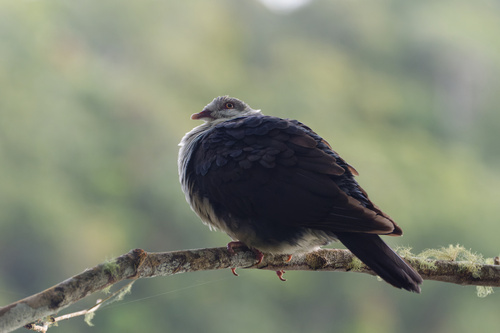 white-headed pigeon
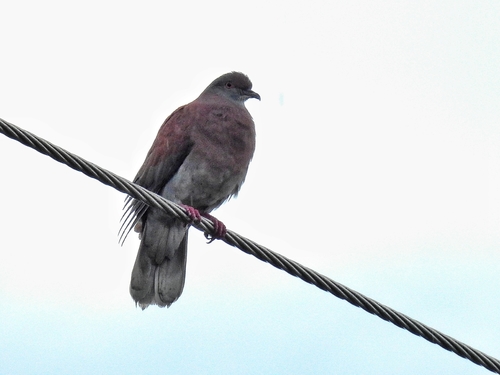 pomba-galega
Em resumo
A marca de campo mais confiável para separar a pomba-galega da white-headed pigeon é a cabeça, pescoço e partes inferiores brancas brilhantes da pomba-galega adulta, que nunca são igualadas pela pomba-galega. As pombas-galegas imaturas podem ser mais complicadas, pois sua cabeça e partes inferiores são mais opacas e acinzentadas, mas ainda assim carecem dos tons roxos gerais da pomba-galega. Em todas as idades, a pomba-galega apresenta uma cabeça e peito roxos opacos com uma nuca cobreada, e nunca tem uma cabeça verdadeiramente branca. A estrutura e o tamanho são semelhantes, mas a white-headed pigeon é mais pesada e longa. A cor do bico e o tom das partes inferiores também são úteis, especialmente à queima-roupa. O habitat e a distribuição não se sobrepõem, então o contexto pode ajudar se conhecido.
Dicas de identificação
- Cabeça e partes inferiores brancas (adultos): Apenas a white-headed pigeon apresenta uma cabeça, pescoço, peito e barriga brancos brilhantes; a pomba-galega nunca apresenta, independentemente da idade ou sexo.
- Cabeça e peito roxos opacos (Pale-vented): A pomba-galega adulta sempre tem uma cabeça e peito roxos opacos, às vezes com brilho cobre na nuca, mas nunca brancos.
- Confusão juvenil: As pombas-galegas imaturas têm uma cabeça e partes inferiores mais acinzentadas, mas ainda carecem de tons roxos ou cobre da pomba-galega; seu bico e pés são mais opacos, mas ainda não são de bico preto como a pomba-galega.
- Cor do bico: A white-headed pigeon tem um bico rosa a vermelho com uma ponta clara (adultos), enquanto a pomba-galega tem um bico preto em todas as idades.
- Tom das partes inferiores: A white-headed é branca ou off-white abaixo (exceto em juvenis muito jovens), a pomba-galega é cinza pálido ou branca apenas na subespécie do sul, mas sempre com uma cabeça roxa ou acastanhada.
- Brilho das partes superiores: A white-headed apresenta iridescência verde ou roxa nas partes superiores, mas não o brilho cobre da nuca da pomba-galega.
- Cor das partes nuas: Ambas têm pernas e anéis oculares vermelhos, mas os olhos da white-headed são laranja pálido ou amarelo, enquanto a íris da pomba-galega é vermelha.
- Tamanho e forma: A white-headed é mais pesada e longa, mas isso é sutil, a menos que ambas sejam vistas juntas.
- Voz: A white-headed é alta e rouca ("WHOO! uk"), a pomba-galega é suave e multi-notada ("kuk kuk croo-ooos").
- Habitat e distribuição: A white-headed apenas no leste da Austrália, a pomba-galega apenas nas Américas tropicais; nunca se sobrepõem.
- Diferenças sexuais: Ambos os sexos são semelhantes em cada espécie, mas as fêmeas são mais opacas; isso não causa confusão entre as espécies.
- Visões de voo: Não há padrão distintivo de asa superior juvenil em nenhuma delas, então confie na cor do corpo e no contraste da cabeça.
- Voo de exibição: A pomba-galega pode mostrar um deslizamento semi-circular, mas isso não é diagnóstico sem o contexto da plumagem.
- Comportamento em grupo: Ambas podem ser solitárias ou em pequenos grupos; o agrupamento não é um separador.
- Armadilhas comuns: A pomba-galega imatura pode parecer opaca e acinzentada, mas nunca mostra os tons roxos ou cobre da pomba-galega. A cor do bico e o contraste da cabeça/partes inferiores são fundamentais nesses casos.
Tamanho
A white-headed pigeon é distintamente mais pesada (média de 419 g) e mais longa (38–42 cm) do que a pomba-galega (230–250 g, 30–32 cm). No campo, a white-headed parece mais robusta e atarracada, enquanto a pomba-galega é mais esbelta e ligeiramente mais curta. No entanto, ambas são grandes pombas e o tamanho sozinho pode ser enganoso sem comparação direta.
Plumagem
As pombas-galegas adultas são inconfundíveis com sua cabeça, pescoço, peito e barriga brancos limpos, contrastando fortemente com asas e cauda cinza-ardósia e partes superiores escuras com brilho verde ou roxo. O bico é rosa a vermelho com uma ponta clara, e o anel ocular e as pernas são vermelhos. As fêmeas são semelhantes, mas com um branco mais opaco e sujo. Os juvenis são mais acinzentados na cabeça e partes inferiores, com partes nuas mais opacas, mas ainda carecem de qualquer brilho roxo ou cobre. Em contraste, os adultos da pomba-galega (macho e fêmea) têm uma cabeça, peito e partes superiores roxos opacos, brilho cobre na nuca e uma garganta esbranquiçada. As partes inferiores são cinza pálido (ou brancas na subespécie do sul), mas a cabeça nunca é branca. Os imaturos são muito opacos e acastanhados, sem qualquer branco ou contraste forte. O bico é preto, as pernas e o anel ocular são vermelhos. Em voo, nenhuma das espécies mostra um padrão marcante de asa superior em juvenis, então a separação depende da cor geral e do contraste.
Comportamento
Ambas as espécies mostram um voo típico de pomba: rápido, direto, com batidas de asa regulares e ocasionalmente flicks. A pomba-galega é notada por voos altos e rápidos e um deslizamento de exibição semi-circular. Ambas podem pousar em áreas abertas, mas a white-headed é mais provável de ser vista nas bordas florestais ao longo da costa leste da Austrália, enquanto a pomba-galega prefere áreas parcialmente abertas com árvores nas Américas tropicais. Ambas podem ser solitárias ou em pequenos grupos.
Habitat
A white-headed pigeon é encontrada apenas ao longo da costa leste da Austrália, geralmente perto de florestas e áreas arborizadas. A pomba-galega é amplamente distribuída nas Américas tropicais, do sul do México ao norte da Argentina, favorecendo bordas florestais, margens de rios e áreas abertas com árvores dispersas. Não há sobreposição de distribuição; o contexto da localização é uma forte pista.
Voz
A white-headed pigeon emite um "WHOO!" alto e rouco seguido por um "uk" rouco (repetido), ou um "oom" baixo. A pomba-galega tem um chamado muito mais suave e multi-notado: uma sequência de suaves "kuk kuk croo-ooos," com o inicial "kuk" característico. A diferença em volume e padrão é marcante, com a white-headed sendo muito mais alta e simples, e a pomba-galega mais suave e complexa.