

alegrinho vs alegrinho-trinador
Serpophaga subcristata versus Serpophaga griseicapilla
Jogue um quiz com alegrinho e alegrinho-trinador
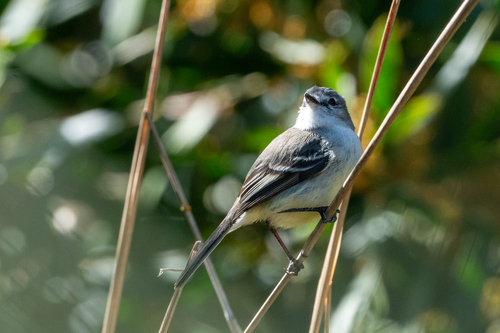 alegrinho
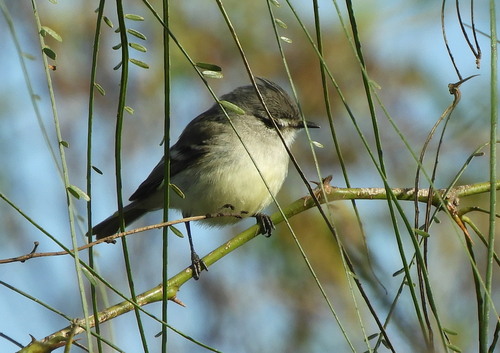 alegrinho-trinador
Em resumo
A marca de campo mais confiável entre o alegrinho e o alegrinho-trinador é a cor e a proeminência da coroa e das barras das asas, especialmente em adultos. O alegrinho frequentemente apresenta uma crista branca oculta, mas às vezes levantada, enquanto o alegrinho-trinador tem apenas uma pequena mancha branca, menos óbvia, em algumas penas centrais da coroa pretas. As barras das asas também diferem: as do alegrinho são esbranquiçadas a pálido buffy, enquanto as do alegrinho-trinador podem ser canela a esbranquiçadas. Ambas as espécies são muito semelhantes em tamanho e forma geral, e ambos os sexos se parecem, então a atenção cuidadosa às sutis diferenças de plumagem é essencial. Pássaros juvenis e imaturos são especialmente complicados, mas o tom geral das partes superiores e a cor das barras das asas podem ajudar a separá-los.
Dicas de identificação
- Cor da coroa e crista (adultos): O alegrinho pode mostrar uma crista branca quando levantada, que geralmente está oculta, mas às vezes visível. O alegrinho-trinador tem apenas uma pequena mancha branca menos óbvia em algumas penas centrais da coroa pretas. Procure qualquer sinal de uma crista branca levantada em pássaros empoleirados.
- Cor da coroa (todas as idades): Ambos têm coroas cinzas, mas o alegrinho-trinador é frequentemente descrito como coroa cinza ou nuca cinza, às vezes parecendo ligeiramente mais escuro devido às penas centrais pretas.
- Supercílios e anel ocular: Ambas as espécies têm um supercílios branco fino, mas o alegrinho-trinador também mostra um crescente branco sob o olho, que é menos pronunciado no alegrinho.
- Padrão facial: O alegrinho tem uma linha escura através do olho; o alegrinho-trinador tem uma linha cinza mais escura. Ambos têm rostos brancos acinzentados, mas o alegrinho-trinador pode parecer ligeiramente mais contrastante devido ao crescente.
- Cor das partes superiores: O alegrinho é oliva cinza acima, enquanto o alegrinho-trinador é marrom oliváceo—ligeiramente mais quente e mais marrom. Em boa luz, isso pode ser uma pista sutil, mas útil.
- Barras das asas (adultos): As do alegrinho são esbranquiçadas a pálido buffy; as do alegrinho-trinador podem ser canela a esbranquiçadas. Tons canela nas barras das asas sugerem o alegrinho-trinador, mas cuidado com o desgaste e as condições de luz.
- Barras das asas (juvenis): O juvenil do alegrinho tem barras das asas buff; o alegrinho-trinador pode ser canela a esbranquiado. Isso é sutil e variável, mas em uma comparação direta, tons canela favorecem o alegrinho-trinador.
- Cor da cauda: Ambos têm caudas escuras ou marrom-cinza com bordas esbranquiçadas nas penas externas. Isso não é um forte separador.
- Partes inferiores: Ambos têm gargantas brancas e peitos acinzentados, com barrigas amarelas pálidas. S. s. straminea (alegrinho) tem uma barriga amarela mais brilhante, mas a maioria das subespécies se sobrepõe em tom.
- Cor do íris: Ambas as espécies têm íris escuras, mas o alegrinho-trinador pode ser castanho a escuro. Isso não é confiável em campo.
- Bico e pernas: Ambos têm bicos pretos; o alegrinho tem pernas e pés cinzas, enquanto o alegrinho-trinador tem pernas e pés pretos. Isso é sutil e raramente diagnóstico em campo.
- Tamanho: O alegrinho é ligeiramente mais pesado em média, mas a sobreposição de tamanho é quase completa e não útil em campo.
- Comportamento: Ambos são forrageadores ativos e inquietos em habitats semelhantes. O comportamento não é um separador.
- Habitat e distribuição: Ambas as espécies ocorrem juntas em grande parte de sua distribuição e habitat, então não confie na localização.
- Voz: Se você conhece os chamados, use-os—eles são o separador mais confiável, mas os detalhes não são fornecidos aqui.
Em resumo, concentre-se na presença ou ausência de uma crista branca, na cor e proeminência das barras das asas (canela no alegrinho-trinador) e nas sutis diferenças nos tons das partes superiores e marcas faciais. Quando em dúvida, a voz é a melhor, mas pistas de plumagem podem ajudar com observação cuidadosa e próxima.
Tamanho
Ambas as espécies são muito pequenos tiranídeos e se sobrepõem em comprimento (alegrinho: cerca de 11 cm, alegrinho-trinador: 9–11 cm). O alegrinho tem uma média ligeiramente mais pesada (7,0 g) do que o alegrinho-trinador (4,4–7,5 g), mas isso não é uma marca de campo confiável. Em mãos, o alegrinho pode parecer um pouco mais robusto, mas em campo, o tamanho não é um separador seguro.
Plumagem
- Juvenis/imaturos: Ambas as espécies têm barras das asas buff ou pálidas, mas os juvenis do alegrinho têm pouca ou nenhuma branca na coroa, enquanto o alegrinho-trinador mostra um pouco de branco oculto em algumas penas centrais da coroa pretas. As barras das asas do juvenil do alegrinho são buff, enquanto as do alegrinho-trinador podem ser canela a esbranquiçadas.
- Adultos: Os adultos do alegrinho têm uma coroa cinza com uma crista branca oculta que pode ser levantada, um supercílios branco fino e uma linha escura através do olho. As partes superiores são oliva cinza, e as asas têm penas escuras a pretas com bordas pálidas e duas barras das asas esbranquiçadas a pálido buffy. A cauda é escura com bordas esbranquiçadas. As partes inferiores são brancas no queixo e na garganta, cinzas no peito e amarelas pálidas na barriga.
Os adultos do alegrinho-trinador têm uma coroa e nuca cinzas com uma pequena mancha branca oculta em penas centrais da coroa pretas, um supercílios branco fino, um crescente branco sob o olho e uma linha cinza escura através do olho. As partes superiores são marrom oliváceo (mais quente que o alegrinho), e as asas são cinza marrom escuro com bordas mais claras e duas barras das asas canela a esbranquiçadas. A cauda é marrom-cinza escura com bordas esbranquiçadas. As partes inferiores são brancas com um tom acinzentado na garganta, peito acinzentado e barriga amarela pálida. - Cor do íris: O alegrinho tem uma íris marrom escura; o alegrinho-trinador varia de castanho a marrom escuro, não é uma marca de campo forte.
Comportamento
Ambas as espécies são forrageadores ativos em vegetação arbustiva, coletando insetos da folhagem e às vezes pairando brevemente. Seu estilo de forrageio e 'jizz' geral são muito semelhantes, então o comportamento não é um separador confiável em campo.
Habitat
Ambas as espécies são encontradas em habitats semelhantes na Argentina, Bolívia, Brasil, Paraguai e Uruguai. Elas se sobrepõem amplamente em distribuição e habitat, então o contexto não é útil para separação.
Voz
A principal separação taxonômica entre essas espécies é baseada em suas vocalizações muito diferentes, mas nenhuma descrição específica é fornecida nas notas. Na prática, a voz é o melhor separador se você conhece os chamados, mas os detalhes não estão disponíveis aqui.