

marreca-toicinho vs pato-rabo-alçado-americano
Anas bahamensis versus Oxyura jamaicensis
Jogue um quiz com marreca-toicinho e pato-rabo-alçado-americano
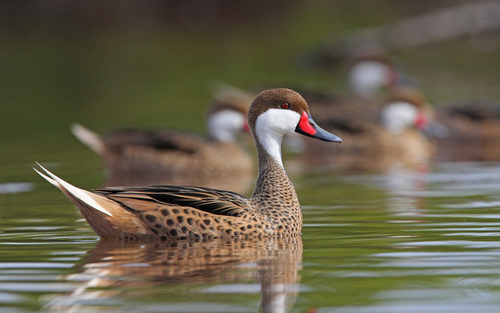 marreca-toicinho
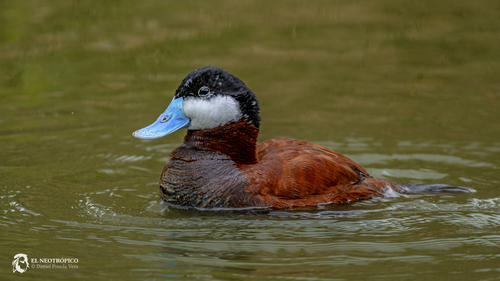 pato-rabo-alçado-americano
Em resumo
A marca de campo mais confiável para separar a marreca-toicinho do pato-rabo-alçado-americano é o padrão da bochecha: a marreca-toicinho tem bochechas brancas largas em um rosto principalmente marrom, enquanto o pato-rabo-alçado-americano apresenta uma mancha branca brilhante na bochecha, nitidamente destacada contra uma touca e nuca escuras, especialmente nos machos. Em voo, a marreca-toicinho exibe um especulum verde na asa, enquanto as asas superiores do pato-rabo-alçado-americano são solidamente escuras, sem painel iridescente. Estruturalmente, o pato-rabo-alçado-americano é um pássaro compacto, de pescoço curto e cauda rígida, frequentemente visto com a cauda levantada, enquanto a marreca-toicinho é mais esbelta, com uma cauda mais pontuda e um pescoço mais longo. A cor do bico também é uma pista forte: os machos adultos do pato-rabo-alçado-americano em plumagem de reprodução têm um bico azul marcante, enquanto a marreca-toicinho tem um bico cinza com base vermelha. Fêmeas e imaturos de ambas as espécies são mais apagados, mas os padrões de bochecha e asa permanecem úteis.
Dicas de identificação
- Padrão da bochecha (todas as idades): A marreca-toicinho tem bochechas brancas largas em um rosto marrom; o pato-rabo-alçado-americano apresenta uma mancha branca brilhante na bochecha, nitidamente contornada por uma touca e nuca escuras, especialmente nos machos. Fêmeas e imaturos do pato-rabo-alçado-americano têm uma linha marrom borrada na bochecha pálida.
- Padrão da asa em voo (todas as idades): A marreca-toicinho exibe um especulum verde iridescente na asa, visível como um painel colorido em voo ou em repouso com as asas abertas. A asa superior do pato-rabo-alçado-americano é solidamente escura, sem especulum ou painel contrastante.
- Formato e posição da cauda: O pato-rabo-alçado-americano tem uma cauda rígida frequentemente mantida levantada, mesmo ao nadar ou em repouso. A cauda da marreca-toicinho é pontuda, mas não rígida, e geralmente é mantida alinhada com o corpo.
- Formato e cor do bico: O bico do pato-rabo-alçado-americano é largo, em forma de concha, e azul brilhante nos machos adultos em reprodução; nas fêmeas e machos não reprodutores, é cinza. A marreca-toicinho tem um bico cinza esbelto com base vermelha; os juvenis têm um bico mais apagado.
- Formato do corpo e postura: O pato-rabo-alçado-americano é compacto, de pescoço curto, e fica baixo na água. A marreca-toicinho é mais longa, mais esbelta, e fica mais alta, com um perfil mais gracioso.
- Plumagem de reprodução dos machos: Os machos do pato-rabo-alçado-americano na época de reprodução têm corpo castanho-avermelhado com uma touca escura, bochechas brancas, e bico azul—único entre os patos. Os machos da marreca-toicinho são marrons com bochechas brancas e não têm azul no bico.
- Confusão entre fêmeas e imaturos: Fêmeas e imaturos do pato-rabo-alçado-americano são acastanhados com uma mancha pálida na bochecha cruzada por uma faixa borrada e uma touca escura; fêmeas/imaturos da marreca-toicinho são mais apagadas que os machos, mas sempre mostram bochechas brancas largas, sem touca escura ou faixa na bochecha.
- Comportamento de voo: Os patos-rabo-alçados-americanos raramente voam, mas quando o fazem, seu voo é rápido e baixo sobre a água, com batidas de asa rápidas. A marreca-toicinho decola mais prontamente e voa com um perfil mais típico de pato mergulhador.
- Comportamento alimentar: O pato-rabo-alçado-americano mergulha e forrageia debaixo d'água, frequentemente desaparecendo por longos períodos. A marreca-toicinho se alimenta na superfície, inclinando-se para frente, mas raramente mergulha.
- Pistas de habitat: No Caribe e na América do Sul, a marreca-toicinho é o único pintail e prefere wetlands abertos e rasos. O pato-rabo-alçado-americano é mais provável de ser encontrado em lagos pantanosos e vegetados, especialmente em populações europeias introduzidas.
- Vocalizações: Se você ouvir um som de tamborilar ou borbulhar, especialmente durante a exibição, isso indica o pato-rabo-alçado-americano; a marreca-toicinho é geralmente silenciosa.
- Impressão de tamanho: Ambos são semelhantes em massa, mas o pato-rabo-alçado-americano parece muito mais robusto e de pescoço mais curto, enquanto a marreca-toicinho é mais elegante e alongada.
- Estrutura do bico: O bico do pato-rabo-alçado-americano é visivelmente mais largo e mais espatulada do que o bico esbelto da marreca-toicinho, especialmente óbvio a curta distância.
- Cauda em pássaros nadadores: Se você ver um pato com a cauda levantada como um galo, é um pato-rabo-alçado-americano; a marreca-toicinho mantém a cauda nivelada.
- Variação sazonal: Os machos do pato-rabo-alçado-americano mostram apenas o bico azul e o corpo castanho na época de reprodução; no inverno, eles são mais apagados, mas ainda mostram a mancha branca na bochecha e a touca escura. A marreca-toicinho não tem mudanças sazonais fortes na plumagem.
Tamanho
Ambas as espécies são semelhantes em massa, com o pato-rabo-alçado-americano pesando em média cerca de 544,5 g [wikidata], e a marreca-toicinho variando por subespécie, mas geralmente na faixa de 474–710 g [wikipedia]. No entanto, o pato-rabo-alçado-americano parece mais compacto e robusto, com um pescoço curto e grosso e um corpo atarracado, enquanto a marreca-toicinho é mais alongada e esbelta, com uma cauda mais longa e pontuda. No campo, a cauda curta e rígida do pato-rabo-alçado-americano e sua construção robusta são distintas em comparação com a forma mais graciosa e semelhante a um pintail da marreca-toicinho.
Plumagem
-
Plumagem juvenil/imatura e feminina: Ambas as espécies são mais apagadas do que os machos adultos, mas o padrão da bochecha ainda é diagnóstico. A marreca-toicinho de todas as idades mostra bochechas brancas largas em um rosto marrom; os juvenis têm um bico mais apagado, mas mantêm o contraste da bochecha. O pato-rabo-alçado-americano (fêmea e imatura) apresenta uma mancha branca na bochecha cruzada por uma linha marrom borrada e uma touca escura, com o restante do rosto e corpo acinzentados.
-
Plumagem de reprodução dos machos adultos: Os machos do pato-rabo-alçado-americano são inconfundíveis com um bico azul brilhante, touca escura e bochechas brancas, além de um corpo castanho-avermelhado. Os machos da marreca-toicinho são marrons no geral, com bochechas brancas e um bico cinza com base vermelha.
-
Padrão da asa em voo: A marreca-toicinho de todas as idades mostra um especulum verde iridescente, visível como um painel colorido na asa. As asas superiores do pato-rabo-alçado-americano são solidamente escuras, sem especulum ou painel contrastante.
-
Cauda: A cauda do pato-rabo-alçado-americano é rígida e frequentemente mantida ereta, enquanto a cauda da marreca-toicinho é pontuda, mas não tão rígida ou levantada.
-
Bico: O bico do pato-rabo-alçado-americano é largo, em forma de concha, e azul nos machos em reprodução; cinza no inverno e em fêmeas/imaturos. O bico da marreca-toicinho é cinza com base vermelha (mais apagado em juvenis).
Comportamento
O pato-rabo-alçado-americano é um pato mergulhador, frequentemente forrageando debaixo d'água e raramente voando, a menos que seja assustado; quando voa, usa batidas rápidas de asa e permanece baixo sobre a água. Ele frequentemente fica baixo na água e frequentemente levanta sua cauda rígida. A marreca-toicinho é um pato mergulhador, se alimentando na superfície inclinando-se para frente, em vez de mergulhar. É mais provável que seja vista nadando com a cauda nivelada e o pescoço estendido, e decola mais prontamente do que o pato-rabo-alçado-americano.
Habitat
Ambas as espécies utilizam habitats de água doce, mas a marreca-toicinho é mais provável de ser encontrada em wetlands abertos e rasos, lagoas e poças salobras, especialmente no Caribe e na América do Sul. O pato-rabo-alçado-americano prefere lagos e poças pantanosas com vegetação emergente densa, e em sua área introduzida na Europa, é frequentemente encontrado em lagos mais profundos. A marreca-toicinho é distribuída de forma irregular em sua área, enquanto o pato-rabo-alçado-americano pode ser localmente abundante onde está estabelecido.
Voz
Nenhuma das espécies é especialmente vocal no campo. Os machos do pato-rabo-alçado-americano podem produzir um som distinto de tamborilar ou 'borbulhar' ao bater seu bico no peito, frequentemente acompanhado de bolhas na água. A marreca-toicinho não é conhecida por vocalizações distintas nas fontes fornecidas.
marreca-toicinho · pato-rabo-alçado-americano · Minhas aves difíceis