

águia-sapeira vs tartaranhão-cinzento
Circus aeruginosus versus Circus cyaneus
Jogue um quiz com águia-sapeira e tartaranhão-cinzento
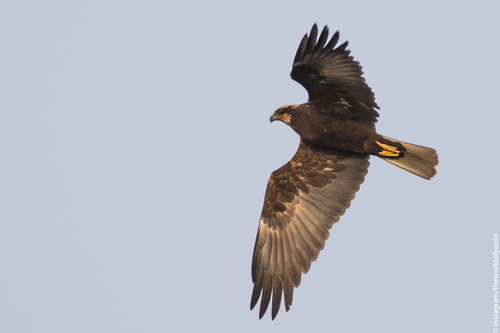 águia-sapeira
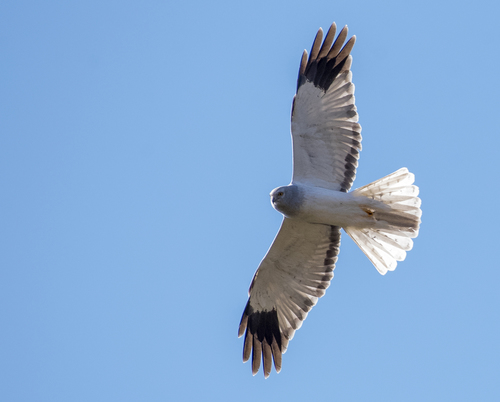 tartaranhão-cinzento
Em resumo
A marca de campo mais confiável para separar a águia-sapeira do tartaranhão-cinzento é o padrão da asa superior e do corpo em voo, especialmente em juvenis e fêmeas. As fêmeas e juvenis da águia-sapeira apresentam um corpo sólido, marrom chocolate escuro, com uma cabeça e ombros contrastantemente claros, sem a cauda branca e as listras claras na asa inferior do tartaranhão-cinzento. As fêmeas e juvenis do tartaranhão-cinzento ('ringtails') são marrons por cima, mas sempre mostram uma cauda branca marcante e partes inferiores amarelas com listras marrons, além de um perfil de asa e cauda mais longo e esguio. Os machos são mais fáceis: os machos da águia-sapeira são tricolores (marrom, cinza, preto) sem cauda branca, enquanto os machos do tartaranhão-cinzento são principalmente cinza claro e branco com pontas de asa pretas e uma cauda branca. A estrutura e o estilo de voo também ajudam: a águia-sapeira é mais robusta e com asas mais largas, enquanto o tartaranhão-cinzento é mais esguio e mais leve.
Dicas de identificação
- Mancha de cauda branca: Apenas o tartaranhão-cinzento (todas as idades e sexos) mostra uma cauda branca marcante em voo; a águia-sapeira nunca faz isso. Esta é a melhor marca de campo, especialmente para fêmeas e juvenis.
- Padrão da asa inferior e do corpo (juvenis/fêmeas): Os juvenis/fêmeas da águia-sapeira são sólidos, marrons escuros por baixo, com uma cabeça e ombros claros, sem a cauda branca e as listras amarelas do tartaranhão-cinzento. Os ringtails do tartaranhão-cinzento têm partes inferiores amarelas com listras marrons e uma cauda branca contrastante.
- Padrão da cabeça e do rosto: As fêmeas/juvenis da águia-sapeira têm uma cabeça e ombros amarelo-claro, muitas vezes em forte contraste com o corpo escuro, e uma área escura ao redor do olho. Os ringtails do tartaranhão-cinzento têm uma cabeça com menos contraste, sem 'capuz' claro e um rosto marrom mais uniforme.
- Plumagem dos machos: Os machos da águia-sapeira são tricolores (marrom, cinza, preto) com uma cabeça clara, corpo marrom, secundárias/terciares cinzas e pontas de asa pretas. Os machos do tartaranhão-cinzento são cinza claro por cima, branco por baixo, com pontas de asa pretas e uma cauda branca—muito mais claros e limpos em geral.
- Forma da asa e voo: A águia-sapeira é mais robusta e com asas mais largas, com batidas de asa mais lentas e constantes e um voo mais pesado e menos leve. O tartaranhão-cinzento é mais esguio, com asas mais longas e estreitas e um estilo de voo mais ágil e flutuante.
- Forma da cauda: O tartaranhão-cinzento tem uma cauda mais longa e afilada em relação ao tamanho do corpo; a cauda da águia-sapeira é mais curta e menos afilada.
- Tamanho: A águia-sapeira é maior e mais pesada, especialmente as fêmeas. Em comparação direta, a águia-sapeira parece mais robusta e imponente.
- Pernas em voo: A águia-sapeira muitas vezes deixa suas pernas penduradas de forma notável enquanto caça; isso é menos óbvio no tartaranhão-cinzento.
- Contexto do habitat: Se vista sobre extensos juncais ou zonas úmidas, a águia-sapeira é mais provável; sobre charnecas, pastagens altas ou terras agrícolas abertas, o tartaranhão-cinzento é mais provável, especialmente fora da temporada de reprodução.
- Confusão juvenil: O juvenil da águia-sapeira pode parecer muito escuro, até mesmo negro em raras formas, mas ainda assim não terá a cauda branca do tartaranhão-cinzento. O juvenil do tartaranhão-cinzento sempre mostra a cauda branca e uma barriga mais clara e listrada.
- Disco facial: O tartaranhão-cinzento tem um disco facial sutil semelhante ao de uma coruja, dando uma aparência ligeiramente 'achatada' em vistas próximas, especialmente em fêmeas/juvenis. A águia-sapeira não possui essa característica.
- Vocalizações: Apenas o tartaranhão-cinzento é notavelmente vocal, especialmente durante a passagem de alimentos e exibições; a águia-sapeira é geralmente silenciosa.
- Painel primário: Os machos do tartaranhão-cinzento mostram um forte contraste entre as asas cinza claro e as pontas de asa pretas; os machos da águia-sapeira têm uma asa mais mesclada e tricolor.
- Cor dos olhos: As fêmeas adultas da águia-sapeira têm uma íris clara que se destaca em um rosto escuro; as fêmeas do tartaranhão-cinzento têm um olho com menos contraste.
- Quando em dúvida: Se você ver um gavião com uma cauda branca, é um tartaranhão-cinzento. Se o pássaro for grande, de asas largas, marrom escuro com uma cabeça clara e sem cauda branca, é uma águia-sapeira.
Tamanho
A águia-sapeira é distintamente maior e mais robusta que o tartaranhão-cinzento. As fêmeas da águia-sapeira são especialmente pesadas (até 800g), enquanto as fêmeas do tartaranhão-cinzento pesam em média cerca de 530g [wikidata]. O comprimento da águia-sapeira é de 48–56 cm com uma envergadura de 115–130 cm, em comparação com os 41–52 cm e 97–122 cm de envergadura do tartaranhão-cinzento [wikipedia]. No campo, a águia-sapeira muitas vezes parece ter um corpo mais pesado, com asas mais largas e uma cauda menos afilada. O tartaranhão-cinzento é mais esguio, com asas mais longas e estreitas e uma cauda mais longa em relação ao tamanho do corpo.
Plumagem
- Juvenis e Fêmeas:
- Águia-sapeira juvenis e fêmeas são quase totalmente marrons chocolate escuro, com uma cabeça e ombros amarelo-claro conspicuamente mais claros. A área clara pode ser bem definida ou desbotada, mas o rosto é sempre mais escuro ao redor do olho, fazendo com que a íris clara se destaque. Não há cauda branca. Os juvenis têm menos amarelo nos ombros do que as fêmeas. Raras formas hipermelânicas podem parecer quase todas pretas em voo.
- Tartaranhão-cinzento fêmeas e juvenis ('ringtails') são marrons por cima com uma mancha de cauda branca marcante, e partes inferiores amarelas com listras marrons. A cauda branca está sempre presente e é óbvia em voo. Os juvenis têm listras menos distintas e secundárias mais escuras, mas ainda mostram a cauda branca e um corpo inferior geralmente mais claro do que a águia-sapeira.
- Machos:
- Águia-sapeira machos são marrons avermelhados com listras amarelas, uma cabeça clara, e uma asa tricolor: asa anterior marrom, secundárias/terciares cinzas, e primárias pretas. Sem cauda branca.
- Tartaranhão-cinzento machos são cinza claro por cima, branco por baixo (exceto por um peito superior cinza), com pontas de asa pretas e uma cauda branca. As asas são longas e estreitas, e a aparência geral é muito mais clara e limpa do que a dos machos da águia-sapeira.
- Em todas as idades: Apenas o tartaranhão-cinzento mostra uma cauda branca; a águia-sapeira nunca faz isso.
Comportamento
Ambas as espécies caçam planando baixo sobre o solo aberto com as asas em um V raso, mas a águia-sapeira muitas vezes parece mais pesada e menos ágil, com asas mais largas e batidas de asa mais lentas e constantes. O tartaranhão-cinzento é mais leve e ágil, com uma tendência a percorrer campos e charnecas de maneira mais errática, semelhante a uma coruja. A águia-sapeira pode deixar suas pernas penduradas de forma mais óbvia durante a caça. Ambas as espécies caçam pequenos mamíferos e aves, mas o tartaranhão-cinzento depende mais de mamíferos, enquanto a águia-sapeira captura uma gama mais ampla de presas, incluindo anfíbios e répteis.
Habitat
Ambas as espécies podem ser encontradas em habitats abertos, como pântanos e pastagens, mas a águia-sapeira está mais intimamente ligada a zonas úmidas e juncais, especialmente para reprodução. O tartaranhão-cinzento é mais frequentemente visto sobre charnecas, pastagens altas e terras agrícolas abertas, e é mais migratório, abandonando altitudes mais altas no inverno. Em áreas onde ambas ocorrem, a águia-sapeira é mais provável de ser vista perto de extensas zonas úmidas, enquanto o tartaranhão-cinzento é mais disseminado em áreas abertas mais secas.
Voz
O tartaranhão-cinzento é descrito como um pássaro muito vocal, com fêmeas emitindo um assobio 'piih-eh' ao receber comida e um chamado de alarme 'chit-it-it-it-it-et-it'. Os machos emitem um 'chek-chek-chek' e um 'chuk-uk-uk-uk' saltitante durante a exibição. Nenhuma vocalização distintiva é notada para a águia-sapeira nas fontes, portanto, os chamados não são uma marca de campo confiável para separação.