

violet-headed hummingbird vs violet sabrewing
Klais guimeti versus Campylopterus hemileucurus
Jogue um quiz com violet-headed hummingbird e violet sabrewing
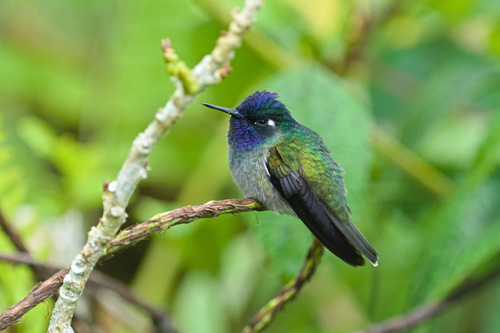 violet-headed hummingbird
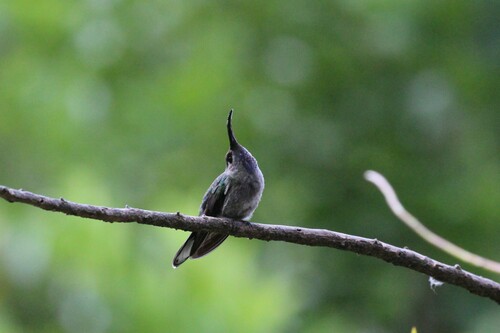 violet sabrewing
Em resumo
A marca de campo mais confiável entre o beija-flor cabeça-violeta e o sabre-violeta é o tamanho: o sabre-violeta é dramaticamente maior, quase o dobro do comprimento e várias vezes a massa do beija-flor cabeça-violeta. Se você ver um beija-flor com uma cabeça e garganta violeta ou azul intensa, verifique seu tamanho e comprimento do bico—o sabre-violeta é robusto e de bico longo, enquanto o cabeça-violeta é pequeno e de bico curto. Ambos podem mostrar verdes e violetas metálicos, mas apenas os machos do beija-flor cabeça-violeta têm uma mancha branca nítida atrás do olho. As fêmeas de ambos são mais apagadas, mas o sabre-violeta ainda é muito maior e mais robusto. Em voo ou empoleirado, a cauda larga do sabre-violeta com pontas brancas largas é uma pista forte, enquanto a cauda do beija-flor cabeça-violeta é menor com pequenas manchas pálidas. O habitat e a elevação podem ajudar: o cabeça-violeta prefere florestas de planície a florestas de encosta, enquanto o sabre-violeta é uma espécie montana.
Dicas de identificação
- O tamanho é a pista mais imediata: Se o beija-flor é grande e robusto, é o sabre-violeta; se é pequeno e delicado, é o cabeça-violeta. Isso se aplica a todas as idades e sexos.
- Estrutura do bico: O sabre-violeta tem um bico mais longo e grosso (especialmente em algumas subespécies), enquanto o cabeça-violeta tem um bico curto e reto (cerca de 13 mm). Compare com beija-flores próximos, se possível.
- Cor da cabeça e garganta (machos): Os machos do cabeça-violeta têm uma cabeça e garganta violeta ou azul intensa, enquanto os machos do sabre-violeta têm uma coroa escura com um brilho verde-azulado e um rosto e partes inferiores metálico violeta-azulado. O violeta do sabre-violeta é mais extenso no corpo, menos concentrado na cabeça.
- Mancha branca atrás do olho: Presente e conspícua em ambos os sexos do beija-flor cabeça-violeta, ausente no sabre-violeta. Esta é uma marca de campo rápida em distâncias curtas.
- Padrão da cauda: A cauda do sabre-violeta é larga com pontas brancas largas nas penas externas (ambos os sexos), visível em voo ou quando aberta. A cauda do cabeça-violeta é verde com pequenas manchas brancas-cinzentas, nunca com pontas brancas largas.
- Partes inferiores (machos): Os machos do cabeça-violeta têm um peito verde que desbota para uma barriga cinza, enquanto os machos do sabre-violeta são metálico violeta-azulado em toda a parte inferior, às vezes mais azuis na barriga.
- Partes inferiores (fêmeas): As fêmeas do cabeça-violeta são cinzas embaixo com uma touca azul e costas verdes; as fêmeas do sabre-violeta têm uma garganta violeta-azulada, partes inferiores principalmente cinzas com uma barriga mais branca, e manchas verdes metálicas ao longo dos lados.
- Costas e rabo: Ambas as espécies mostram verde metálico, mas a parte inferior das costas e as coberturas da cauda do sabre-violeta são especialmente brilhantes e extensas.
- Comportamento em flores/alimentadores: Os sabre-violeta são dominantes e podem perseguir outros beija-flores. O cabeça-violeta é mais propenso a se alimentar silenciosamente e evitar confrontos.
- Habitat e elevação: Se você estiver acima de 1.500 m em floresta montana úmida ou em um alimentador de jardim em alta altitude, espere encontrar o sabre-violeta. Em florestas de planície ou de encosta, o cabeça-violeta é mais provável.
- Postura empoleirada: O sabre-violeta parece grande, de corpo pesado e de cauda longa quando empoleirado. O cabeça-violeta é compacto, com uma cauda e bico proporcionalmente mais curtos.
- Aparência em voo: A cauda larga do sabre-violeta e sua construção pesada são óbvias em voo. O cabeça-violeta parece mais leve e ágil.
- Vocalizações: Se você ouvir um canto alto, variado, com cliques agudos e trinos, é o sabre-violeta. Silêncio ou falta de canto distinto não confirmam o cabeça-violeta, mas a canção do sabre-violeta é uma pista positiva.
- Diferenças sexuais: As fêmeas de ambas as espécies são mais apagadas, mas o tamanho e o padrão da cauda ainda as separam de forma confiável.
- Pássaros juvenis/imaturos: Nenhuma diferença específica de padrão de asa ou voo juvenil é notada, então use tamanho, bico e padrão da cauda para todas as idades.
Tamanho
O sabre-violeta é o maior beija-flor do México e da América Central, medindo de 13 a 15 cm de comprimento e pesando de 9 a 12 g. Em contraste, o beija-flor cabeça-violeta é muito menor, com uma média de apenas 8,1 cm de comprimento e uma construção proporcionalmente mais leve (peso não especificado, mas típico para um pequeno beija-flor). O bico do sabre-violeta também é mais longo e robusto, especialmente em algumas subespécies. Quando vistos juntos ou com outros beija-flores para escala, o volume e o comprimento do sabre-violeta são inconfundíveis, enquanto o cabeça-violeta parece pequeno e delicado.
Plumagem
- Machos adultos: Os machos do beija-flor cabeça-violeta têm uma cabeça e garganta violeta ou azul intensa com uma mancha branca clara atrás do olho, costas metálicas verde-azuladas ou verde-bronze, peito verde que desbota para uma barriga cinza, e uma cauda verde com pequenas manchas brancas-cinzentas. Os machos do sabre-violeta têm uma coroa escura com brilho verde-azulado, rosto metálico violeta-azulado, nuca, parte superior das costas e partes inferiores (mais azuis na barriga), parte inferior das costas verde metálica, e uma cauda larga com penas centrais de verde-azulado a preto-azulado e pontas brancas largas nas penas externas da cauda.
- Fêmeas adultas: As fêmeas do cabeça-violeta são mais apagadas, com uma touca azul, costas verdes, partes inferiores cinzas, e a mesma mancha branca pós-ocular que os machos. As fêmeas do sabre-violeta têm uma coroa escura, partes superiores metálicas verdes a verde-bronze, rabo mais verde-azulado, garganta violeta-azulada, partes inferiores principalmente cinzas com uma barriga mais branca, manchas verdes metálicas ao longo dos lados, e coberturas da cauda verdes. Sua cauda é larga com pontas brancas largas, ao contrário das pequenas manchas pálidas da cauda do cabeça-violeta.
- Juvenil/imaturo: Nenhuma diferença específica de padrão de asa ou voo juvenil é descrita nas fontes para ambas as espécies, então concentre-se em tamanho, estrutura e padrão da cauda para todas as idades.
Comportamento
Ambas as espécies se alimentam de néctar e pequenos insetos, mas o sabre-violeta é mais dominante e agressivo, frequentemente defendendo áreas de flores e alimentadores, e perseguindo outros beija-flores. O beija-flor cabeça-violeta é mais propenso a ser visto se alimentando silenciosamente em flores do sub-bosque, às vezes em agregações soltas. Os sabre-violeta podem ser vistos seguindo um circuito de flores ou em leks (machos cantando juntos), enquanto o cabeça-violeta é menos conspícuo e mais solitário.
Habitat
O beija-flor cabeça-violeta prefere florestas úmidas de planície e de encosta subtropicais ou tropicais, incluindo crescimento degradado e secundário. Ele é tipicamente encontrado em elevações mais baixas. O sabre-violeta, em contraste, é uma espécie montana, encontrada de 500 a 2.500 m (México) ou de 1.500 a 2.400 m (Costa Rica), em florestas montanas úmidas perenes, florestas secundárias maduras, plantações de banana e jardins. Se você estiver em floresta de alta altitude ou em um alimentador de néctar nas montanhas, o sabre-violeta é muito mais provável; em florestas de planície ou de encosta, o cabeça-violeta é a espécie esperada.
Voz
O sabre-violeta tem uma canção distinta, alta e variada, descrita como cliques agudos e trinos, com notas explosivas. Seus chamados são cliques agudos e cliques únicos em voo. Nenhuma descrição vocal está disponível para o beija-flor cabeça-violeta nas fontes, então a voz é apenas diagnóstica se você ouvir a canção característica do sabre-violeta.
violet-headed hummingbird · violet sabrewing · Minhas aves difíceis