

violet-backed starling vs burchell's starling
Cinnyricinclus leucogaster versus Lamprotornis australis
Jogue um quiz com violet-backed starling e burchell's starling
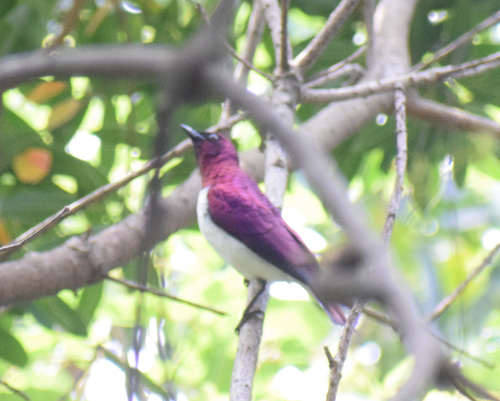 violet-backed starling
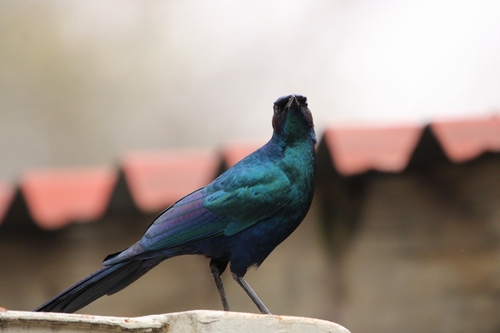 burchell's starling
Em resumo
A marca de campo mais confiável é o forte dimorfismo sexual no violet-backed starling: os machos adultos são strikingly iridescent violet acima com partes inferiores brancas puras, enquanto as fêmeas são marrons e fortemente estriadas, lembrando um tordo. O burchell's starling, em contraste, não é dimórfico sexualmente e ambos os sexos apresentam uma aparência uniforme e brilhante. O violet-backed starling é muito menor e mais delicado, frequentemente se alimentando alto na copa das árvores, enquanto o burchell's é um grande e robusto estorninho das florestas do sul da África. Se você ver um pequeno estorninho semelhante a um tordo com estrias ousadas, é uma fêmea de violet-backed; um grande pássaro totalmente brilhante é o burchell's. Padrões de asas juvenis e imaturos não são descritos para nenhuma das espécies nas fontes.
Dicas de identificação
- Dimorfismo sexual é fundamental: Apenas o violet-backed starling é fortemente dimórfico sexualmente. Machos adultos são iridescentes violet acima com partes inferiores brancas puras; fêmeas são marrons e fortemente estriadas, semelhantes a tordos. O burchell's starling não apresenta tal diferença entre os sexos.
- Tamanho e estrutura: O burchell's é muito maior e mais pesado (80 g) do que o violet-backed starling (cerca de 17–18 cm de comprimento, muito mais leve). No campo, o burchell's parece robusto e de corpo longo, enquanto o violet-backed é compacto e delicado.
- Contraste de plumagem: O macho de violet-backed mostra um contraste nítido entre as partes superiores violet e as partes inferiores brancas, nunca visto no burchell's. A fêmea de violet-backed é marrom e fortemente estriada, ao contrário de qualquer burchell's.
- Brilho uniforme: O burchell's starling é uniformemente brilhante (azul ou esverdeado, dependendo da luz), sem contraste de cor ousado ou estrias. Se você ver um estorninho com brilho total e sem padrão, é o burchell's.
- Estrias: Apenas a fêmea de violet-backed mostra estrias pesadas acima e abaixo; o burchell's nunca é estriado.
- Cor da íris: Ambas as espécies têm íris amarelas, então essa não é uma característica de separação.
- Bico e pernas: Ambas têm bicos e pernas pretas; não é útil para separação.
- Altura de forrageio: O violet-backed é mais frequentemente visto alto na copa das árvores, raramente no chão. O burchell's é mais provável de ser visto em níveis mais baixos ou em florestas mais abertas.
- Sobreposição de habitat: Ambas podem ocorrer em florestas e savanas, mas o burchell's é restrito ao sul da África, enquanto o violet-backed é mais disseminado.
- Confusão juvenil/imatura: Nenhum padrão distintivo de asas juvenis ou imaturos é descrito para nenhuma das espécies, então não confie no padrão de voo para separação.
- Comportamento: Se você ver um estorninho pegando insetos na copa, é mais provável que seja um violet-backed. O burchell's não é notado por esse comportamento.
- Localização do ninho: Não é útil no campo, mas o violet-backed faz ninhos em fendas de árvores a poucos metros do chão; os hábitos de nidificação do burchell's não são descritos aqui.
- Bandos mistos: Em bandos mistos de estorninhos, use o tamanho e o contraste de plumagem para identificar o violet-backed entre os burchell's maiores e uniformes.
- Abundância local: No sul da África, o burchell's é o estorninho grande e brilhante padrão; o violet-backed é menos comum e mais provável de ser encontrado em bordas de floresta ou situações de copa.
- Armadilhas comuns: A fêmea de violet-backed pode ser confundida com um tordo devido às estrias; o burchell's nunca é estriado e sempre é brilhante.
Tamanho
O burchell's starling é substancialmente maior e mais pesado, com uma massa adulta em torno de 80 g [wikidata], em comparação com o muito menor violet-backed starling, que atinge apenas cerca de 17–18 cm de comprimento [wikipedia]. No campo, o burchell's parece mais robusto e volumoso, enquanto o violet-backed é visivelmente mais delicado e compacto. Essa diferença de tamanho é frequentemente aparente mesmo à distância, especialmente quando ambas as espécies são vistas no mesmo habitat.
Plumagem
Os machos adultos de violet-backed starling são inconfundíveis com sua cabeça e costas iridescentes violet, contrastando nitidamente com partes inferiores brancas puras. As fêmeas são marrons acima com estrias ousadas, semelhantes a tordos, e partes inferiores brancas fortemente estriadas. Ambos os sexos têm íris amarelas e bicos e pernas pretas. O burchell's starling, em contraste, não apresenta dimorfismo sexual: ambos os sexos são uniformemente brilhantes (tipicamente azuis ou esverdeados, embora o tom exato não seja especificado nas notas) e carecem do forte contraste ou estrias vistos no violet-backed. Não há menção de padrões distintivos de asas juvenis ou imaturos para nenhuma das espécies nas fontes, então marcas de voo específicas de idade não podem ser usadas para separação. Se você ver um pássaro com plumagem clara, brilhante e sem marcas, é o burchell's; se você ver um forte contraste de cor ou estrias pesadas, é o violet-backed.
Comportamento
O violet-backed starling frequentemente se alimenta alto na copa das árvores, raramente descendo ao chão, e às vezes captura insetos em voo como um pega-insetos. O burchell's starling é descrito como monogâmico e presumivelmente sedentário, mas nenhum comportamento específico de forrageio é dado. Em bandos mistos ou em árvores frutíferas, o violet-backed é mais provável de ser visto acima do nível dos olhos, enquanto o burchell's pode ser mais conspícuo e acessível devido ao seu tamanho.
Habitat
Ambas as espécies ocorrem em florestas e savanas, mas o violet-backed starling é amplamente distribuído pela África subsaariana, favorecendo bordas de florestas e copas de árvores. O burchell's starling é nativo de florestas secas e mesófilas e savanas do sul da África. Se você estiver observando aves no sul da África e encontrar um grande estorninho brilhante em uma floresta aberta, é provável que seja o burchell's; um estorninho menor e mais delicado, especialmente na copa, pode ser o violet-backed.
violet-backed starling · burchell's starling · Minhas aves difíceis