

Violet-backed Starling vs Burchell's Starling
Cinnyricinclus leucogaster contro Lamprotornis australis
Fai un quiz con Violet-backed Starling e Burchell's Starling
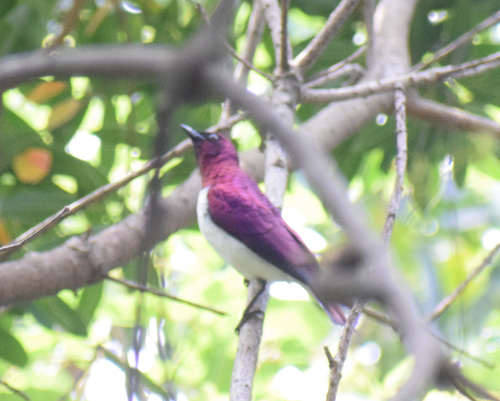 Violet-backed Starling
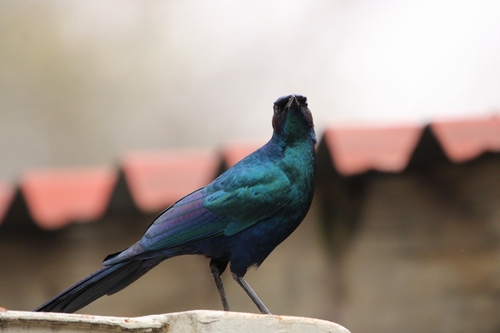 Burchell's Starling
In breve
Il segno distintivo più affidabile è il forte dimorfismo sessuale nel Violet-backed Starling: i maschi adulti sono straordinariamente iridescenti di viola sopra con parti inferiori bianche pure, mentre le femmine sono marroni e fortemente striate, somigliando a un tordo. Il Burchell's Starling, al contrario, non è dimorfico sessualmente e entrambi i sessi mostrano un aspetto lucido uniforme. Il Violet-backed Starling è molto più piccolo e più delicato, spesso si nutre in alto nella chioma, mentre il Burchell's è un grande starling robusto delle foreste dell'Africa meridionale. Se vedi un piccolo starling simile a un tordo con striature audaci, è una femmina di Violet-backed; un grande uccello completamente lucido è il Burchell's. I modelli di ali specifici per i giovani e gli immaturi non sono descritti per nessuna delle due specie nelle fonti.
Consigli di identificazione
- Il dimorfismo sessuale è fondamentale: Solo il Violet-backed Starling è fortemente dimorfico sessualmente. I maschi adulti sono iridescenti di viola sopra con parti inferiori bianche pure; le femmine sono marroni e fortemente striate, simili a un tordo. Il Burchell's Starling non mostra tale differenza tra i sessi.
- Dimensione e struttura: Il Burchell's è molto più grande e pesante (80 g) rispetto al Violet-backed Starling (circa 17–18 cm di lunghezza, molto più leggero). Sul campo, il Burchell's appare robusto e lungo, mentre il Violet-backed è compatto e delicato.
- Contrasto del piumaggio: Il maschio di Violet-backed mostra un forte contrasto tra le parti superiori viola e le parti inferiori bianche, mai visto nel Burchell's. La femmina di Violet-backed è marrone e fortemente striata, a differenza di qualsiasi Burchell's.
- Lucentezza uniforme: Il Burchell's Starling è uniformemente lucido (blu o verdastro, a seconda della luce), senza un forte contrasto di colore o striature. Se vedi uno starling con lucentezza uniforme e senza pattern, è il Burchell's.
- Striature: Solo la femmina di Violet-backed mostra forti striature sopra e sotto; il Burchell's non è mai striato.
- Colore dell'iride: Entrambe le specie hanno iridi gialle, quindi questo non è un carattere distintivo.
- Becco e zampe: Entrambi hanno becchi e zampe nere; non utile per la separazione.
- Altezza di foraggiamento: Il Violet-backed è più spesso visto in alto nella chioma, raramente a terra. Il Burchell's è più probabile che venga visto a livelli più bassi o in boschi più aperti.
- Sovrapposizione dell'habitat: Entrambi possono verificarsi in boschi e savane, ma il Burchell's è limitato all'Africa meridionale, mentre il Violet-backed è più diffuso.
- Confusione giovanile/immatura: Non ci sono modelli distintivi di ali giovanili o immaturi descritti per nessuna delle due specie, quindi non fare affidamento sul pattern di volo per la separazione.
- Comportamento: Se vedi uno starling che cattura insetti nella chioma, è più probabile che sia un Violet-backed. Il Burchell's non è noto per questo comportamento.
- Posizionamento del nido: Non utile sul campo, ma il Violet-backed nidifica in crepe degli alberi a pochi metri da terra; le abitudini di nidificazione del Burchell's non sono descritte qui.
- Fagotti misti: In fagotti misti di starling, usa dimensione e contrasto del piumaggio per individuare il Violet-backed tra i Burchell's più grandi e uniformi.
- Abbondanza locale: Nell'Africa meridionale, il Burchell's è lo starling lucido grande di default; il Violet-backed è meno comune e più probabile in situazioni di margine forestale o chioma.
- Trappole comuni: La femmina di Violet-backed può essere scambiata per un tordo a causa delle striature; il Burchell's non è mai striato e sempre lucido.
Taglia
Il Burchell's Starling è sostanzialmente più grande e pesante, con una massa adulta di circa 80 g [wikidata], rispetto al molto più piccolo Violet-backed Starling, che raggiunge solo circa 17–18 cm di lunghezza [wikipedia]. Sul campo, il Burchell's appare più massiccio e robusto, mentre il Violet-backed è visibilmente più delicato e compatto. Questa differenza di dimensione è spesso evidente anche a distanza, specialmente quando entrambe le specie sono viste nello stesso habitat.
Piumaggio
I maschi adulti di Violet-backed Starling sono inconfondibili con la loro testa e schiena iridescenti di viola, che contrastano nettamente con le parti inferiori bianche pure. Le femmine sono marroni sopra con forti striature simili a un tordo e parti inferiori bianche fortemente striate. Entrambi i sessi hanno iridi gialle e becchi e zampe nere. Il Burchell's Starling, al contrario, non mostra dimorfismo sessuale: entrambi i sessi sono uniformemente lucidi (tipicamente blu o verdastri, anche se la tonalità esatta non è specificata nelle note) e mancano del forte contrasto o delle striature viste nel Violet-backed. Non c'è menzione di modelli distintivi di ali giovanili o immaturi per nessuna delle due specie nelle fonti, quindi i segni di volo specifici per età non possono essere utilizzati per la separazione. Se vedi un uccello con un piumaggio chiaro, lucido e senza segni, è il Burchell's; se vedi un forte contrasto di colore o forti striature, è il Violet-backed.
Comportamento
Il Violet-backed Starling si nutre spesso in alto nella chioma, raramente scendendo a terra, e a volte cattura insetti in volo come un catturatore di insetti. Il Burchell's Starling è descritto come monogamo e presumibilmente sedentario, ma non viene fornito alcun comportamento di foraggiamento specifico. In fagotti misti o presso alberi fruttiferi, il Violet-backed è più probabile che venga visto sopra il livello degli occhi, mentre il Burchell's può essere più evidente e avvicinabile a causa della sua dimensione.
Habitat
Entrambe le specie si trovano in boschi e savane, ma il Violet-backed Starling è diffuso in tutta l'Africa subsahariana, preferendo i margini forestali e le chiome boschive. Il Burchell's Starling è nativo delle foreste secche e mesiche e delle savane dell'Africa meridionale. Se stai osservando gli uccelli nell'Africa meridionale e incontri un grande starling lucido in un bosco aperto, è probabile che sia il Burchell's; uno starling più piccolo e delicato, specialmente nella chioma, potrebbe essere il Violet-backed.
Violet-backed Starling · Burchell's Starling · I miei uccelli difficili