

variegated laughingthrush vs black-faced laughingthrush
Trochalopteron variegatum versus Trochalopteron affine
Jogue um quiz com variegated laughingthrush e black-faced laughingthrush
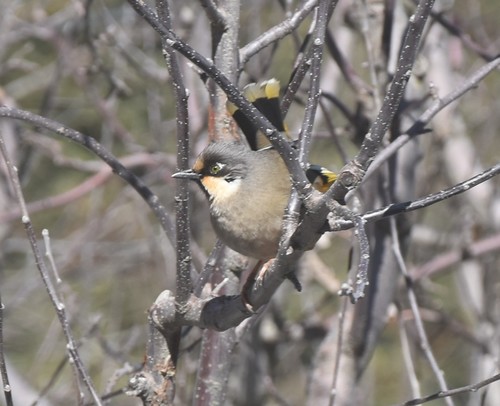 variegated laughingthrush
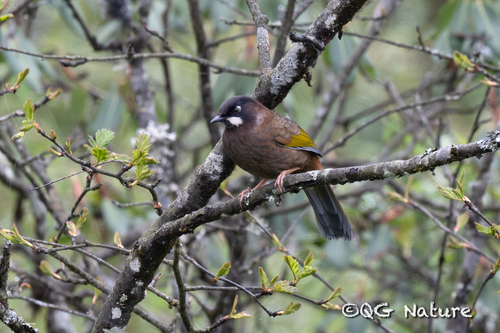 black-faced laughingthrush
Em resumo
A marca de campo mais confiável para separar o variegated laughingthrush do black-faced laughingthrush é a presença de amarelo na asa e na cauda: o variegated (especialmente a subespécie T. v. variegatum) apresenta penas primárias e secundárias amarelas distintas e penas externas da cauda amarelas, enquanto o black-faced laughingthrush não possui esses tons amarelos e é geralmente mais uniformemente colorido. Ambas as espécies são de tamanho médio, semelhantes em estrutura e massa, mas a combinação do corpo oliva-amarelado, faixa preta na garganta e contrastes amarelos nas asas/cauda do variegated laughingthrush é única. Diferenças sutis ao redor do rosto e da garganta, bem como a distribuição regional, também podem ajudar, mas a coloração das asas e da cauda é a pista de campo mais direta quando visível.
Dicas de identificação
- Amarelo na asa e na cauda (apenas Variegated): Procure por penas primárias e secundárias amarelas e penas externas da cauda amarelas, especialmente em T. v. variegatum. Esta é a marca de campo mais confiável e é visível tanto em aves empoleiradas quanto em voo. O black-faced laughingthrush nunca mostra amarelo nessas áreas.
- Coberturas maiores com ponta canela e coberturas primárias pretas (Variegated): Em aves empoleiradas ou em boas vistas de voo, note as pontas canela e as coberturas pretas, que estão ausentes no black-faced.
- Asa e cauda uniformes (Black-faced): O black-faced laughingthrush tem uma asa e cauda mais uniformes, de cor cinza-marrom, sem qualquer destaque amarelo ou canela.
- Padrão facial: O variegated laughingthrush tem uma área preta ao redor do bico que se estende até o olho, interrompida por um anel ocular branco, e uma área amarelada na base da mandíbula que desbota para um tom esbranquiçado. O black-faced laughingthrush é descrito como tendo um rosto mais escuro e uniforme, mas as diferenças detalhadas no padrão facial são sutis e menos confiáveis do que a cor das asas/cauda.
- Faixa na garganta (Variegated): Uma faixa preta no centro da garganta está presente no variegated laughingthrush; verifique essa marca em vistas próximas. O black-faced não possui esse recurso.
- Testa e coroa: O variegated (T. v. variegatum) apresenta uma testa amarelada com uma coroa cinza-acastanhada; T. v. simile é mais opaca, mas ainda mais claro que o black-faced, que é geralmente mais uniformemente escuro na cabeça.
- Padrão da cauda: Ambas têm uma cauda grande com uma faixa subterminal cinza e ponta branca, então isso não é um separador. Apenas as penas externas da cauda amarelas (Variegated) são diagnósticas.
- Confusão de subespécies: Se você encontrar T. v. simile (Variegated), o amarelo nas asas e na cauda é substituído por cinza, tornando a separação do black-faced mais difícil. Nesses casos, confie mais no padrão facial, faixa na garganta e diferenças sutis na coloração geral.
- Distribuição: Se você estiver nas montanhas ocidentais ou centrais do Himalaia (por exemplo, Himachal Pradesh, Uttarakhand, oeste do Nepal), é mais provável que veja o variegated; nas montanhas orientais do Himalaia (por exemplo, Arunachal Pradesh, leste do Nepal, Butão, Mianmar), o black-faced é mais provável. Em zonas de sobreposição (leste do Nepal, Butão), use marcas de plumagem.
- Tamanho e estrutura: Ambas são semelhantes em tamanho e forma, então não confie em volume ou comprimento para separação.
- Aves juvenis/imaturas: Nenhuma diferença específica de padrão de asa juvenil ou imaturo é descrita nas fontes, então use a coloração das asas e cauda de adultos para todas as idades, a menos que mais informações estejam disponíveis.
- Diferenças sexuais: Nenhum dimorfismo sexual é mencionado para qualquer uma das espécies; todas as marcas de campo se aplicam a ambos os sexos.
- Comportamento: Ambas as espécies se comportam de maneira semelhante em campo, então não use comportamento como separador.
- Voz: Nenhuma diferença vocal diagnóstica é descrita nas fontes fornecidas.
- Armadilhas: Em luz fraca ou vistas distantes, o amarelo nas asas e cauda do variegated pode ser perdido; sempre tente ter uma boa visão das penas de voo e das bordas da cauda. Em subespécies mais opacas ou plumagens desgastadas, confie no padrão facial e na faixa na garganta.
Tamanho
Ambas as espécies são muito semelhantes em tamanho, com o variegated laughingthrush pesando em média cerca de 65 g e o black-faced laughingthrush cerca de 68 g [wikidata]. Ambas medem cerca de 24–26 cm de comprimento [wikipedia]. No campo, nenhuma das espécies é provável de parecer visivelmente maior ou menor que a outra, e o tamanho sozinho não é um separador confiável.
Plumagem
As diferenças de plumagem são mais pronunciadas na asa e na cauda. O variegated laughingthrush adulto (T. v. variegatum) apresenta penas primárias e secundárias amarelas, penas externas da cauda amarelas e coberturas maiores com ponta canela, com coberturas primárias pretas. A cauda tem uma faixa subterminal cinza e uma ponta branca. O rosto apresenta uma área preta ao redor do bico que se estende até o olho, interrompida por um anel ocular branco, e uma testa amarelada com uma coroa cinza-acastanhada. A garganta tem uma faixa central preta. A subespécie T. v. simile é mais opaca, com primárias, secundárias e penas externas da cauda cinzas (não amarelas), e uma testa amarelada mais opaca, mas ainda mostra algum contraste em comparação com o black-faced. O black-faced laughingthrush não possui amarelo nas asas e na cauda, apresentando um rosto e coloração geral mais uniformes e escuros. Ambas as espécies têm uma cauda grande com uma faixa subterminal cinza e ponta branca, mas apenas o variegated mostra amarelo nas penas de voo. Plumagens juvenis e imaturas não são especificamente descritas nas fontes, então o padrão de asa/cauda de adultos é o principal separador.
Comportamento
Nenhuma diferença comportamental distintiva é notada nas fontes para separação em campo. Ambas as espécies são típicas de laughingthrushes, provavelmente vistas forrageando em bandos em sub-bosques densos ou florestas secundárias, movendo-se ativamente através do meio do dossel e da parte inferior da copa.
Habitat
O variegated laughingthrush é encontrado principalmente no subcontinente indiano ao norte, especialmente nas elevações baixas a médias das montanhas ocidentais e centrais do Himalaia (Butão, Índia, Nepal, Tibete) [wikipedia]. O black-faced laughingthrush é encontrado mais a leste, desde o leste do Nepal através de Arunachal Pradesh, Butão, sudeste do Tibete e até Mianmar [wikipedia]. Há alguma sobreposição de distribuição no leste do Nepal e no Butão, mas na maioria das áreas, as duas espécies são separadas geograficamente. As preferências de habitat são amplamente semelhantes, com ambas ocupando colinas florestadas e regiões montanhosas.
variegated laughingthrush · black-faced laughingthrush · Minhas aves difíceis