

thick-billed kingbird vs suiriri-cinza
Tyrannus crassirostris versus Tyrannus dominicensis
Jogue um quiz com thick-billed kingbird e suiriri-cinza
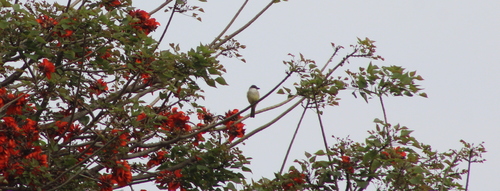 thick-billed kingbird
 suiriri-cinza
Em resumo
A marca de campo mais confiável entre o thick-billed kingbird e o suiriri-cinza é o bico: o thick-billed kingbird tem um bico notavelmente mais robusto e pesado, enquanto o bico do suiriri-cinza é forte, mas menos profundo. Os juvenis de suiriri-cinza apresentam bordas ruivas nas coberturas das asas, no dorso e na cauda, que nunca estão presentes no thick-billed. Nos adultos, o thick-billed kingbird tem a parte superior mais escura e com um tom mais oliva e uma barriga amarela, enquanto o suiriri-cinza é cinza mais claro por cima e branco por baixo. Ambas as espécies têm manchas amarelas ocultas na coroa, mas a estrutura do bico, a cor da parte inferior e a aparência geral são as melhores pistas de campo. O habitat e a distribuição raramente se sobrepõem, mas confusões podem ocorrer com vagantes.
Dicas de identificação
- Tamanho e forma do bico: O thick-billed kingbird tem um bico muito mais robusto e profundo do que o suiriri-cinza. Em boa luz, procure um bico pesado, quase oversized no thick-billed; o bico do suiriri-cinza é forte, mas mais esguio em perfil.
- Plumagem juvenil: Apenas os juvenis de suiriri-cinza têm bordas ruivas (ferrugem) nas coberturas das asas, no dorso e na cauda. Se você ver essas bordas quentes, especialmente em voo ou em pássaros empoleirados, é um suiriri-cinza.
- Cor da parte inferior: O thick-billed kingbird sempre apresenta partes inferiores amareladas (de canário pálido a primrose profundo), especialmente na barriga e nas coberturas da cauda. O suiriri-cinza é branco por baixo, com apenas uma leve lavagem cinza no peito—nunca amarelo.
- Tom da parte superior: O thick-billed kingbird é mais escuro e mais oliva por cima, enquanto o suiriri-cinza é um cinza mais claro e limpo. Isso é sutil, mas pode ajudar em boa luz.
- Padrão facial: O suiriri-cinza tem uma máscara escura distinta ao redor do olho, dando uma aparência de bandido. O thick-billed tem bochechas brancas e um rosto menos marcado.
- Mancha na coroa: Ambas as espécies têm uma mancha amarela oculta na coroa, mas ela raramente é visível e não é confiável para identificação em campo.
- Cauda e bordas das asas: A cauda e as asas do thick-billed kingbird têm bordas amarelas pálidas ou canela, enquanto as do suiriri-cinza são mais uniformemente marrons. Isso é sutil e melhor visto de perto.
- Tamanho e aparência geral: O thick-billed kingbird é mais robusto, especialmente na cabeça e no bico, e muitas vezes parece mais pesado em geral. O suiriri-cinza é ligeiramente menor e mais esguio.
- Comportamento: Ambos saltam de poleiros altos, mas o thick-billed pode parecer mais deliberado e robusto em seus movimentos. O suiriri-cinza é ousado e agressivo, muitas vezes atacando pássaros maiores.
- Vocalizações: Se você ouvir um trinado alto e rolante "pipiri, pipiri", é um suiriri-cinza. Os chamados do thick-billed não são tão distintos ou trinado.
- Habitat e distribuição: Nos EUA, o thick-billed kingbird é encontrado no árido sudoeste, especialmente ao longo de rios e florestas abertas. O suiriri-cinza é uma espécie caribenha e costeira, raramente encontrada no interior ou em elevações. Se você estiver no Arizona ou no Novo México, o thick-billed é esperado; na Flórida ou no Caribe, o suiriri-cinza é o padrão.
- Sexo e estação: Ambos os sexos são semelhantes em ambas as espécies, e a variação sazonal é menor, exceto pelo desgaste das penas. Diferenças sutis no tom da parte superior no thick-billed (menos oliva, amarelo mais pálido) podem ser devido ao desgaste, não à idade ou sexo.
- Armadilhas: Não confie na mancha amarela da coroa, pois geralmente está oculta. O tamanho do bico e a cor da parte inferior são mais confiáveis. A plumagem juvenil é diagnóstica apenas para o suiriri-cinza.
- Quando em dúvida: Concentre-se na estrutura do bico, na cor da parte inferior e na máscara facial. Se você ver amarelo por baixo e um bico pesado, é o thick-billed; se for branco por baixo com uma máscara escura, é o suiriri-cinza.
- Visões de voo: Os juvenis de suiriri-cinza podem mostrar ruivo nas asas e na cauda em voo, o que o thick-billed nunca mostra. Os adultos são melhor separados pelo bico, cor da parte inferior e aparência geral.
Tamanho
O thick-billed kingbird é o maior e mais pesado dos dois, com uma média de cerca de 25 cm de comprimento e 52–59 g de massa. O suiriri-cinza é ligeiramente menor, com cerca de 23 cm e 37–52 g (média de 43,8 g). No campo, essa diferença de tamanho é sutil, mas o thick-billed muitas vezes parece mais robusto, especialmente na cabeça e no bico.
Plumagem
- Pássaros juvenis/imaturos: Os juvenis de suiriri-cinza têm bordas ruivas distintas nas coberturas das asas, no dorso e na cauda, que estão ausentes no thick-billed de qualquer idade. Esta é a marca mais confiável específica para a idade em voo ou empoleirados.
- Adultos: O thick-billed kingbird tem uma coroa e uma testa marrom-cinzentas escuras, com um dorso cinza-oliva pálido e uma barriga amarela (variando de pálido a primrose profundo). O suiriri-cinza é mais claro em geral, com partes superiores cinzas, asas e cauda marrons, e partes inferiores brancas com apenas uma leve lavagem cinza no peito. Ambas as espécies têm uma mancha amarela oculta na coroa, mas ela raramente é visível.
- Padrão da cabeça: O suiriri-cinza mostra uma máscara escura ao redor dos olhos, enquanto o thick-billed tem bochechas brancas e uma máscara facial menos distinta.
- Cauda e asas: Ambas têm caudas marrons, mas a cauda e as asas do thick-billed têm bordas amarelas pálidas ou canela, enquanto as do suiriri-cinza são mais uniformemente marrons, sem bordas fortes.
Comportamento
Ambas as espécies são defensoras agressivas de seus territórios, frequentemente atacando pássaros maiores. O thick-billed kingbird normalmente caça de poleiros altos expostos, saltando para pegar insetos em voo (caçando). O suiriri-cinza também é altamente territorial e conhecido por sua ousadia, às vezes atacando rapinas e mamíferos. Seu estilo de forrageamento é semelhante, mas o thick-billed pode parecer mais deliberado e robusto em seus movimentos.
Habitat
O thick-billed kingbird é encontrado no sudoeste dos EUA, México e Guatemala, preferindo florestas ripárias, planícies alagadas abertas e florestas tropicais decíduas, frequentemente em elevações de até 2.000 m. O suiriri-cinza é uma espécie caribenha e costeira, geralmente em áreas abertas, bordas e perto da água, mas não em habitats áridos ou de montanha preferidos pelo thick-billed. A sobreposição é rara, exceto para vagantes, então o contexto é uma pista forte.
Voz
O suiriri-cinza tem um trinado alto e rolante descrito como "pipiri, pipiri," que é distinto e a fonte de muitos nomes locais. As vocalizações do thick-billed kingbird são menos bem descritas nas fontes, mas não são notadas como semelhantes às chamadas altas e trinado do suiriri-cinza. Se você ouvir o chamado clássico "pipiri", isso favorece fortemente o suiriri-cinza.
thick-billed kingbird · suiriri-cinza · Minhas aves difíceis