

alcaravão vs batuiruçu-de-axila-preta
Burhinus oedicnemus versus Pluvialis squatarola
Jogue um quiz com alcaravão e batuiruçu-de-axila-preta
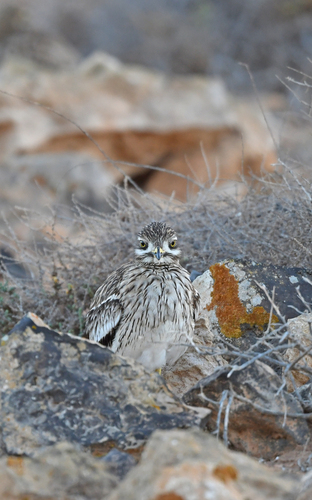 alcaravão
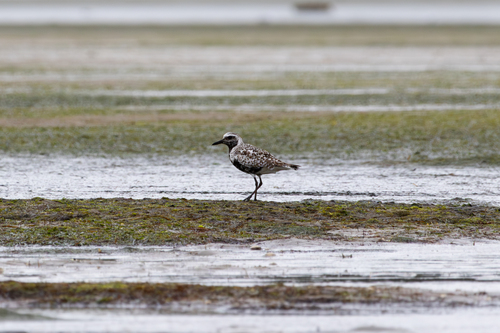 batuiruçu-de-axila-preta
Em resumo
A separação mais confiável entre alcaravão e batuiruçu-de-axila-preta, especialmente em voo, é o padrão das asas: o alcaravão apresenta marcas de asas pretas e brancas ousadas, enquanto o batuiruçu-de-axila-preta (de todas as idades) tem axilas pretas e flancos internos visíveis como manchas escuras na parte inferior da asa. Os batuiruçus-de-axila-preta juvenis e de primeiro inverno têm um padrão distinto de asas superiores preto e branco, mas os imaturos de alcaravão se assemelham aos adultos. Estruturalmente, o alcaravão é maior, com pernas mais longas e olhos 'gogó', com uma base de bico amarela grossa, enquanto o batuiruçu-de-axila-preta é mais compacto, com um bico totalmente preto mais pesado e pernas mais curtas. No chão, a plumagem críptica e arenosa do alcaravão e os olhos amarelos marcantes contrastam com o jeito típico de batuiruçu-de-axila-preta e as mudanças sazonais de plumagem. Ambos podem ser encontrados em habitats abertos, mas o alcaravão prefere solo seco e pedregoso, enquanto o batuiruçu-de-axila-preta é costeiro.
Dicas de identificação
- Padrão da parte inferior da asa em voo (todas as idades): O batuiruçu-de-axila-preta sempre mostra axilas pretas e flancos internos em voo, criando uma mancha escura na base da parte inferior da asa—o alcaravão nunca mostra isso, em vez disso, exibe marcas de asas pretas e brancas ousadas.
- Padrão da parte superior da asa em voo: O alcaravão tem marcas de asas pretas e brancas marcantes visíveis de cima e de baixo; o batuiruçu-de-axila-preta não possui essas, mostrando asas mais simples com apenas sutis contrastes claros e escuros.
- Partes superiores juvenis/de primeiro inverno: Os batuiruçus-de-axila-preta juvenis têm um dorso mais escuro com bordas de penas brancas cremosas, enquanto os imaturos de alcaravão são arenosos e crípticos, semelhantes aos adultos.
- Estrutura do bico: O alcaravão tem um bico forte amarelo e preto, com amarelo na base; o batuiruçu-de-axila-preta tem um bico mais curto, mais pesado e totalmente preto (24–34 mm), notavelmente mais grosso e mais curto em relação ao tamanho da cabeça.
- Cor e tamanho dos olhos: O alcaravão tem olhos muito grandes e amarelos brilhantes—frequentemente descritos como 'gogó'—enquanto o batuiruçu-de-axila-preta tem olhos escuros e sem destaque.
- Pernas: O alcaravão tem pernas longas e amarelas pálidas, dando-lhe uma postura alta e ereta; o batuiruçu-de-axila-preta tem pernas mais curtas e escuras, típicas de batuirucus.
- Forma do corpo e postura: O alcaravão se mantém alto e ereto, frequentemente curvado e imóvel; o batuiruçu-de-axila-preta é mais compacto, com uma postura horizontal e comportamento de alimentação ativo.
- Plumagem de reprodução adulta: O batuiruçu-de-axila-preta na primavera/verão é audaciosamente preto e branco, com um rosto, pescoço, peito e barriga pretos, e um rabo branco—o alcaravão é sempre críptico, marrom-areia, nunca preto e branco.
- Plumagem não reprodutiva adulta: O batuiruçu-de-axila-preta torna-se cinza liso por cima com um peito manchado e barriga branca; o alcaravão permanece arenoso e estriado, sem forte mudança sazonal.
- Padrão facial: O alcaravão tem um rosto simples com um olho amarelo forte e base de bico; o batuiruçu-de-axila-preta pode mostrar um supercílios fraco na plumagem não reprodutiva, mas carece do olhar 'gogó'.
- Cauda e rabo: O batuiruçu-de-axila-preta tem um rabo branco e cauda com faixas pretas, visíveis em voo; a cauda do alcaravão é menos contrastante e não é uma marca de campo chave.
- Contexto do habitat: O alcaravão quase nunca é encontrado em lamas costeiras ou praias; o batuiruçu-de-axila-preta é quase sempre costeiro fora da temporada de reprodução.
- Comportamento: O alcaravão é frequentemente imóvel e depende de camuflagem; o batuiruçu-de-axila-preta é ativo, correndo e parando de maneira típica de batuirucu.
- Impressão de tamanho: O alcaravão parece muito maior e com pernas mais longas do que o batuiruçu-de-axila-preta, mesmo à distância.
- Armadilha: Em luz fraca ou à distância, a plumagem críptica do alcaravão pode fazê-lo parecer semelhante a um grande batuiruçu pálido, mas o olho e o bico amarelos, pernas longas e padrão de asas em voo são sempre diagnósticos.
Tamanho
alcaravão is noticeably larger and heavier: 38–46 cm in length, 76–88 cm wingspan, and 290–535 g in weight [wikipedia]. batuiruçu-de-axila-preta is smaller and more compact, at 27–30 cm length, 71–83 cm wingspan, and 190–280 g (up to 345 g pre-migration) [wikipedia]. In the field, alcaravão's long legs and upright stance make it appear even larger relative to batuiruçu-de-axila-preta's more squat, plover-like profile.
Plumagem
-
Juvenile/First-winter: batuiruçu-de-axila-preta juveniles and first-winters have a blacker back with creamy white feather edges and, crucially, always show black axillaries and inner flanks in flight—this is diagnostic at all ages. alcaravão immatures are similar to adults and lack this underwing contrast, instead showing bold black and white wing markings in flight.
-
Adult breeding: batuiruçu-de-axila-preta adults in spring/summer are strikingly black and white above, with a black face, neck, breast, and belly, bordered with white, and a white rump and barred tail. alcaravão adults are cryptically patterned brown and sandy above, with no black belly or face, and have a strong yellow and black bill and large yellow eyes.
-
Adult non-breeding: batuiruçu-de-axila-preta becomes plain grey above with a speckled breast and white belly. alcaravão remains cryptic and sandy, with no strong seasonal change.
-
In flight: alcaravão shows bold black and white wing markings (upper and underwing), while batuiruçu-de-axila-preta shows black axillaries and inner flanks, and a white rump with black-banded tail.
Comportamento
O alcaravão é frequentemente visto em pé, ereto, com pernas longas e proeminentes e uma postura curvada e imóvel, especialmente durante o dia, quando é menos ativo. É principalmente crepuscular ou noturno, frequentemente permanecendo parado e dependendo da camuflagem. Em voo, o alcaravão aparece com asas longas e largas, com batidas lentas e profundas e flashes de asas pretas e brancas proeminentes.
O batuiruçu-de-axila-preta é mais ativo durante o dia, frequentemente visto correndo e pausando de maneira típica de batuirucu em lamas abertas ou praias. Em voo, é rápido e direto, com asas pontudas e corpo compacto. No chão, é mais provável que seja visto em bandos, especialmente fora da temporada de reprodução.
Habitat
O alcaravão prefere solo seco, aberto, pedregoso ou arenoso, frequentemente em charnecas interiores, campos em pousio ou habitats semelhantes a estepes. Evita lamas costeiras úmidas e raramente é visto perto da água.
O batuiruçu-de-axila-preta está fortemente associado a habitats costeiros fora da temporada de reprodução: estuários arenosos ou lamacentos, flats de maré e praias. Reproduz-se na tundra ártica, mas é quase sempre costeiro durante a migração e inverno.