

Motmot

southern penduline-tit vs spike-heeled lark

Anthoscopus minutus versus Chersomanes albofasciata

Jogue um quiz com southern penduline-tit e spike-heeled lark
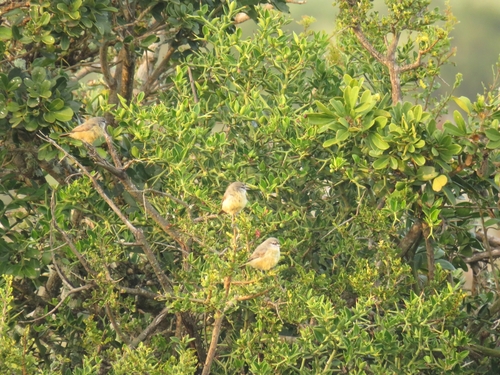
southern penduline-tit (Anthoscopus minutus) southern penduline-tit
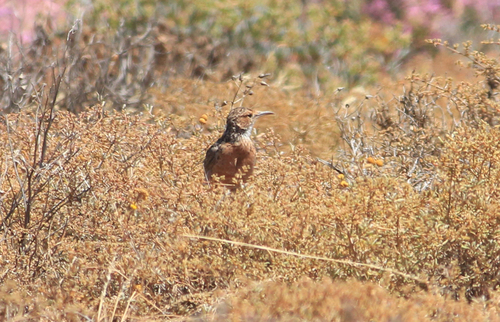
spike-heeled lark (Chersomanes albofasciata) spike-heeled lark

Mídia

Carregando…

Em resumo

The most reliable way to separate Southern Penduline Tit from Spike-heeled Lark is by overall structure and size: the tit is a tiny, compact bird with a short bill, while the lark is much larger and longer-billed. Both species occur in dry, shrubby habitats in southern Africa, but the lark is nearly five times heavier and has a noticeably different silhouette. Plumage is less helpful due to limited details, but the tit’s small, round appearance and the lark’s elongated, ground-dwelling jizz are strong clues. If seen in flight or perched, focus first on body size and bill shape.

Dicas de identificação

  1. Size is the fastest check: Southern Penduline Tit is extremely small; if the bird appears sparrow-sized or larger, it is almost certainly a Spike-heeled Lark (works for all ages and sexes).
  2. Bill shape: The tit has a very short, fine bill suited for picking insects from foliage, while the lark’s bill is long, slightly decurved, and robust—noticeable even at a distance (all ages).
  3. Jizz and posture: Tits are round-bodied, often upright or acrobatic in trees/bushes; larks are elongated, horizontal, and often seen walking or running on the ground (all ages).
  4. Perching vs. ground: If the bird is foraging in bushes or trees, tit is much more likely; larks are almost always on the ground.
  5. Tail and wing structure: The tit has a short tail and wings, giving a compact look; the lark’s tail and wings are longer, and it may show a more pointed wing shape in flight.
  6. Group size: Tits often move in small, active groups; larks are more solitary or in pairs.
  7. Plumage pitfalls: Both are plain and sandy-toned, but the tit lacks the streaking or subtle patterning often seen on larks. However, this is subtle and not always reliable.
  8. Flight style: Tits fly in short, weak bursts between bushes; larks flush with a stronger, undulating flight and may fly further before landing.
  9. Habitat context: Dense shrub or thornveld points to tit; open, grassy or sparsely vegetated ground to lark.
  10. Vocalizations: Not diagnostic with current notes, but larks often sing from the ground or low perches, while tit calls are high-pitched and given in social flocks.
  11. Season and sex: No seasonal or sexual plumage differences are diagnostic for separation here.
  12. Juvenile confusion: No distinctive juvenile or immature wing patterns are described for either species, so focus on structure and behavior for young birds.
  13. Common pitfalls: Beginners may misjudge size at a distance—use nearby objects or other birds for scale.
  14. Local abundance: Both species can be locally common, so do not rely on rarity for ID.
  15. If in doubt: Always check bill length and body size first—these are the most consistently reliable marks in the field.

Tamanho

Spike-heeled Lark is much larger, with an average body mass of about 24.7g [wikidata], compared to the much smaller Southern Penduline Tit (no mass given, but all Anthoscopus are among Africa’s tiniest passerines). The lark is visibly bulkier and longer, with a proportionally longer bill and tail. In the field, the tit appears as a tiny, almost wren-like bird, while the lark is closer in size to a pipit or small thrush.

Plumagem

No detailed age-specific or wing pattern marks are given for either species. Both species are adapted to dry, open habitats, but the Southern Penduline Tit typically shows a plain, soft-toned plumage with no strong patterning, while larks (including Spike-heeled) often have more cryptic, streaked or sandy coloration to blend with the ground. However, without specifics, plumage should not be relied on for separation here.

Comportamento

Southern Penduline Tit is highly active, often seen flitting through bushes and small trees, rarely on the ground, and frequently in small groups. It forages acrobatically, sometimes hanging upside down. In contrast, Spike-heeled Lark is a terrestrial species, usually seen walking or running on open ground, often singly or in pairs. Its movements are more deliberate, and it may flush with a low, undulating flight if disturbed.

Habitat

Both species share dry shrubland and savannah habitats in southern Africa, but the tit is more likely to be found in shrubby vegetation, sometimes in Mediterranean-type scrub, while the lark favors open, seasonally wet or dry grassland as well as shrubland. If you see a bird in dense bushes, tit is more likely; on open ground, especially in grassland, lark is favored.

Enviar uma descrição melhor

Use as mesmas seções da comparação. Seu texto é publicado na hora.

The most reliable way to separate Southern Penduline Tit from Spike-heeled Lark is by overall structure and size: the tit is a tiny, compact bird with a short bill, while the lark is much larger and longer-billed. Both species occur in dry, shrubby habitats in southern Africa, but the lark is nearly five times heavier and has a noticeably different silhouette. Plumage is less helpful due to limited details, but the tit’s small, round appearance and the lark’s elongated, ground-dwelling jizz are strong clues. If seen in flight or perched, focus first on body size and bill shape.

  1. Size is the fastest check: Southern Penduline Tit is extremely small; if the bird appears sparrow-sized or larger, it is almost certainly a Spike-heeled Lark (works for all ages and sexes).
  2. Bill shape: The tit has a very short, fine bill suited for picking insects from foliage, while the lark’s bill is long, slightly decurved, and robust—noticeable even at a distance (all ages).
  3. Jizz and posture: Tits are round-bodied, often upright or acrobatic in trees/bushes; larks are elongated, horizontal, and often seen walking or running on the ground (all ages).
  4. Perching vs. ground: If the bird is foraging in bushes or trees, tit is much more likely; larks are almost always on the ground.
  5. Tail and wing structure: The tit has a short tail and wings, giving a compact look; the lark’s tail and wings are longer, and it may show a more pointed wing shape in flight.
  6. Group size: Tits often move in small, active groups; larks are more solitary or in pairs.
  7. Plumage pitfalls: Both are plain and sandy-toned, but the tit lacks the streaking or subtle patterning often seen on larks. However, this is subtle and not always reliable.
  8. Flight style: Tits fly in short, weak bursts between bushes; larks flush with a stronger, undulating flight and may fly further before landing.
  9. Habitat context: Dense shrub or thornveld points to tit; open, grassy or sparsely vegetated ground to lark.
  10. Vocalizations: Not diagnostic with current notes, but larks often sing from the ground or low perches, while tit calls are high-pitched and given in social flocks.
  11. Season and sex: No seasonal or sexual plumage differences are diagnostic for separation here.
  12. Juvenile confusion: No distinctive juvenile or immature wing patterns are described for either species, so focus on structure and behavior for young birds.
  13. Common pitfalls: Beginners may misjudge size at a distance—use nearby objects or other birds for scale.
  14. Local abundance: Both species can be locally common, so do not rely on rarity for ID.
  15. If in doubt: Always check bill length and body size first—these are the most consistently reliable marks in the field.

Spike-heeled Lark is much larger, with an average body mass of about 24.7g [wikidata], compared to the much smaller Southern Penduline Tit (no mass given, but all Anthoscopus are among Africa’s tiniest passerines). The lark is visibly bulkier and longer, with a proportionally longer bill and tail. In the field, the tit appears as a tiny, almost wren-like bird, while the lark is closer in size to a pipit or small thrush.

No detailed age-specific or wing pattern marks are given for either species. Both species are adapted to dry, open habitats, but the Southern Penduline Tit typically shows a plain, soft-toned plumage with no strong patterning, while larks (including Spike-heeled) often have more cryptic, streaked or sandy coloration to blend with the ground. However, without specifics, plumage should not be relied on for separation here.

Southern Penduline Tit is highly active, often seen flitting through bushes and small trees, rarely on the ground, and frequently in small groups. It forages acrobatically, sometimes hanging upside down. In contrast, Spike-heeled Lark is a terrestrial species, usually seen walking or running on open ground, often singly or in pairs. Its movements are more deliberate, and it may flush with a low, undulating flight if disturbed.

Both species share dry shrubland and savannah habitats in southern Africa, but the tit is more likely to be found in shrubby vegetation, sometimes in Mediterranean-type scrub, while the lark favors open, seasonally wet or dry grassland as well as shrubland. If you see a bird in dense bushes, tit is more likely; on open ground, especially in grassland, lark is favored.

Descartar as alterações?

Você tem edições não salvas. Se sair agora, elas serão perdidas.

southern penduline-tit · spike-heeled lark · Minhas aves difíceis