

southern fiscal vs andorinha-de-bando
Lanius collaris versus Hirundo rustica
Jogue um quiz com southern fiscal e andorinha-de-bando
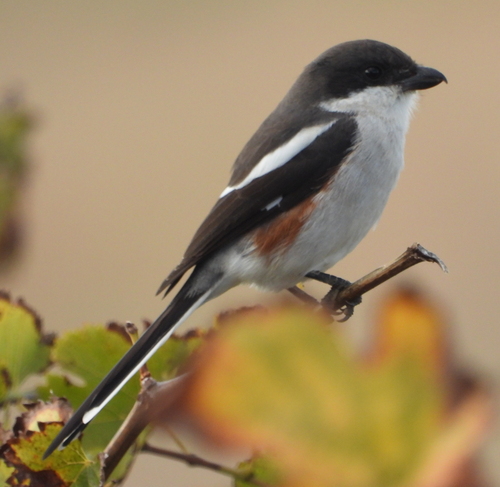 southern fiscal
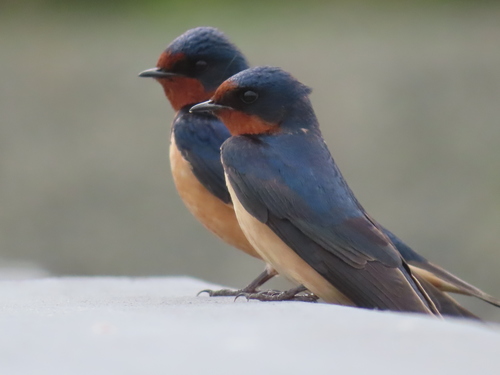 andorinha-de-bando
Em resumo
The most reliable field mark to separate Southern Fiscal from Barn Swallow is overall structure: the fiscal is a chunky, upright shrike with a thick bill and long, white-edged tail, while the swallow is a slender, streamlined aerialist with a deeply forked tail and pointed wings. Juvenile Barn Swallows can be confused with other swallows but not with Southern Fiscal, as the latter never shows a rufous face or blue upperparts. In flight or perched, the fiscal's bold black-and-white pattern and upright stance contrast sharply with the swallow's glossy blue, rufous, and white plumage and constant, agile flight. Even at a distance, the fiscal's heavy bill and shrike jizz are unlike any swallow.
Dicas de identificação
- Structure is key: Southern Fiscal is a thickset, upright shrike with a heavy, hooked bill; Barn Swallow is slender, with a tiny bill and long, pointed wings. This difference is obvious both perched and in flight.
- Tail shape: Fiscal has a long, straight black tail with white outer feathers and tips; Barn Swallow has a deeply forked tail with elongated streamers (especially in adults) and a line of white spots near the tip. Juvenile swallows have shorter, less forked tails but still lack the fiscal's tail pattern.
- Plumage pattern: Fiscal is boldly black above (from crown to tail) with a white 'V' on the back and white underparts. Barn Swallow is glossy blue above, with a rufous face and throat, a dark blue breast band, and off-white underparts. No fiscal ever shows a rufous face or blue gloss.
- Perched posture: Fiscal sits upright, often alone or in pairs, on exposed perches; swallow perches horizontally, usually in groups, on wires or ledges.
- Flight style: Fiscal flies directly from perch to perch, rarely for long distances; swallow is almost always seen in continuous, agile flight, swooping and gliding for insects.
- Bill shape: Fiscal's bill is thick, strong, and hooked (shrike-like); swallow's bill is tiny and delicate, adapted for catching insects in flight.
- Legs and feet: Fiscal has strong, black legs and feet, often visible when perched; swallow's legs are short and weak, rarely seen except when perched.
- Juvenile confusion: Juvenile Barn Swallow is browner and lacks long tail streamers, but still shows a rufous face and never the fiscal's black-and-white pattern. Fiscal juveniles resemble adults, always with the shrike jizz.
- Sex differences: Female fiscal may have a rufous tinge on the lower flank, but never a rufous face; female swallow has shorter tail streamers and duller blue, but otherwise similar to male.
- Voice: Fiscal's calls are harsh, shrike-like, and sometimes imitative; swallow's calls are softer, more musical, and include sharp alarms and twittering.
- Habitat context: Fiscal is territorial and solitary, often in bushy or semi-open areas; swallow is social, found in open airspace, often near water or human structures.
- Feeding behavior: Fiscal hunts from a perch, sometimes impaling prey; swallow catches insects in continuous flight.
- Size impression: Fiscal appears larger and bulkier, especially when perched; swallow is much lighter and more delicate.
- Common pitfalls: Do not confuse juvenile swallow's short tail for a fiscal's tail; look for the rufous face and blue upperparts in swallows, and the upright, heavy-billed look in fiscals.
- Seasonal context: Swallows may be absent or less common outside migration/breeding season; fiscals are resident year-round in their range.
Tamanho
Southern Fiscal is significantly heavier and bulkier (about 40 g) than Barn Swallow (16–22 g). The fiscal measures 21–23 cm long, but much of this is due to its long tail; it appears robust and thickset. Barn Swallow is shorter (17–19 cm) and much more slender, with a long wingspan (32–34.5 cm) and elongated, deeply forked tail streamers (especially in adults). The swallow's light build and long wings are adapted for agile, sustained flight, while the fiscal is a percher and pouncer.
Plumagem
Juvenile Barn Swallow is browner above, with a paler rufous face, whiter underparts, and lacks the long tail streamers of adults. It never shows the black-and-white 'V' back or the bold white outer tail feathers of Southern Fiscal. Adult Barn Swallow has steel-blue upperparts, a rufous forehead, chin, and throat, a dark blue breast band, and off-white underparts. Its deeply forked tail has a line of white spots near the tip. Southern Fiscal, by contrast, is black above (from crown to tail) with a crisp white 'V' on the back, white underparts, and a long black tail with white outer feathers and tips. The fiscal's bill, eyes, and legs are black; females may show a rufous tinge on the lower flank, but never the swallow's rufous face or blue gloss. No age or sex of Barn Swallow ever shows the fiscal's shrike-like pattern or structure.
Comportamento
Southern Fiscal is typically seen perched upright on exposed branches, wires, or posts, scanning for prey, and may be observed impaling prey on thorns. It is mostly sedentary and hunts from a perch. Barn Swallow is almost always seen in flight, swooping and gliding with fluid, acrobatic movements as it catches insects on the wing. When perched, swallows often gather in groups on wires or ledges, sitting horizontally or slightly hunched, never upright like a shrike. The swallow's flight is continuous and graceful, while the fiscal's is direct and purposeful, with frequent stops.
Habitat
Southern Fiscal is found in open habitats across southern Africa, often in bushy areas, farmland, or near human habitation, always with perches available. Barn Swallow is cosmopolitan, breeding in open country, farmland, and near water, often close to human settlements, but is much more likely to be seen in open airspace or perched on wires in flocks. The fiscal is solitary or in pairs, defending territory, while the swallow is gregarious, especially outside the breeding season.
Voz
Southern Fiscal gives a mix of harsh, shrike-like calls, including a distinctive Dzzzttt-dzzzt-dzzzt alarm and a jumble of swizzling notes, sometimes imitating other species. Its song, though sweet, is quiet and used for territory or pair-bonding. Barn Swallow has a variety of calls: a witt or witt-witt, a loud splee-plink when excited, and sharp alarm notes (siflitt for cats, flitt-flitt for raptors). Both species are more vocal in the breeding season, but their calls are quite different in quality and function.