

felosa-dos-juncos vs cigarrinha-malhada
Acrocephalus schoenobaenus versus Locustella naevia
Jogue um quiz com felosa-dos-juncos e cigarrinha-malhada
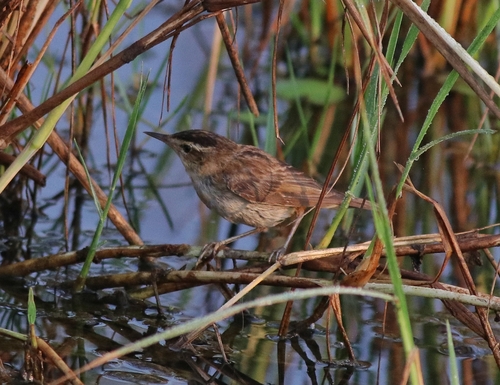 felosa-dos-juncos
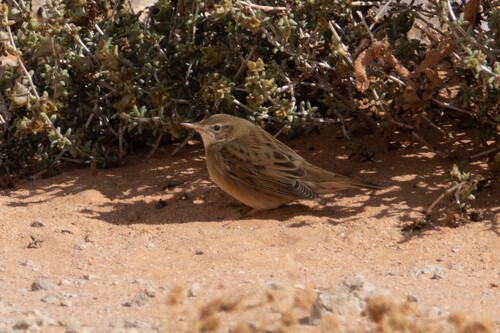 cigarrinha-malhada
Em resumo
The most reliable field mark to separate Sedge Warbler from Grasshopper Warbler is the Sedge Warbler’s bold, pale supercilium (eyebrow) that stands out even at a distance, while Grasshopper Warbler shows only a faint eye-stripe. Juvenile Sedge Warblers may show dark breast spots, but Grasshopper Warbler always has at least some streaking below. In flight or perched, Sedge Warbler looks brighter and more contrasty, with a streaked crown and back, while Grasshopper Warbler is more uniformly pale olive-brown above with a streaked back but a less contrasting face. Structure and behavior also help: Sedge Warbler is more upright and active, often singing from exposed perches, while Grasshopper Warbler is secretive, creeping low in cover and rarely showing itself. Voice is a clincher: Sedge Warbler’s song is a varied, chattering warble, while Grasshopper Warbler’s is a long, mechanical reeling trill.
Dicas de identificação
- Supercilium (eyebrow): Sedge Warbler always shows a strong, pale, well-defined supercilium extending well behind the eye. Grasshopper Warbler has at best a faint, short eye-stripe, often barely visible in the field.
- Crown and face: Sedge Warbler has a black-streaked crown and a flattened forehead, giving a sharp, contrasting head pattern. Grasshopper Warbler’s crown is less contrasting, with streaks but no sharp division, and the face is plainer with greyish cheeks.
- Back and rump: Sedge Warbler’s back is brown and heavily streaked, with a warm, unstreaked brown rump that stands out from the wings. Grasshopper Warbler’s upperparts are pale olive-brown with each feather centrally streaked, but the overall effect is more uniform, and the rump does not contrast strongly.
- Underparts: Sedge Warbler’s underparts are pale and mostly plain, except for dark spots on the breast in juveniles. Grasshopper Warbler always shows some dark streaks or spots on the breast and flanks, giving a streakier look below, especially in fresh plumage.
- Tail: Grasshopper Warbler has a longer, more rounded, reddish-brown tail, often fanned and showing faint bars and streaked under-tail coverts. Sedge Warbler’s tail is shorter, less rounded, and not as obviously reddish or barred.
- Bill: Sedge Warbler has a strong, pointed bill; Grasshopper Warbler’s bill is finer and less robust, but this is subtle in the field.
- Leg color: Sedge Warbler has greyish legs; Grasshopper Warbler’s legs and feet are pale yellowish-brown.
- Behavior: Sedge Warbler is active, often perching in the open, flicking wings and tail, and performing song flights. Grasshopper Warbler is secretive, creeping low in dense cover, rarely perching in the open, and often running along stems with a high-stepping gait.
- Song: Sedge Warbler’s song is a varied, chattering warble with mimicry, given from exposed perches or in flight. Grasshopper Warbler’s song is a long, high-pitched, mechanical reeling trill, often lasting minutes and very hard to locate.
- Alarm call: Sedge Warbler gives a sharp 'chirr' or rattling call; Grasshopper Warbler gives a repeated ticking 'twkit-twkit-twkit'.
- Habitat: Sedge Warbler prefers reedbeds and waterside vegetation and is often seen in the open. Grasshopper Warbler favors rough grass, brambles, gorse, and dense low cover, usually away from open water and rarely seen in the open.
- Flight: Sedge Warbler may be seen making short, parachuting song flights with wings held in a 'V'. Grasshopper Warbler rarely flies except when flushed, and then quickly dives back into cover.
- Juvenile confusion: Juvenile Sedge Warblers can show dark breast spots, but the strong supercilium and streaked crown remain distinctive. Grasshopper Warbler juveniles are streaked below but lack the bold face pattern.
- Seasonal context: In migration or winter, both species may be silent and harder to separate, but Sedge Warbler’s brighter, more contrasting plumage and supercilium remain reliable. Grasshopper Warbler’s secretive behavior and uniform coloration are clues.
- Pitfalls: Beware of confusing Sedge Warbler with Aquatic Warbler (which has a pale crown stripe) or Moustached Warbler, but Grasshopper Warbler is always more uniform, less contrasting, and never shows a strong supercilium.
Tamanho
Both species are similar in length (Sedge Warbler: 11.5–13 cm; Grasshopper Warbler: about 12.5 cm) and weight (Sedge Warbler: ~12 g; Grasshopper Warbler: 11.5–16 g) [wikipedia]. In the hand, Grasshopper Warbler can be slightly heavier, but this is not a reliable field mark. Structurally, Sedge Warbler often looks a bit more upright and pointed, with a stronger bill, while Grasshopper Warbler appears more slender and rounded, especially in the tail.
Plumagem
- Juvenile/immature birds: Juvenile Sedge Warblers show dark spots on the breast, which can be confused with the streaking of Grasshopper Warbler, but Sedge Warbler’s spots are more discrete and the bird retains a strong pale supercilium and a streaked crown. Grasshopper Warbler juveniles and adults both have some dark streaking or spots on the breast and flanks, but lack the bold supercilium and have a more subdued face pattern.
- Adults: Sedge Warbler has a streaked brown back and wings, a warm brown unstreaked rump, a flattened forehead, a black-streaked crown, and a prominent whitish supercilium. Grasshopper Warbler is paler olive-brown above, with each feather having a central dark streak, a faint eye-stripe, greyish cheeks, and reddish-brown tail feathers with faint bars and streaked under-tail coverts. The underparts of Sedge Warbler are pale and plain, while Grasshopper Warbler’s are cream or yellowish-buff with streaks/spots on the breast and flanks.
- Wing and tail: Sedge Warbler’s wings are streaked, and the rump is warmer brown and contrasts with the duller wings. Grasshopper Warbler’s wings are brown with paler edges, and the tail is longer, more rounded, and often fanned to show its reddish color and faint barring.
Comportamento
Sedge Warbler is much more likely to be seen in the open, often singing from the tops of reeds or bushes, and will perform song flights with a parachuting descent and wings held in a 'V'. It is active, often flicking wings and tail. Grasshopper Warbler is extremely skulking, rarely flying except when flushed, and spends most of its time creeping through dense vegetation, running along stems with a high-stepping gait, and often raising/flaring its tail when perched. When disturbed, Grasshopper Warbler may feign injury or dive back into cover immediately.
Habitat
Both species can occur in similar wetland or rough grassland habitats, but Sedge Warbler is more closely tied to reedbeds, marshes, and waterside vegetation, where it is often conspicuous. Grasshopper Warbler prefers rough grass, brambles, gorse, young plantations, and overgrown hedgerows, often away from open water, and is much more secretive within dense cover. Overlap is possible, but Sedge Warbler is more likely in open, wet reedbeds; Grasshopper Warbler in drier, bushier, or rougher ground.
Voz
Sedge Warbler’s song is a fast, chattering jumble of varied phrases, often including mimicry and delivered from a prominent perch or in flight. Its call is a sharp 'chirr' or 'kerr', sometimes forming a rattling alarm. Grasshopper Warbler’s song is a long, high-pitched, mechanical reeling trill, often compared to an angler’s reel or a distant machine, and can last for minutes without pause. The song is ventriloquial and very difficult to localize. Its alarm call is a repeated ticking 'twkit-twkit-twkit'. The song is the most reliable separation in spring and early summer.
felosa-dos-juncos · cigarrinha-malhada · Minhas aves difíceis