
rusty-tailed flycatcher vs blue-fronted redstart
Ficedula ruficauda versus Phoenicurus frontalis
Jogue um quiz com rusty-tailed flycatcher e blue-fronted redstart
 rusty-tailed flycatcher
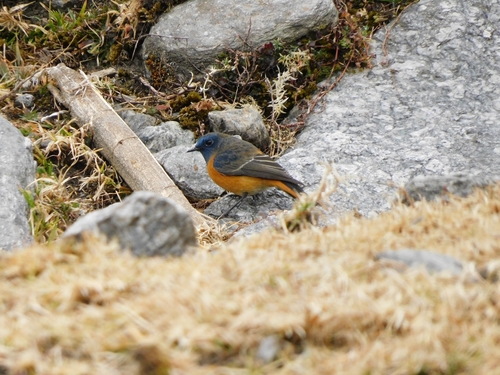 blue-fronted redstart
Em resumo
A marca de campo mais confiável entre o rusty-tailed flycatcher e o blue-fronted redstart é a presença de uma forte coloração azul na cabeça e no peito do macho adulto do blue-fronted redstart, que está completamente ausente no rusty-tailed flycatcher. O rusty-tailed flycatcher é um pequeno e simples flycatcher com uma cauda ruiva, enquanto o blue-fronted redstart é um pássaro maior e mais colorido, com um impressionante peito azul (nos machos) e partes inferiores laranja. As fêmeas e os imaturos do blue-fronted redstart são mais apagados, mas ainda mostram uma coloração mais rica e uma estrutura diferente em comparação com o rusty-tailed flycatcher, que é uniformemente marron. Ambas as espécies podem se sobrepor nos Himalaias no inverno, mas sua estrutura, cor da cauda e, especialmente, a presença ou ausência de azul são fundamentais para a separação.
Dicas de identificação
- Coloração azul: O macho adulto do blue-fronted redstart apresenta um azul profundo na cabeça, garganta e peito—nunca presente no rusty-tailed flycatcher. Esta é a marca mais decisiva nos machos adultos.
- Partes inferiores laranja: O blue-fronted redstart (ambos os sexos, mas especialmente os machos) tem partes inferiores laranja ricas; o rusty-tailed flycatcher é pálido e não possui laranja ou ruivo nas partes inferiores.
- Cor e padrão da cauda: Ambas as espécies têm caudas ruivas, mas a cauda do blue-fronted redstart é mais brilhante e frequentemente apresenta uma área central escura, enquanto a cauda do rusty-tailed flycatcher é mais uniformemente ruiva ou ruiva com menos contraste.
- Coloração geral: O rusty-tailed flycatcher é uniformemente marron-oliva acima e pálido abaixo, com pouco contraste. As fêmeas e imaturos do blue-fronted redstart são mais marrons, mas ainda mais quentes e coloridos que o rusty-tailed flycatcher, especialmente na cauda e flancos.
- Tamanho e estrutura: O blue-fronted redstart é visivelmente maior e mais robusto, com uma cauda mais longa e uma postura mais ereta e robusta. O rusty-tailed flycatcher é menor, mais delicado e compacto.
- Formato do bico: Ambos têm bicos típicos de flycatcher, mas o do blue-fronted redstart é ligeiramente mais pesado e mais largo na base, embora isso seja sutil e melhor utilizado em comparação direta.
- Comportamento de empoleiramento: O blue-fronted redstart frequentemente se empoleira em rochas ou solo aberto e é mais propenso a abrir ou agitar sua cauda. O rusty-tailed flycatcher prefere empoleiramentos em árvores ou arbustos e é menos conspícuo em seus movimentos.
- Contexto de habitat: Nos Himalaias, o blue-fronted redstart é mais provável de ser encontrado em áreas abertas, rochosas ou arbustivas, enquanto o rusty-tailed flycatcher prefere bordas de floresta e vegetação mais densa.
- Confusão de sexo e idade: As fêmeas e imaturos do blue-fronted redstart não têm azul, mas ainda são mais quentes e ricos em tom do que qualquer rusty-tailed flycatcher. Se você ver qualquer azul, não é um rusty-tailed flycatcher.
- Sobreposição sazonal: Ambas podem ocorrer juntas no inverno nas encostas dos Himalaias—não confie apenas na distribuição para separação nesta região e estação.
- Sem painéis nas asas: Nenhuma das espécies tem barras ou painéis de asas distintivos em qualquer idade, então não use essa característica para separação.
- Agitação da cauda: Ambas as espécies podem agitar suas caudas, mas o blue-fronted redstart é mais propenso a abrir e agitar, especialmente quando agitado ou exibindo.
- Consistência da plumagem: O rusty-tailed flycatcher mostra pouca variação entre sexos ou idades; o blue-fronted redstart é sexualmente dimórfico, com machos sendo muito mais brilhantes.
- Comparação direta: Se vistos juntos, as diferenças de tamanho, cor e comportamento são marcantes—o blue-fronted redstart é maior, mais colorido e mais ousado; o rusty-tailed flycatcher é menor, mais simples e mais reservado.
- Voz: Não é diagnóstico com as informações disponíveis—não confie em chamadas ou canções para separação com base nas fontes atuais.
Tamanho
O rusty-tailed flycatcher é menor e mais leve (massa corporal ~13,3 g) do que o blue-fronted redstart, que é geralmente um pássaro visivelmente maior e mais robusto (massa exata não fornecida, mas os redstarts são tipicamente mais pesados e longos do que pequenos flycatchers do gênero Ficedula). No campo, o blue-fronted redstart parecerá mais robusto, com uma cauda mais longa e uma postura mais ereta, enquanto o rusty-tailed flycatcher é compacto e delicado.
Plumagem
O macho adulto do blue-fronted redstart é inconfundível com sua cabeça, garganta e peito azul profundo, contrastando com partes inferiores laranja brilhante e uma cauda ruiva. As fêmeas e imaturos são mais apagados, com partes superiores marrons e partes inferiores mais pálidas, mas ainda mostram tons mais quentes e uma cauda mais contrastante do que o rusty-tailed flycatcher. O rusty-tailed flycatcher de todas as idades é uniformemente marron-oliva acima, pálido abaixo, e tem uma cauda ruiva ou ruiva distinta que contrasta com as costas, mas carece de qualquer azul ou laranja. Ambos os sexos e todas as idades do rusty-tailed flycatcher são semelhantes, então a determinação de sexo pela plumagem não é possível. Em voo, o blue-fronted redstart mostra uma cauda ruiva brilhante com penas centrais escuras, enquanto a cauda do rusty-tailed flycatcher é mais uniformemente ruiva. Nenhum painel de asa ou padrão de asa superior distintivo é descrito para qualquer uma das espécies nas fontes, então a separação depende da cor geral e do padrão da cauda.
Comportamento
O rusty-tailed flycatcher geralmente se empoleira ereto em galhos expostos, fazendo pequenas investidas para capturar insetos, e frequentemente agita sua cauda. O blue-fronted redstart também se empoleira ereto, mas é mais provável de ser visto em rochas ou ramos baixos em áreas abertas, frequentemente abrindo e agitando sua cauda. Os redstarts são geralmente mais ousados e mais conspícuos em seus movimentos, enquanto o rusty-tailed flycatcher é mais reservado e menos exibido.
Habitat
O rusty-tailed flycatcher é encontrado no subcontinente indiano ao norte e na Ásia Central, preferindo florestas abertas, bordas de floresta e ravinas arborizadas, especialmente durante a migração e inverno. O blue-fronted redstart se reproduz em altitudes mais elevadas nos Himalaias e na China central, em florestas temperadas, e inverna nas encostas do sul dos Himalaias e no norte da Indochina. No inverno, ambas podem ocorrer em habitats semelhantes nas encostas dos Himalaias, mas o blue-fronted redstart prefere áreas mais abertas, rochosas ou arbustivas, enquanto o rusty-tailed flycatcher se mantém nas bordas de floresta e em coberturas mais densas.
rusty-tailed flycatcher · blue-fronted redstart · Minhas aves difíceis