

rufous woodpecker vs buff-necked woodpecker
Micropternus brachyurus versus Meiglyptes tukki
Jogue um quiz com rufous woodpecker e buff-necked woodpecker
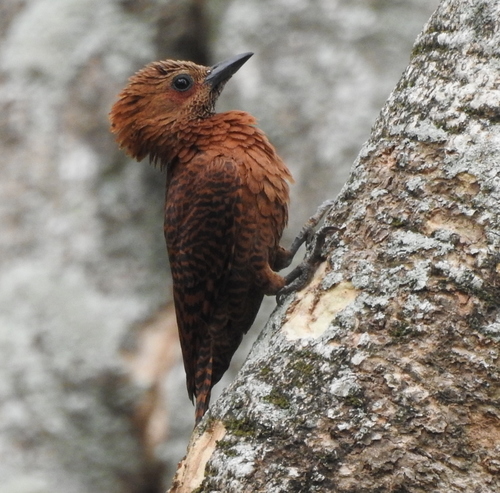 rufous woodpecker
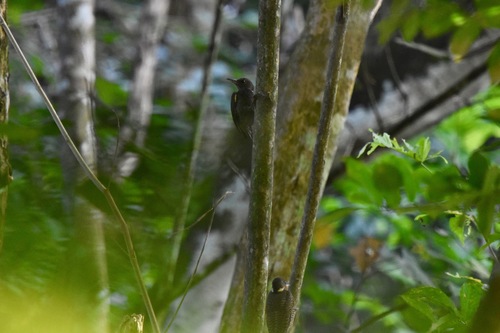 buff-necked woodpecker
Em resumo
A marca de campo mais confiável entre o pica-pau ruivo e o pica-pau de pescoço buff é o tom geral da plumagem e o padrão da cabeça/pescoço: o pica-pau ruivo é um marrom-ruivo escuro uniforme com uma cabeça mais clara e sem faixa clara no pescoço, enquanto o pica-pau de pescoço buff é marrom escuro com uma faixa suja-creme contrastante no pescoço. No campo, o pica-pau ruivo parece mais uniforme e 'sujeira' com finas barras pretas, enquanto o pica-pau de pescoço buff mostra uma distinta faixa clara no pescoço e barras mais claras nas asas. A forma do bico e o comprimento da cauda também diferem: o ruivo tem um bico curto e uma cauda curta, enquanto o de pescoço buff tem um bico mais longo e pontudo e uma cauda mais longa. As diferenças de sexo e idade são sutis, mas o juvenil ruivo pode mostrar algumas listras na garganta. Ambas as espécies podem ser encontradas em habitats florestais de planície semelhantes no Sudeste Asiático, portanto, atenção cuidadosa a esses detalhes estruturais e de plumagem é essencial.
Dicas de identificação
- Faixa clara no pescoço (apenas no de pescoço buff): Procure uma faixa suja-creme ou clara no lado do pescoço do pica-pau de pescoço buff; o pica-pau ruivo nunca mostra isso, independentemente da idade ou sexo.
- Tom geral da cor: O pica-pau ruivo é um marrom-ruivo escuro uniforme com uma cabeça mais clara e finas barras pretas; o de pescoço buff é marrom escuro, não ruivo, e o contraste com a faixa clara no pescoço é marcante.
- Barras nas asas e cauda: Ambas as espécies têm asas e caudas barradas, mas as barras do ruivo são mais finas e uniformes, enquanto o de pescoço buff mostra barras mais claras e contrastantes.
- Padrão da cabeça e face: O pica-pau ruivo tem um pescoço, coberturas auriculares e lore sem marcas; o de pescoço buff tem a faixa clara no pescoço e uma aparência geralmente mais padronizada ao redor da cabeça/pescoço.
- Forma do bico: O ruivo tem um bico curto e ligeiramente curvado; o bico do de pescoço buff é mais longo, mais pontudo e também curvado ao longo do culmen. Isso é melhor visto de perfil ou em vistas próximas.
- Comprimento da cauda: O pica-pau de pescoço buff tem uma cauda visivelmente mais longa que o ruivo, que é de cauda curta e compacta. Essa diferença é sutil, mas pode ser vista quando empoleirado ou em voo.
- Cresta: O pica-pau ruivo tem uma cresta fraca e erétil; o de pescoço buff não tem uma cresta nucal. A cresta raramente é óbvia, mas pode ajudar em vistas próximas.
- Diferenças sexuais: O macho do pica-pau ruivo pode mostrar penas com pontas vermelhas sob o olho e na região malar; fêmeas e jovens não têm isso. O de pescoço buff não mostra essa característica.
- Listras na garganta juvenil (apenas no ruivo): O juvenil do pica-pau ruivo pode mostrar algumas listras na garganta, mas isso é sutil e nem sempre está presente. Os juvenis do de pescoço buff não são descritos, mas a faixa clara no pescoço deve ser visível desde uma idade jovem.
- Aparência 'sujada' (ruivo): O pica-pau ruivo pode parecer sujo ou pegajoso, especialmente ao fazer ninho, devido a secreções de formigas. Isso é único do ruivo e pode ser uma pista em vistas próximas.
- Comportamento de forrageio: O ruivo é frequentemente visto em ou perto de ninhos de formigas arbóreas, às vezes com formigas ou detritos em sua plumagem. O de pescoço buff está menos intimamente ligado às formigas.
- Tolerância ao habitat: O ruivo pode ser encontrado em habitats mais perturbados ou abertos, incluindo plantações, enquanto o de pescoço buff é mais restrito a florestas intactas.
- Voz: Se ouvido, os chamados nasais agudos do ruivo e a bateria distinta podem confirmar a identificação; a voz do de pescoço buff não é descrita aqui.
- Voo e jizz: O ruivo parece compacto e de cauda curta em voo; o de pescoço buff parece ter cauda mais longa e mais esbelta.
- Armadilhas: Em luz fraca, a faixa clara no pescoço do de pescoço buff pode ser perdida, fazendo-o parecer mais uniforme e potencialmente confundindo-o com o ruivo. Sempre tente confirmar a presença ou ausência da faixa no pescoço e verifique as proporções do bico e da cauda.
Tamanho
O pica-pau ruivo tem cerca de 25 cm de comprimento e parece de tamanho médio para um pica-pau, com uma cauda curta e corpo compacto. O pica-pau de pescoço buff é ligeiramente menor e mais leve (massa média 53g, comprimento da asa 101mm), mas tem uma cauda visivelmente mais longa e um bico mais esbelto e pontudo. No campo, a cauda e o bico mais longos do de pescoço buff podem fazê-lo parecer mais alongado e menos compacto do que o ruivo. Essas diferenças são sutis e melhor usadas em combinação com a plumagem e o padrão da cabeça.
Plumagem
- Aves juvenis/imaturas: O juvenil do pica-pau ruivo pode mostrar algumas listras na garganta (às vezes também em algumas subespécies como adultos), mas de outra forma se assemelha aos adultos em coloração geral marrom-ruivo escuro com barras pretas nas asas e cauda. O juvenil do pica-pau de pescoço buff não é especificamente descrito, mas a chave faixa clara no pescoço deve estar presente desde uma idade jovem.
- Adultos: O pica-pau ruivo é overall marrom-ruivo escuro, com barras pretas nas asas e cauda, uma cabeça mais clara e pescoço e coberturas auriculares sem marcas. Os machos têm pontas de penas vermelhas sutis no rosto, ausentes em fêmeas e jovens. O pica-pau de pescoço buff é marrom escuro com barras claras nas asas e uma distinta faixa suja-creme no pescoço. Ele não possui uma cresta nucal (diferente de alguns parentes), e o bico é mais longo e mais pontudo. A faixa clara no pescoço é a marca de campo mais óbvia em todas as plumagens. Ambas as espécies têm algum grau de barras nas asas, mas o contraste e o padrão diferem: as barras do ruivo são mais finas e mais uniformes, as do de pescoço buff são mais claras e mais contrastantes.
Comportamento
O pica-pau ruivo é frequentemente visto forrageando em pares, especialmente em ninhos de formigas arbóreas, troncos caídos ou montes de termitas, e é famoso por fazer ninho dentro de ninhos de formigas. O comportamento de forrageio do pica-pau de pescoço buff é menos detalhado nas notas, mas também é um pica-pau de floresta, provavelmente forrageando em troncos e galhos. O ruivo pode parecer mais 'sujado' ou desarrumado devido à sua associação com ninhos de formigas, às vezes com plumagem pegajosa ou com aparência suja. Ambas as espécies são provavelmente vistas nos níveis médio a baixo da floresta, mas a estreita associação do ruivo com ninhos de formigas é distintiva.
Habitat
Ambas as espécies ocorrem em florestas de planície e colinas do Sudeste Asiático, incluindo matagal, florestas perenes e decíduas. O pica-pau ruivo é notavelmente adaptável, persistindo mesmo em habitats perturbados, como plantações de palma de óleo, e se estende até 3000 m em algumas áreas. O pica-pau de pescoço buff também é uma espécie florestal, mas não é descrito como tolerante a uma gama tão ampla de habitats. Em áreas onde ambas ocorrem, o habitat sozinho não é um separador confiável, mas o ruivo pode ser encontrado em locais mais abertos ou perturbados.
Voz
O pica-pau ruivo tem um chamado nasal agudo de três notas (keenk-keenk-keenk), um longo wicka e uma série de notas wick-wick, além de uma bateria distinta que começa rapidamente e desacelera. Nenhuma vocalização é descrita para o pica-pau de pescoço buff nas notas, portanto, a voz não é um separador confiável, a menos que os chamados ou a bateria do ruivo sejam reconhecidos.
rufous woodpecker · buff-necked woodpecker · Minhas aves difíceis