

Motmot

クリチャゲラ 対 カレハゲラ

Micropternus brachyurus 対 Meiglyptes tukki

クリチャゲラとカレハゲラのクイズ
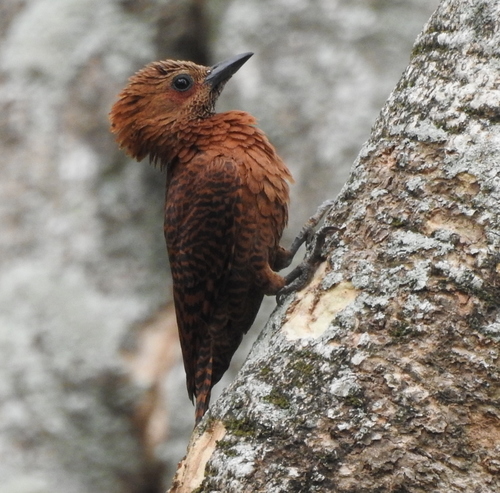
クリチャゲラ (Micropternus brachyurus) クリチャゲラ
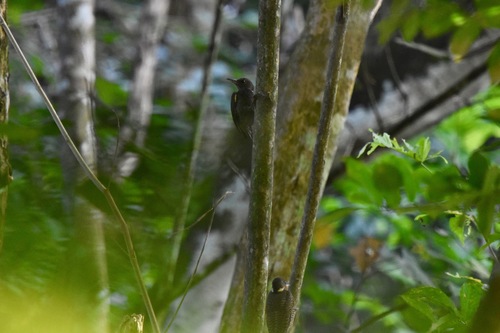
カレハゲラ (Meiglyptes tukki) カレハゲラ

メディア

読み込み中…

要点

クリチャゲラとカレハゲラの間で最も信頼できるフィールドマークは、全体的な羽色のトーンと頭/首のパターンです:クリチャゲラは均一な暗いルーファスブラウンで、頭はより淡い色合いで、淡い首のストライプはありません。一方、カレハゲラは暗い茶色で、首に対照的な汚れたクリーム色のストライプがあります。フィールドでは、クリチャゲラはより均一で「すすけた」外観を持ち、細かい黒いバーニングが見られますが、カレハゲラは明確な淡い首のストライプと淡い翼のバーニングを示します。くちばしの形状と尾の長さも異なります:クリチャゲラは短いくちばしと短い尾を持ち、カレハゲラはより長く、尖ったくちばしと長い尾を持っています。性別と年齢の違いは微妙ですが、若いクリチャゲラは喉にいくつかのストリーキングを示すことがあります。両種は東南アジアの類似した低地の森林生息地に見られるため、これらの構造的および羽色の詳細に注意を払うことが重要です。

識別のコツ

  1. 淡い首のストライプ(カレハゲラのみ): カレハゲラの首の側に汚れたクリーム色または淡いストライプを探してください;クリチャゲラは年齢や性別に関係なくこれを示しません。
  2. 全体的な色調: クリチャゲラは均一な暗いルーファスブラウンで、頭はより淡い色合いで、細かい黒いバーニングがあります;カレハゲラは暗い茶色で、ルーファスではなく、淡い首のストライプとの対比が際立っています。
  3. 翼と尾のバーニング: 両種はバーニングのある翼と尾を持っていますが、クリチャゲラのバーニングはより細かく均一で、カレハゲラはより淡く、対照的なバーニングを示します。
  4. 頭と顔のパターン: クリチャゲラは無地の首、耳の覆い、ロアを持っています;カレハゲラは淡い首のストライプと頭/首の周りに一般的によりパターン化された外観を持っています。
  5. くちばしの形状: クリチャゲラは短く、わずかに曲がった黒いくちばしを持っています;カレハゲラのくちばしはより長く、尖っており、また、クルメンに沿って曲がっています。これは側面または近くのビューで最もよく見られます。
  6. 尾の長さ: カレハゲラはクリチャゲラよりも明らかに長い尾を持っていますが、クリチャゲラは短い尾でコンパクトです。この違いは微妙ですが、止まっているときや飛んでいるときに見ることができます。
  7. 冠羽: クリチャゲラは弱い、立ち上がる冠羽を持っています;カレハゲラは全く後頭冠を欠いています。冠羽はあまり明らかではありませんが、近くのビューで役立つことがあります。
  8. 性差: オスのクリチャゲラは目の下やマラール領域に赤い先端の羽毛を示すことがあります;雌や若い個体にはこれがありません。カレハゲラはこの特徴を示しません。
  9. 若い喉のストリーキング(クリチャゲラのみ): 若いクリチャゲラは喉にいくつかのストリーキングを示すことがありますが、これは微妙で常に存在するわけではありません。カレハゲラの若い個体は具体的に記述されていませんが、淡い首のストライプは若い頃から見えるはずです。
  10. 「汚れた」外観(クリチャゲラ): クリチャゲラは、特に巣作り中に、アリの分泌物のために汚れているように見えることがあります。これはクリチャゲラに特有であり、近くのビューで手がかりになることがあります。
  11. 採餌行動: クリチャゲラはしばしば樹上のアリの巣の上または近くで見られ、時には羽毛にアリや破片が付いていることがあります。カレハゲラはアリにあまり密接に結びついていません。
  12. 生息地の耐性: クリチャゲラは、プランテーションを含むより乱されたまたは開けた生息地で見られることがありますが、カレハゲラは完全な森林により制限されています。
  13. 声: 聞こえた場合、クリチャゲラの鋭い鼻音の呼び声と独特のドラミングがIDを確認できます;カレハゲラの声はここでは記述されていません。
  14. 飛行とジズ: クリチャゲラは飛行中にコンパクトで短い尾を持っているように見えます;カレハゲラは長い尾を持ち、より細長く見えます。
  15. 落とし穴: 照明が悪い場合、カレハゲラの淡い首のストライプが見逃され、より均一に見え、クリチャゲラと混同される可能性があります。常に首のストライプの有無を確認し、くちばしと尾の比率をチェックしてください。

大きさ

クリチャゲラは約25 cmの長さで、キツツキとしては中型に見え、短い尾とコンパクトな体型を持っています。カレハゲラはわずかに小さく、軽量(平均質量53g、翼の長さ101mm)ですが、明らかに長い尾とより細長く尖ったくちばしを持っています。フィールドでは、カレハゲラの長い尾とくちばしが、クリチャゲラよりもより細長く、コンパクトでないように見えることがあります。これらの違いは微妙で、羽色と頭のパターンと組み合わせて使用するのが最適です。

羽色

行動

クリチャゲラはしばしばペアで採餌しているのが見られ、特に樹上のアリの巣、倒木、またはシロアリの mound で見られ、アリの巣の中で巣作りをすることで有名です。カレハゲラの採餌行動はノートに詳しく記載されていませんが、樹木や枝の上で採餌する可能性が高い森林のキツツキです。クリチャゲラはアリの巣との関連のために「汚れた」または乱れた外観を持っているように見えることがあり、時には粘着性または汚れたように見える羽毛を持っています。両種は森林の中層から下層で見られる可能性が高いですが、クリチャゲラのアリの巣との密接な関連は特徴的です。

生息環境

両種は東南アジアの低地および丘陵の森林に生息し、草地、常緑樹林、落葉樹林を含みます。クリチャゲラは特に適応性が高く、油ヤシプランテーションなどの乱された生息地でも生き残り、いくつかの地域では3000 mまで分布しています。カレハゲラも森林の種ですが、そのような広範囲の生息地に耐性があるとは記述されていません。両方が生息する地域では、生息地だけでは信頼できる区別にはならず、クリチャゲラはより開けたまたは乱れた場所で見られることがあります。

声

クリチャゲラは鋭い鼻音の三音呼び声(keenk-keenk-keenk)、長いウィッカ、ウィック・ウィックの音の一連を持ち、独特のドラミングは急速に始まり、遅くなります。ノートにはカレハゲラの声に関する記述はなく、クリチャゲラの呼び声やドラミングが認識されない限り、声は信頼できる区別にはなりません。

より良い説明を送る

比較と同じ項目を使ってください。文章はすぐに公開されます。

The most reliable field mark between Rufous Woodpecker and Buff-necked Woodpecker is the overall plumage tone and head/neck pattern: Rufous Woodpecker is a uniform dark rufous-brown with a paler head and no pale neck stripe, while Buff-necked Woodpecker is dark brown with a contrasting dirty-cream stripe on the neck. In the field, Rufous Woodpecker looks more uniform and 'sooty' with fine black barring, whereas Buff-necked Woodpecker shows a distinct pale neck stripe and paler wing barring. Bill shape and tail length also differ: Rufous is short-billed and short-tailed, Buff-necked has a longer, more pointed bill and a longer tail. Sex and age differences are subtle, but juvenile Rufous can show some throat streaking. Both species can be found in similar lowland forest habitats in Southeast Asia, so careful attention to these structural and plumage details is essential.

  1. Pale neck stripe (Buff-necked only): Look for a dirty-cream or pale stripe on the side of the neck in Buff-necked Woodpecker; Rufous Woodpecker never shows this, regardless of age or sex.
  2. Overall color tone: Rufous Woodpecker is a uniform dark rufous-brown with a paler head and fine black barring; Buff-necked is dark brown, not rufous, and the contrast with the pale neck stripe is striking.
  3. Wing and tail barring: Both species have barred wings and tails, but Rufous's barring is finer and more uniform, while Buff-necked shows paler, more contrasting barring.
  4. Head and face pattern: Rufous Woodpecker has an unmarked neck, ear coverts, and lore; Buff-necked has the pale neck stripe and a generally more patterned appearance around the head/neck.
  5. Bill shape: Rufous has a short, slightly curved black bill; Buff-necked's bill is longer, more pointed, and also curved along the culmen. This is best seen in profile or close views.
  6. Tail length: Buff-necked Woodpecker has a noticeably longer tail than Rufous, which is short-tailed and compact. This difference is subtle but can be seen when perched or in flight.
  7. Crest: Rufous Woodpecker has a weak, erectile crest; Buff-necked lacks a nuchal crest altogether. The crest is rarely obvious but can help in close views.
  8. Sex differences: Male Rufous Woodpecker may show red-tipped feathers under the eye and on the malar region; females and young lack these. Buff-necked does not show this feature.
  9. Juvenile throat streaking (Rufous only): Juvenile Rufous Woodpecker may show some streaking on the throat, but this is subtle and not always present. Buff-necked juveniles are not described, but the pale neck stripe should be visible from a young age.
  10. 'Soiled' appearance (Rufous): Rufous Woodpecker may look dirty or sticky, especially when nesting, due to ant secretions. This is unique to Rufous and can be a clue in close views.
  11. Foraging behavior: Rufous is often seen on or near arboreal ant nests, sometimes with ants or debris on its plumage. Buff-necked is less closely tied to ants.
  12. Habitat tolerance: Rufous may be found in more disturbed or open habitats, including plantations, while Buff-necked is more restricted to intact forest.
  13. Voice: If heard, Rufous's sharp nasal calls and distinctive drumming can confirm the ID; Buff-necked's voice is not described here.
  14. Flight and jizz: Rufous appears compact and short-tailed in flight; Buff-necked looks longer-tailed and more slender.
  15. Pitfalls: In poor light, Buff-necked's pale neck stripe can be missed, making it look more uniform and potentially confusing it with Rufous. Always try to confirm the presence or absence of the neck stripe and check for the bill and tail proportions.

Rufous Woodpecker is about 25 cm in length and appears medium-sized for a woodpecker, with a short tail and compact build. Buff-necked Woodpecker is slightly smaller and lighter (mean mass 53g, wing length 101mm), but has a noticeably longer tail and a more slender, pointed bill. In the field, the longer tail and bill of Buff-necked can make it look more elongated and less compact than Rufous. These differences are subtle and best used in combination with plumage and head pattern.

  • Juvenile/immature birds: Juvenile Rufous Woodpecker may show some streaking on the throat (sometimes also in some subspecies as adults), but otherwise resembles adults in overall dark rufous-brown coloration with black barring on wings and tail. Juvenile Buff-necked Woodpecker is not specifically described, but the key pale neck stripe is expected to be present from a young age.
  • Adults: Rufous Woodpecker is overall dark rufous-brown, with black bars on wings and tail, a paler head, and unmarked neck and ear coverts. Males have subtle red feather tips on the face, absent in females and young. Buff-necked Woodpecker is dark brown with pale barring on the wings and a distinctive dirty-cream stripe on the neck. It lacks a nuchal crest (unlike some relatives), and the bill is longer and more pointed. The pale neck stripe is the most obvious field mark in all plumages. Both species have some degree of wing barring, but the contrast and pattern differ: Rufous's barring is finer and more uniform, Buff-necked's is paler and more contrasting.

Rufous Woodpecker is often seen foraging in pairs, especially on arboreal ant nests, fallen logs, or termite mounds, and is famous for nesting inside ant nests. Buff-necked Woodpecker's foraging behavior is less detailed in the notes, but it is also a forest woodpecker likely to forage on trunks and branches. Rufous may appear more 'soiled' or disheveled due to its association with ant nests, sometimes with sticky or dirty-looking plumage. Both species are likely to be seen in the mid to lower levels of the forest, but Rufous's close association with ant nests is distinctive.

Both species occur in lowland and hill forests of Southeast Asia, including scrub, evergreen, and deciduous forests. Rufous Woodpecker is notably adaptable, persisting even in disturbed habitats such as oil palm plantations, and ranges up to 3000 m in some areas. Buff-necked Woodpecker is also a forest species but is not described as tolerant of such a wide range of habitats. In areas where both occur, habitat alone is not a reliable separator, but Rufous may be found in more open or disturbed sites.

Rufous Woodpecker has a sharp, nasal three-note call (keenk-keenk-keenk), a long wicka, and a series of wick-wick notes, plus a distinctive drumming that starts rapidly and slows down. No vocalizations are described for Buff-necked Woodpecker in the notes, so voice is not a reliable separator unless Rufous's calls or drumming are recognized.

変更を破棄しますか?

保存していない編集があります。今離れると失われます。

クリチャゲラ · カレハゲラ · 苦手な鳥