

red-rumped parrot vs periquito-comum
Psephotus haematonotus versus Melopsittacus undulatus
Jogue um quiz com red-rumped parrot e periquito-comum
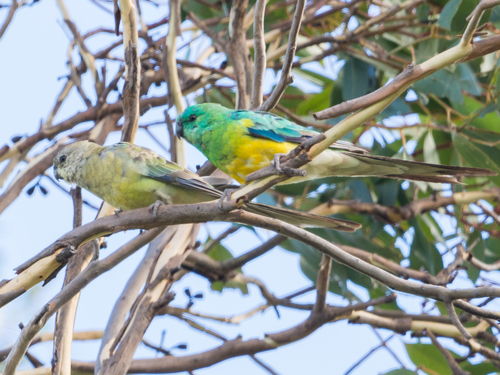 red-rumped parrot
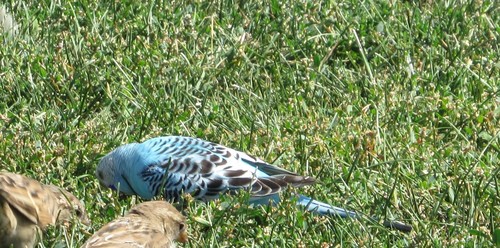 periquito-comum
Em resumo
A marca de campo mais confiável entre o red-rumped parrot e o periquito-comum é a presença de um rabo vermelho (parte inferior das costas e rabo) nos machos adultos de red-rumped parrots, que os periquitos-comuns nunca apresentam. Para aves imaturas ou fêmeas, concentre-se no padrão da asa superior em voo: os red-rumped parrots juvenis e fêmeas têm uma distinta barra subalar off-white, enquanto os periquitos-comuns não têm isso e, em vez disso, mostram flashes amarelos na cauda externa e na asa apenas quando estão abertas. Os periquitos-comuns são menores, com uma construção mais compacta e um padrão escamoso preto único nas costas e asas, enquanto os red-rumped parrots são mais longos e esguios, com partes superiores mais simples. Ambas as espécies podem ser esverdeadas, mas a combinação de estrutura, cor do rabo e padrão da asa é diagnóstica em campo.
Dicas de identificação
- Rabo vermelho (apenas macho adulto de red-rumped parrot): Procure por uma mancha vermelha brilhante na parte inferior das costas e rabo. Os periquitos-comuns nunca mostram vermelho nesta área. Esta é a marca de campo mais confiável para machos adultos.
- Barra subalar (juvenil/fêmea de red-rumped parrot): Em voo ou ao se esticar, os red-rumped parrots juvenis e fêmeas mostram uma distinta barra subalar off-white. Isso está ausente nos periquitos-comuns de todas as idades. Os machos imaturos de red-rumped parrots mantêm essa barra até cerca de 2 anos de idade.
- Padrão da asa superior e costas: Os periquitos-comuns têm marcas escamosas (onduladas) pretas ousadas nas costas e asas, com bordas amarelas. Os red-rumped parrots têm partes superiores verdes ou oliva simples, sem escamação preta.
- Flashes na cauda: Os periquitos-comuns mostram flashes amarelos na cauda externa e nas asas, mas apenas quando as asas estão estendidas ou em voo. Os red-rumped parrots não têm esses flashes amarelos.
- Manchas nas bochechas: Os periquitos-comuns têm manchas azul-violetas nas bochechas e uma série de três manchas pretas na garganta de cada lado. Os red-rumped parrots não têm essas características.
- Cor do bico: Ambas as espécies têm bicos acinzentados, mas os bicos dos red-rumped parrots são mais escuros nos machos e mais claros nas fêmeas e imaturos. Os bicos dos periquitos-comuns são oliva-acinzentados; não é geralmente uma marca de campo forte, mas pode ajudar em vistas próximas.
- Cor do cera (apenas periquito-comum): Nos periquitos-comuns, a cera (área carnosa acima do bico) é azul em machos adultos, marrom ou branca em fêmeas, e rosada em juvenis. Os red-rumped parrots não mostram uma cera colorida.
- Tamanho e forma: Os red-rumped parrots são mais longos, esguios, e têm uma cauda mais alongada. Os periquitos-comuns são menores, robustos, e têm uma cauda mais curta e mais grossa.
- Dimorfismo sexual: Os red-rumped parrots são fortemente dimórficos sexualmente; os machos são muito mais brilhantes e têm o rabo vermelho, enquanto as fêmeas são mais apagadas. Os periquitos-comuns mostram menos dimorfismo sexual na plumagem, com diferenças principalmente na cor da cera.
- Padrão da cabeça juvenil: Os jovens periquitos-comuns têm listras pretas até a cera, que desaparecem com a idade. Os juvenis de red-rumped parrots não mostram esse padrão.
- Contexto do habitat: Em florestas abertas ou parques gramados no sudeste da Austrália, especialmente perto da água, suspeite do red-rumped parrot. Em áreas abertas áridas ou grandes bandos barulhentos, suspeite do periquito-comum.
- Tamanho do bando e comportamento: Os periquitos-comuns estão frequentemente em grandes bandos apertados, especialmente em voo. Os red-rumped parrots estão mais frequentemente em pares ou pequenos grupos.
- Postura empoleirada: Os periquitos-comuns empoleiram-se eretos, frequentemente altos e próximos uns dos outros, e podem parecer mais ativos e inquietos. Os red-rumped parrots empoleiram-se mais horizontalmente e são mais calmos.
- Estilo de voo: Os periquitos-comuns têm um voo rápido e ondulante e frequentemente fazem curvas em bandos apertados. Os red-rumped parrots têm um voo mais direto e menos errático.
- Armadilha – aves cativas: Periquitos-comuns escapados ou ferais podem mostrar uma variedade de cores, mas aves do tipo selvagem são sempre verdes com escamação preta. Os red-rumped parrots em cativeiro mantêm sua plumagem do tipo selvagem.
Tamanho
Os red-rumped parrots são visivelmente maiores e mais esguios, com uma média de cerca de 28 cm de comprimento e pesando 45–77 gramas [wikipedia], enquanto os periquitos-comuns selvagens são menores, com cerca de 18 cm de comprimento e 30–40 gramas [wikipedia]. A diferença é especialmente aparente em comparação direta ou quando vistos empoleirados lado a lado. Os periquitos-comuns também têm uma cauda proporcionalmente mais curta e uma aparência mais compacta e robusta, enquanto os red-rumped parrots são mais alongados, com uma cauda mais longa e elegante.
Plumagem
- Aves juvenis/imaturas em voo: Os red-rumped parrots juvenis e fêmeas mostram uma clara barra subalar off-white, visível em voo e quando as asas estão abertas. Essa barra também está presente em machos imaturos até cerca de 2 anos de idade. Os periquitos-comuns nunca mostram essa barra subalar; em vez disso, suas penas de voo são verde-pretas com bordas amarelas, e flashes amarelos são visíveis apenas na cauda externa e na asa quando abertas.
- Machos adultos: Os machos de red-rumped parrot são verde-esmeralda brilhante com partes inferiores amarelas, destaques azuis nas asas e um rabo vermelho (diagnóstico). Os periquitos-comuns são verde-claro com marcas escamosas pretas nas costas e asas, rosto e testa amarelos, manchas azul-violetas nas bochechas e sem rabo vermelho.
- Fêmeas adultas: As fêmeas de red-rumped parrot são verde-oliva apagadas com partes inferiores pálidas e um rabo verde-lima, sem as cores brilhantes e o rabo vermelho do macho. As fêmeas de periquito-comum são semelhantes aos machos, mas podem ser diferenciadas pela cor da cera; ambos os sexos mantêm o padrão escamoso preto nas costas e asas.
- Juvenis: Os jovens red-rumped parrots se assemelham às fêmeas, mas com um rabo vermelho e rosto verde-azulado claro nos machos. Os jovens periquitos-comuns têm listras escuras até a cera e mais preto nas costas e asas, que desaparecem à medida que amadurecem.
Comportamento
Os red-rumped parrots são frequentemente vistos se alimentando silenciosamente no chão em pares ou pequenos bandos, às vezes empoleirando-se em árvores, mas tipicamente menos gregários do que os periquitos-comuns. Os periquitos-comuns são altamente sociais, frequentemente formando grandes bandos barulhentos, especialmente ao voar entre locais de alimentação e água. Os periquitos-comuns tendem a empoleirar-se altos e próximos uns dos outros, e podem parecer mais inquietos, mudando frequentemente de posição e chamando. Os red-rumped parrots são mais propensos a serem vistos em pares ou grupos familiares, com um comportamento mais calmo.
Habitat
Os red-rumped parrots são encontrados em florestas abertas, áreas gramadas e parques, especialmente no sudeste da Austrália, frequentemente perto da água e na Bacia Murray-Darling [wikipedia]. Os periquitos-comuns são nativos de regiões áridas e semiáridas em grande parte da Austrália, favorecendo gramados abertos e arbustos, e são menos prováveis de serem encontrados em áreas arborizadas. Na natureza, os periquitos-comuns são frequentemente vistos em grandes bandos em países mais secos e abertos, enquanto os red-rumped parrots preferem áreas com árvores dispersas e mais vegetação.