

red-billed dwarf hornbill vs bico-de-serra-cinzento
Lophoceros camurus versus Lophoceros nasutus
Jogue um quiz com red-billed dwarf hornbill e bico-de-serra-cinzento
 red-billed dwarf hornbill
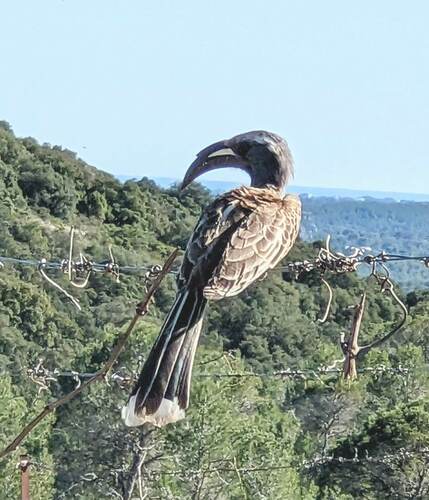 bico-de-serra-cinzento
Em resumo
A marca de campo mais confiável que separa esses dois é a cor do bico: o red-billed dwarf hornbill apresenta um bico distintamente vermelho, enquanto o bico-de-serra-cinzento tem um bico principalmente escuro com uma faixa pálida ou marca cremosa nos machos, e uma mandíbula tricolor com ponta vermelha nas fêmeas. O bico-de-serra-cinzento é muito maior, com uma cauda longa e um casque proeminente, e é principalmente cinza-marrom com linhas brancas na cabeça e nas costas (estas últimas visíveis em voo). O red-billed dwarf hornbill é menor e encontrado em florestas tropicais densas, enquanto o bico-de-serra-cinzento prefere florestas abertas e savanas. Os juvenis de bico-de-serra-cinzento têm bicos totalmente escuros, o que pode causar confusão, mas seu tamanho maior e plumagem cinza-marrom permanecem distintos.
Dicas de identificação
- A cor do bico é a marca mais confiável: O red-billed dwarf hornbill sempre apresenta um bico vermelho, enquanto o bico-de-serra-cinzento tem um bico principalmente escuro com uma faixa pálida (macho) ou um bico tricolor com ponta vermelha (fêmea). Os juvenis de bico-de-serra-cinzento têm bicos totalmente escuros, o que pode causar confusão, então use outras marcas em aves jovens.
- Tamanho e estrutura: O bico-de-serra-cinzento é muito maior e mais robusto, com uma cauda longa e um casque proeminente no bico (especialmente nos machos). O red-billed dwarf hornbill é menor, mais compacto e não possui um casque proeminente.
- Cor da plumagem: O bico-de-serra-cinzento é cinza-marrom no geral, com uma cabeça mais escura, penas de voo e cauda, e possui linhas brancas ao longo da coroa e nas costas (estas últimas visíveis em voo). O red-billed dwarf hornbill é geralmente mais escuro e não possui essas linhas brancas.
- Comprimento da cauda: O bico-de-serra-cinzento tem uma cauda notavelmente longa, que é óbvia em voo e quando empoleirada. O red-billed dwarf hornbill tem uma cauda mais curta.
- Habitat: Se visto em florestas tropicais densas e úmidas, espera-se o red-billed dwarf hornbill; em florestas abertas ou savanas, o bico-de-serra-cinzento é o padrão.
- Comportamento: O bico-de-serra-cinzento é frequentemente conspícuo, empoleirando-se em áreas abertas e chamando alto. O red-billed dwarf hornbill é mais secreto e permanece dentro da cobertura densa da floresta.
- Estilo de voo: O bico-de-serra-cinzento tem um voo ondulante, típico dos bicos-de-serra, e pode mostrar a linha branca nas costas em voo. Nenhum estilo de voo específico é descrito para o red-billed dwarf hornbill, mas seu tamanho menor e forma compacta devem ser aparentes.
- Confusão juvenil: Os juvenis de bico-de-serra-cinzento têm bicos totalmente escuros, mas seu tamanho, plumagem cinza-marrom e linhas brancas na cabeça/nas costas ainda os separam do red-billed dwarf hornbill.
- Diferenças sexuais: No bico-de-serra-cinzento, os machos têm uma faixa pálida no bico escuro, enquanto as fêmeas têm um bico tricolor com ponta vermelha. O red-billed dwarf hornbill não apresenta tal variação; o bico é sempre vermelho em adultos.
- Vocalizações: Se você ouvir um chamado alto e agudo 'pee-o pee-o pee-o', é o bico-de-serra-cinzento. A voz do red-billed dwarf hornbill não é descrita aqui, então o silêncio não é diagnóstico, mas o chamado é um forte indicativo do bico-de-serra-cinzento.
- Sobreposição de distribuição: Esteja ciente do habitat local—se você estiver em uma região onde ambos ocorrem, o habitat é uma forte pista. Em habitats mistos, use a cor do bico e o tamanho como suas marcas primárias.
- Presença do casque: O casque (crista óssea no bico) é mais proeminente no bico-de-serra-cinzento, especialmente nos machos. O red-billed dwarf hornbill não possui um casque proeminente.
- Empoleirado vs. em voo: Quando empoleirado, compare a cor do bico, o tamanho e o comprimento da cauda. Em voo, procure pela linha branca nas costas do bico-de-serra-cinzento e pela robustez geral.
- Armadilhas: Visões ruins ou bicos-de-serra-cinzentos imaturos podem ser enganosos devido à cor do bico, então sempre verifique múltiplas características—tamanho, estrutura e habitat são especialmente importantes.
- Lista de verificação para separação rápida: (a) Bico vermelho = red-billed dwarf hornbill; (b) Grande, cinza-marrom, cauda longa, linhas brancas = bico-de-serra-cinzento; (c) Habitat: floresta tropical = red-billed dwarf hornbill, savana/floresta aberta = bico-de-serra-cinzento.
Tamanho
O bico-de-serra-cinzento é substancialmente maior, medindo 45–51 cm de comprimento (quase o dobro da massa corporal do red-billed dwarf hornbill, que é cerca de 104 g). Sua cauda longa e robustez geral são óbvias mesmo à distância. O red-billed dwarf hornbill é muito menor e mais compacto, com uma cauda proporcionalmente mais curta e uma construção mais leve. Se vistos juntos, a diferença de tamanho é impressionante, mas cuidado com aves solitárias ou visões ruins onde o tamanho pode ser difícil de julgar.
Plumagem
Nenhum padrão de asa específico para idade está disponível para ambas as espécies, mas a coloração geral é útil. O bico-de-serra-cinzento é cinza-marrom no geral, com uma cabeça mais escura, penas de voo e cauda. Ele apresenta uma linha branca de cada lado da coroa e outra nas costas, esta última visível apenas em voo. O bico é escuro com uma faixa pálida ou marca cremosa nos machos, e tricolor com ponta vermelha nas fêmeas; os juvenis têm um bico totalmente escuro. O red-billed dwarf hornbill, por outro lado, tem um bico distintamente vermelho e é geralmente mais escuro e compacto, sem as linhas brancas e marcas pálidas do bico-de-serra-cinzento. A plumagem do red-billed dwarf hornbill é menos bem descrita, mas a cor do bico é sempre diagnóstica em adultos.
Comportamento
O bico-de-serra-cinzento frequentemente se empoleira de forma conspícua em florestas abertas ou savanas, às vezes se anunciando com chamados altos. Seu voo é ondulante, e ele frequentemente se move entre as árvores. O red-billed dwarf hornbill é mais secreto, tipicamente permanecendo dentro da floresta tropical densa e menos propenso a ser visto em áreas abertas. Seu comportamento é mais reservado, tornando-o mais difícil de detectar, exceto em habitat florestal adequado.
Habitat
O red-billed dwarf hornbill é restrito à floresta tropical africana, onde se mantém em interiores de florestas densas e úmidas. O bico-de-serra-cinzento, por outro lado, é amplamente distribuído na África subsaariana e prefere florestas abertas e savanas, raramente entrando em florestas tropicais densas. Se você ver um bico-de-serra em um país aberto e seco, é quase certamente um bico-de-serra-cinzento; em florestas densas e úmidas, o red-billed dwarf hornbill é mais provável.
Voz
O bico-de-serra-cinzento é muito vocal, emitindo um chamado distinto 'pee-o pee-o pee-o', que é frequentemente ouvido antes que o pássaro seja visto. Não há descrição vocal disponível para o red-billed dwarf hornbill nessas notas, então a voz é apenas diagnóstica para o bico-de-serra-cinzento.
red-billed dwarf hornbill · bico-de-serra-cinzento · Minhas aves difíceis