

red-bellied fruit-dove vs claret-breasted fruit-dove
Ptilinopus greyi versus Ptilinopus viridis
Jogue um quiz com red-bellied fruit-dove e claret-breasted fruit-dove
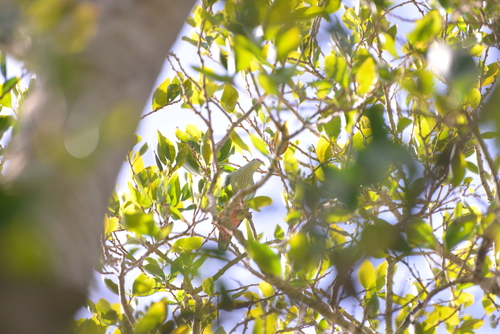 red-bellied fruit-dove
 claret-breasted fruit-dove
Em resumo
A maneira mais confiável de separar o red-bellied fruit-dove do claret-breasted fruit-dove é pela localização e cor da principal mancha avermelhada: o red-bellied tem uma mancha roxo-avermelhada no ventre central e na coroa, enquanto o claret-breasted apresenta uma mancha marrom-avermelhada escura na garganta e no peito superior, além de um rosto e ombro azulados. Os juvenis de red-bellied fruit-dove não possuem o ventre e a coroa vermelhos, tornando-os muito mais simples de verde e potencialmente confusos com outros fruit-doves verdes, mas os juvenis de claret-breasted não são descritos como faltando sua mancha no peito. Ambos são principalmente verdes no geral, mas o rosto e o ombro azulados do claret-breasted são únicos. A distribuição é uma pista forte: o red-bellied é encontrado na Nova Caledônia, Ilhas Santa Cruz e Vanuatu, enquanto o claret-breasted está nas Molucas, Nova Guiné e nas Ilhas Salomão. A estrutura e o tamanho são semelhantes e não ajudam na separação.
Dicas de identificação
- Localização da mancha avermelhada: O red-bellied fruit-dove tem uma mancha roxo-avermelhada no ventre central, enquanto o claret-breasted fruit-dove tem uma mancha marrom-avermelhada escura na garganta e no peito superior. Sempre verifique onde a cor está concentrada.
- Cor da coroa: O red-bellied fruit-dove apresenta uma coroa roxo-avermelhada em adultos. O claret-breasted tem um rosto e coroa frontal azulados, nunca vermelhos.
- Cor do ombro: O claret-breasted fruit-dove tem uma mancha azulada no ombro, que o red-bellied não possui. Isso é visível em aves empoleiradas e às vezes em voo.
- Confusão juvenil: Os juvenis de red-bellied fruit-doves não possuem a mancha vermelha no ventre e a coroa vermelha, aparecendo no geral verdes. Eles podem ser confundidos com outros fruit-doves verdes, mas os juvenis de claret-breasted não são descritos como perdendo sua mancha no peito, então uma ave com um ventre e coroa verdes simples é mais provável que seja um jovem red-bellied.
- Diferenças sexuais: Ambos os sexos de red-bellied são semelhantes, mas as fêmeas têm uma mancha de ventre ligeiramente menor. Isso é sutil e não é uma marca de campo forte.
- Plumagem verde geral: Ambos são principalmente verdes, então não confie apenas na cor geral.
- Rosto e coroa frontal: O rosto e a coroa frontal azulados do claret-breasted são únicos e diagnósticos se vistos bem.
- Distribuição: Se você está na Nova Caledônia, Ilhas Santa Cruz ou Vanuatu, você está quase certamente vendo um red-bellied. Nas Molucas ou Nova Guiné, será um claret-breasted. Nas Ilhas Salomão, verifique a plumagem com cuidado.
- Habitat: Ambos preferem florestas de planície, então o habitat sozinho não é diagnóstico dentro da distribuição sobreposta.
- Estrutura e tamanho: Ambos são semelhantes em tamanho e forma; não use essas características para separação.
- Visões em voo: Nenhuma diferença distinta na parte superior da asa ou padrão de voo é descrita para nenhuma das espécies, então confie na cor da cabeça e das partes inferiores mesmo em voo.
- Visões empoleiradas: Concentre-se na localização da mancha avermelhada (ventre vs. peito) e na presença ou ausência de azulados no rosto e ombro.
- Armadilhas: O red-bellied imaturo pode ser facilmente ignorado como outros fruit-doves verdes devido à falta de manchas vermelhas; sempre considere a idade quando uma ave parecer simples demais.
- Nenhuma diferença vocal descrita: Não confie na voz para separação com base nas informações atuais.
- Dica da comunidade: Se você vê um fruit-dove verde com um ventre e coroa avermelhados, é um red-bellied; se o vermelho está no peito superior e o rosto é azulado, é um claret-breasted.
Tamanho
Ambas as espécies são semelhantes em tamanho, com o claret-breasted fruit-dove medindo de 20 a 21 cm de comprimento. Nenhuma medição direta é dada para o red-bellied fruit-dove, mas ambos são típicos pequenos fruit-doves do gênero Ptilinopus e parecem semelhantes no campo. O tamanho não é uma marca de campo confiável para separar essas duas espécies.
Plumagem
- Aves juvenis/imaturas: O juvenil red-bellied fruit-dove não possui a mancha roxo-avermelhada tanto no ventre quanto na coroa, aparecendo no geral verde e, portanto, mais facilmente confundido com outros fruit-doves verdes. Nenhuma descrição específica é dada para o juvenil claret-breasted, mas a mancha no peito do adulto é uma marca chave.
- Adultos: O red-bellied fruit-dove é no geral verde com uma coroa roxo-avermelhada e uma mancha roxo-avermelhada no ventre central (menor nas fêmeas). O claret-breasted fruit-dove também é principalmente verde, mas tem uma mancha marrom-avermelhada escura bem definida na garganta e no peito superior, um rosto e coroa frontal azulados, e uma mancha azulada no ombro. A localização da mancha avermelhada (ventre vs. peito superior) e a presença de azulados no rosto/ombro são as diferenças mais diagnósticas. Ambos os sexos de red-bellied são semelhantes, mas a mancha do ventre é ligeiramente menor nas fêmeas.
Comportamento
Nenhuma diferença comportamental é descrita que separaria de forma confiável essas duas espécies. Ambos são fruit-doves típicos de florestas de planície, provavelmente se alimentando de frutas na copa e se comportando de maneira semelhante.
Habitat
O red-bellied fruit-dove é encontrado em florestas de planície da Nova Caledônia, Ilhas Santa Cruz (Salomão) e Vanuatu, e é comum na maior parte de sua distribuição. O claret-breasted fruit-dove é encontrado nas Molucas, Nova Guiné e no arquipélago das Ilhas Salomão, também em florestas tropicais ou subtropicais úmidas de planície. A sobreposição é possível nas Ilhas Salomão, mas, caso contrário, a distribuição é um forte separador. Se você estiver fora das Ilhas Salomão, a espécie presente é quase certamente a que tem a distribuição local.
red-bellied fruit-dove · claret-breasted fruit-dove · Minhas aves difíceis