

Red-bellied Fruit-Dove vs Claret-breasted Fruit-Dove
Ptilinopus greyi contro Ptilinopus viridis
Fai un quiz con Red-bellied Fruit-Dove e Claret-breasted Fruit-Dove
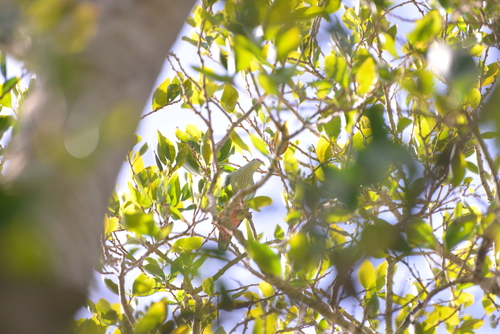 Red-bellied Fruit-Dove
 Claret-breasted Fruit-Dove
In breve
Il modo più affidabile per separare il Red-bellied Fruit-Dove dal Claret-breasted Fruit-Dove è attraverso la posizione e il colore della principale macchia rossastra: il Red-bellied ha una macchia rosso-porpora sulla pancia centrale e sulla corona, mentre il Claret-breasted mostra una macchia rosso-marrone scuro sulla gola e sul petto superiore, oltre a un volto e una spalla grigio-blu. I giovani Red-bellied Fruit-Dove mancano della pancia e della corona rossa, rendendoli molto più semplici verdi e potenzialmente confondibili con altri fruttivori verdi, ma i giovani Claret-breasted non sono descritti come privi della loro macchia sul petto. Entrambi sono principalmente verdi nel complesso, ma il volto e la spalla grigio-blu del Claret-breasted sono unici. L'areale è un forte indizio: il Red-bellied si trova in Nuova Caledonia, nelle Isole Santa Cruz e a Vanuatu, mentre il Claret-breasted si trova nelle Molucche, in Nuova Guinea e nelle Isole Salomone. La struttura e la dimensione sono simili e non utili per la separazione.
Consigli di identificazione
- Location of reddish patch: Il Red-bellied Fruit-Dove ha una macchia rosso-porpora sulla pancia centrale, mentre il Claret-breasted Fruit-Dove ha una macchia rosso-marrone scuro sulla gola e sul petto superiore. Controlla sempre dove è concentrato il colore.
- Crown color: Il Red-bellied Fruit-Dove mostra una corona rosso-porpora negli adulti. Il Claret-breasted ha un volto e una corona anteriore grigio-blu, mai rossi.
- Shoulder color: Il Claret-breasted Fruit-Dove ha una macchia grigio-blu sulla spalla, che il Red-bellied non ha. Questo è visibile negli uccelli posati e talvolta in volo.
- Juvenile confusion: I giovani Red-bellied Fruit-Dove mancano sia della macchia rossa sulla pancia che della corona rossa, apparendo nel complesso verdi. Possono essere scambiati per altri fruttivori verdi, ma i giovani Claret-breasted non sono descritti come privi della loro macchia sul petto, quindi un uccello con una pancia e una corona verdi semplici è più probabilmente un giovane Red-bellied.
- Sex differences: Entrambi i sessi del Red-bellied sono simili, ma le femmine hanno una macchia sulla pancia leggermente più piccola. Questo è sottile e non è un forte segno di campo.
- Overall green plumage: Entrambi sono principalmente verdi, quindi non fare affidamento solo sul colore complessivo.
- Face and forecrown: Il volto e la corona anteriore grigio-blu del Claret-breasted sono unici e diagnostici se visti bene.
- Range: Se ti trovi in Nuova Caledonia, nelle Isole Santa Cruz o a Vanuatu, stai quasi certamente vedendo un Red-bellied. Nelle Molucche o in Nuova Guinea, sarà un Claret-breasted. Nelle Isole Salomone, controlla attentamente il piumaggio.
- Habitat: Entrambi preferiscono le foreste di pianura, quindi l'habitat da solo non è diagnostico all'interno dell'areale sovrapposto.
- Structure and size: Entrambi sono simili in dimensione e forma; non utilizzare queste caratteristiche per la separazione.
- Flight views: Non sono descritte differenze distintive nel modello di volo o nelle ali superiori per nessuna delle due specie, quindi fai affidamento sul colore della testa e delle parti inferiori anche in volo.
- Perched views: Concentrati sulla posizione della macchia rossastra (pancia vs. petto) e sulla presenza o assenza di grigio-blu sul volto e sulla spalla.
- Pitfalls: I giovani Red-bellied possono essere facilmente trascurati come altri fruttivori verdi a causa della mancanza di macchie rosse; considera sempre l'età quando un uccello sembra troppo semplice.
- No vocal differences described: Non fare affidamento sulla voce per la separazione in base alle informazioni attuali.
- Community tip: Se vedi un fruttivoro verde con una pancia e una corona rossastre, è un Red-bellied; se il rosso è sul petto superiore e il volto è grigio-blu, è un Claret-breasted.
Taglia
Entrambe le specie sono simili in dimensione, con il Claret-breasted Fruit-Dove notato a 20–21 cm di lunghezza. Non è fornita alcuna misura diretta per il Red-bellied Fruit-Dove, ma entrambi sono tipici piccoli fruttivori Ptilinopus e appaiono simili sul campo. La dimensione non è un segno di campo affidabile per separare queste due specie.
Piumaggio
- Juvenile/immature birds: Il giovane Red-bellied Fruit-Dove manca della macchia rosso-porpora sia sulla pancia che sulla corona, apparendo nel complesso verde e quindi più facilmente confondibile con altri fruttivori verdi. Non è fornita alcuna descrizione specifica per il giovane Claret-breasted, ma la macchia sul petto dell'adulto è un segno chiave.
- Adults: Il Red-bellied Fruit-Dove è nel complesso verde con una corona rosso-porpora e una macchia rosso-porpora sulla pancia centrale (più piccola nelle femmine). Il Claret-breasted Fruit-Dove è anch'esso principalmente verde ma ha una ben definita macchia rosso-marrone scuro sulla gola e sul petto superiore, un volto e una corona anteriore grigio-blu, e una macchia grigio-blu sulla spalla. La posizione della macchia rossastra (pancia vs. petto superiore) e la presenza di grigio-blu sul volto/spalla sono le differenze diagnostiche più significative. Entrambi i sessi del Red-bellied sono simili, ma la macchia sulla pancia è leggermente più piccola nelle femmine.
Comportamento
Non sono descritte differenze comportamentali che possano separare in modo affidabile queste due specie. Entrambi sono fruttivori tipici delle foreste di pianura, probabilmente si nutrono di frutta nella chioma e si comportano in modo simile.
Habitat
Il Red-bellied Fruit-Dove si trova nelle foreste di pianura della Nuova Caledonia, delle Isole Santa Cruz (Salomone) e di Vanuatu, ed è comune nella maggior parte del suo areale. Il Claret-breasted Fruit-Dove si trova nelle Molucche, in Nuova Guinea e nell'arcipelago delle Isole Salomone, anch'esso in foreste umide di pianura subtropicali o tropicali. È possibile una sovrapposizione nelle Isole Salomone, ma altrimenti, l'areale è un forte separatore. Se ti trovi al di fuori delle Isole Salomone, la specie presente è quasi certamente quella con l'areale locale.
Red-bellied Fruit-Dove · Claret-breasted Fruit-Dove · I miei uccelli difficili