

frango-d'água-azul vs frango-d'água-pequeno
Porphyrio martinica versus Porphyrio flavirostris
Jogue um quiz com frango-d'água-azul e frango-d'água-pequeno
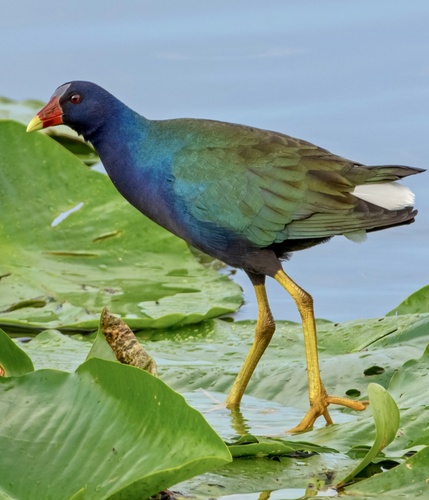 frango-d'água-azul
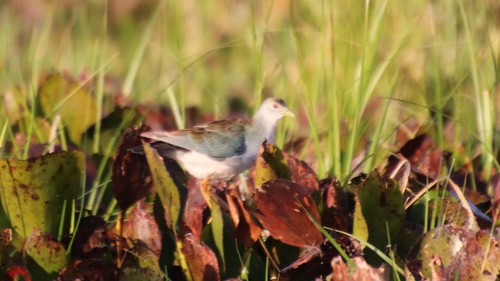 frango-d'água-pequeno
Em resumo
A marca de campo mais confiável para separar o frango-d'água-azul do frango-d'água-pequeno é a cor geral da plumagem em adultos: o frango-d'água-azul é de um profundo azul-púrpura com iridescência verde e turquesa, enquanto o frango-d'água-pequeno é muito mais pálido, com partes inferiores azul-acinzentadas e partes superiores oliva-marrom. As aves imaturas e juvenis são mais complicadas, mas os imaturos do frango-d'água-azul são marrom-bronze com púrpura no peito, enquanto os imaturos do frango-d'água-pequeno são mais marrons acima, com um rosto e pescoço amarelados. A cor do bico e do escudo também é fundamental: os adultos do frango-d'água-azul têm um bico vermelho e amarelo com um escudo azul pálido, enquanto os adultos do frango-d'água-pequeno têm um bico e escudo amarelo-esverdeados pálidos. O tamanho é uma pista forte—o frango-d'água-azul é muito maior e mais pesado. A cor das pernas é útil, mas varia com a idade. As vistas de voo raramente são diagnósticas, mas a cor das pernas e as pernas pendentes podem ser vistas. A maior parte da confusão surge de frangos-d'água-azuis adultos em iluminação fraca ou aves imaturas.
Dicas de identificação
- Cor do corpo adulto: O frango-d'água-azul é de um profundo azul-púrpura com iridescência verde/turquesa; o frango-d'água-pequeno é azul-acinzentado pálido embaixo e oliva-marrom em cima, com um pouco de azul-esverdeado nas asas. Este é o separador mais rápido em boa luz para adultos.
- Cor do bico e escudo (adultos): O frango-d'água-azul tem um bico vermelho e amarelo com um escudo azul pálido; o frango-d'água-pequeno tem um bico e escudo amarelo-esverdeados pálidos. Esta marca é confiável em todas as estações para adultos.
- Cor das pernas e pés: Ambos os adultos têm pernas/pés amarelos, mas os do frango-d'água-azul são mais brilhantes. O frango-d'água-azul imaturo tem pernas/pés marrom-amarelados; os imaturos do frango-d'água-pequeno têm pernas/pés amarelo-alaranjados. As pernas do frango-d'água-azul juvenil são marrons.
- Plumagem juvenil/imatura: O imaturo do frango-d'água-azul é marrom-bronze acima com púrpura no peito e coberturas de cauda brancas; o imaturo do frango-d'água-pequeno é mais marrom acima, com um rosto, pescoço e peito amarelados, e um escudo verde. Se você ver púrpura no peito, favoreça o frango-d'água-azul; se o rosto/pescoço for amarelado e o escudo verde, favoreça o frango-d'água-pequeno.
- Tamanho e estrutura: O frango-d'água-azul é muito maior e mais robusto, com uma construção mais pesada e pernas mais longas. O frango-d'água-pequeno é compacto e delicado. Use isso quando ambos estiverem presentes ou se você tiver uma boa noção de escala.
- Vistas de voo: Ambas as espécies voam com as pernas pendentes. Nenhuma diferença forte no padrão da asa superior é descrita, então confie no tamanho, cor geral e cor das pernas, se visíveis.
- Rosto e partes inferiores (adultos): O rosto e as partes inferiores do frango-d'água-azul são azul-púrpura; o rosto, lados do pescoço e peito do frango-d'água-pequeno são azul-acinzentado pálido, com partes inferiores brancas.
- Cor das costas e coroa: As costas do frango-d'água-azul são iridescentes verde/azul; as do frango-d'água-pequeno são oliva marrom pálido, combinando com a coroa e a nuca.
- Cor do bico em imaturos: O imaturo do frango-d'água-azul tem um bico e escudo pálidos; o imaturo do frango-d'água-pequeno tem um escudo verde e bico pálido.
- Coberturas de cauda: O juvenil do frango-d'água-azul mostra coberturas de cauda brancas, que podem ser visíveis em algumas vistas; o frango-d'água-pequeno é menos bem descrito, mas não menciona essa característica.
- Contexto e distribuição: Fora da América do Sul, o frango-d'água-azul é o padrão. Na América do Sul, ambos ocorrem, então confie na plumagem e estrutura.
- Armadilhas de iluminação: Em luz fraca, o adulto do frango-d'água-azul pode parecer opaco ou marronento, assemelhando-se ao frango-d'água-pequeno. Use a cor do bico/escudo e o tamanho como suporte.
- Acasalamento/comportamento: Se você ver uma exibição com o pescoço e as asas estendidos em ângulos retos, é provável que seja um frango-d'água-azul, mas isso raramente é diagnóstico em campo.
- Diferenças sexuais: Ambas as espécies são semelhantes entre os sexos; não use o sexo como separador.
- Movimento sazonal: O frango-d'água-pequeno é mais migratório dentro da América do Sul, mas isso não é uma marca de campo, a menos que você conheça o timing local.
Tamanho
frango-d'água-azul is notably larger and heavier: adults average about 236 g (with males up to 257 g), and measure 26–37 cm in length with a 50–61 cm wingspan. frango-d'água-pequeno is the smallest Porphyrio, at just 23–26 cm long and 92–111 g for males (females similar). In the field, frango-d'água-azul appears bulkier and longer-legged, while frango-d'água-pequeno is more delicate and compact. If you see both together, the size difference is obvious; alone, use structure and bill size as supporting clues.
Plumagem
- Adults:
- frango-d'água-azul: Striking purple-blue body with green and turquoise iridescence in good light; pale blue forehead shield, red-and-yellow bill, and bright yellow legs/feet. In poor light, can look dusky or brownish but shield and bill remain distinctive.
- frango-d'água-pequeno: Much paler overall; pale brownish olive crown, hindneck, and back; upperwing coverts azure to greenish blue, flight feathers gray-blue; face, neck sides, and breast pale blue-gray, rest of underparts white. Bill and shield are pale greenish-yellow, legs/feet yellow.
- Immatures/Juveniles:
- frango-d'água-azul: Brown-bronze above with purple on chest; pale bill and shield; legs/feet brown-yellowish (immature) or brown (juvenile); white undertail coverts.
- frango-d'água-pequeno: Browner upperparts than adults, buffy face/neck/breast, green frontal shield, yellowish-orange legs/feet.
- Flight views:
- Both species show long, dangling legs in flight. No distinctive upperwing pattern is described for either species, so rely on overall color impression and leg color if visible.
Comportamento
Ambas as espécies são aves de pântano com hábitos semelhantes: caminham sobre vegetação flutuante usando dedos longos e voam curtas distâncias com as pernas arrastando. O frango-d'água-azul é ligeiramente mais propenso a ser visto se exibindo ou se exibindo com as asas parcialmente abertas, especialmente durante o acasalamento. Ambas são secretivas, mas podem ser surpreendentemente ousadas ao forragear. Em voo, o frango-d'água-azul pode parecer mais pesado e menos ágil do que o menor frango-d'água-pequeno.
Habitat
Ambas as espécies habitam pântanos, lagos e zonas úmidas com vegetação emergente densa. O frango-d'água-azul é amplamente distribuído nas Américas, incluindo América do Norte, Central e do Sul, e é um vagante notável. O frango-d'água-pequeno é encontrado na América do Sul e em Trinidad e Tobago, frequentemente se movendo sazonalmente com a estação chuvosa. Se você estiver fora da América do Sul, o frango-d'água-azul é muito mais provável. Na área de sobreposição, o habitat não é um separador forte.
frango-d'água-azul · frango-d'água-pequeno · Minhas aves difíceis