

cigarrinha-de-pallas vs cigarrinha-lanceolada
Helopsaltes certhiola versus Locustella lanceolata
Jogue um quiz com cigarrinha-de-pallas e cigarrinha-lanceolada
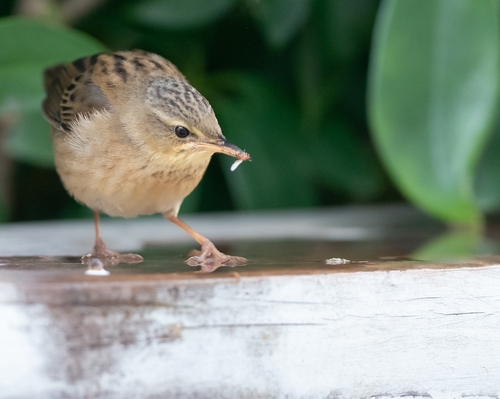 cigarrinha-de-pallas
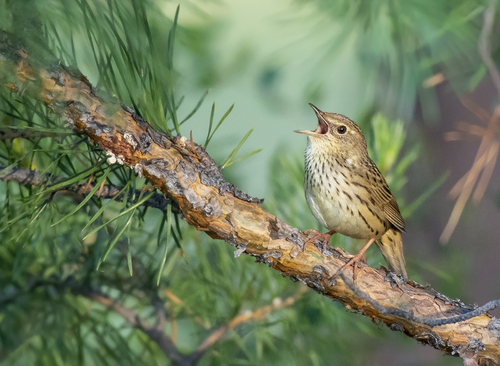 cigarrinha-lanceolada
Em resumo
A marca de campo mais confiável é a estriação das partes inferiores: a cigarrinha-lanceolada apresenta finas estrias escuras no peito, flancos e na parte inferior da cauda, enquanto a cigarrinha-de-pallas tem partes inferiores limpas e sem estrias, exceto por algumas estrias na parte inferior da cauda. Ambas têm costas marrons estriadas e podem parecer semelhantes à primeira vista, especialmente em cobertura densa ou em luz fraca. A cigarrinha-de-pallas é ligeiramente maior, com um rabo marrom mais quente e pontas brancas distintas na cauda e nas tertiais (a marca 'PG Tips'), enquanto a cigarrinha-lanceolada é menor e mais finamente estriada embaixo. Os juvenis de ambas são mais amarelados embaixo, mas a diferença na estriação das partes inferiores continua sendo a chave. Seus cantos diferem: o de Pallas é um trinado melódico, não o reel semelhante a insetos da cigarrinha-lanceolada. A atenção cuidadosa à estriação das partes inferiores e ao padrão da cauda/asa é a melhor maneira de separar essas duas no campo.
Dicas de identificação
- A estriação das partes inferiores é a marca mais confiável: A cigarrinha-lanceolada sempre apresenta finas estrias escuras no peito, flancos e na parte inferior da cauda, em todas as plumagens. A cigarrinha-de-pallas é limpa e sem estrias embaixo, exceto por algumas estrias na parte inferior da cauda. Isso se aplica a adultos e juvenis.
- Procure por pontas brancas na cauda e nas tertiais (Pallas): A cigarrinha-de-pallas apresenta pontas brancas nítidas na cauda e nas tertiais, especialmente quando o pássaro balança a cauda ou as asas. A cigarrinha-lanceolada não possui essas pontas brancas.
- Cor do rabo: A cigarrinha-de-pallas tem um rabo marrom enferrujado mais quente em comparação com o rabo menos contrastante da cigarrinha-lanceolada. Isso é sutil, mas pode ajudar se o pássaro abrir a cauda ou mostrar as costas.
- Tamanho: A cigarrinha-de-pallas é ligeiramente maior e mais robusta que a cigarrinha-lanceolada, mas isso só é útil se você tiver comparação direta ou experiência.
- Coloração juvenil: Os juvenis de ambas as espécies são mais amarelados embaixo, mas o padrão de estriação continua sendo diagnóstico: a cigarrinha-lanceolada é estriada, a cigarrinha-de-pallas não é (exceto na parte inferior da cauda).
- Canto: A cigarrinha-de-pallas canta um trinado melódico, semelhante ao Acrocephalus; a cigarrinha-lanceolada (por implicação) emite um canto mais típico de Locustella. Use o canto com cautela, pois ambos podem ser ventriloquiais e difíceis de localizar.
- Estriação nas costas: Ambas têm costas marrons estriadas; isso não é um separador.
- Estriação na parte inferior da cauda: Ambas mostram alguma estriação aqui, mas apenas a cigarrinha-lanceolada estende essa estriação pelos flancos e peito.
- Habitat: Ambas usam cobertura densa e gramínea e podem se sobrepor em alcance; o habitat não é um separador seguro.
- Comportamento: Ambas são furtivas e difíceis de ver, rastejando pela grama; o comportamento não as separa de forma confiável.
- Estrutura do bico, asa e cauda: Nenhuma diferença forte foi notada; ambas são típicas de Locustella/Helopsaltes em forma.
- Visões de voo: Fique atento às pontas brancas da cauda da cigarrinha-de-pallas em voo; a cauda da cigarrinha-lanceolada é simples.
- Contexto: Se visto cantando, note o tipo de canto para confirmação adicional.
- Armadilhas: Não confie na estriação das costas ou na tonalidade marrom geral; concentre-se na estriação das partes inferiores e na cor das pontas da cauda/asa.
- Sexo e estação: Ambos os sexos são semelhantes; a variação sazonal é mínima, exceto pela amarelidade juvenil, que não afeta a principal diferença de estriação.
Tamanho
A cigarrinha-de-pallas é um pássaro de tamanho médio, ligeiramente maior que a cigarrinha-lanceolada, que é descrita como pequena. A diferença é sutil no campo e nem sempre confiável em um único pássaro, mas se vistos lado a lado, a cigarrinha-de-pallas parece um pouco mais robusta e longa, especialmente na cauda. Ambas as espécies são proporcionalmente semelhantes, sem menção de diferenças óbvias no comprimento do bico ou na projeção da asa.
Plumagem
- Pássaros juvenis/imaturos: Os jovens de ambas as espécies são mais amarelados embaixo, mas os juvenis da cigarrinha-lanceolada já mostram as características finas e escuras estrias no peito, flancos e na parte inferior da cauda, enquanto os juvenis da cigarrinha-de-pallas permanecem em grande parte sem estrias embaixo, exceto por algumas estrias na parte inferior da cauda.
- Adultos: A cigarrinha-de-pallas tem uma costa marrom estriada, um rabo marrom quente e partes inferiores limpas de cinza claro sem estrias, exceto na parte inferior da cauda. Sua cauda e tertiais mostram pontas brancas, que podem ser vistas em boa luz ou quando o pássaro abre a cauda ou balança as asas. Os adultos da cigarrinha-lanceolada têm uma costa marrom estriada, mas suas partes inferiores são distintamente estriadas com finas marcas escuras em forma de 'cabeça de lança' no peito, flancos e na parte inferior da cauda. A cauda e as tertiais não têm as pontas brancas nítidas da cigarrinha-de-pallas. Ambas têm estriação semelhante nas partes superiores, mas o padrão das partes inferiores é o principal separador.
- Visões de voo: Nenhuma nota específica sobre diferenças na asa superior ou no padrão de voo, mas as pontas brancas da cauda da cigarrinha-de-pallas podem aparecer em voo, enquanto a cauda da cigarrinha-lanceolada parece mais simples.
Comportamento
Ambas as espécies são secretivas e preferem se esconder em grama densa ou folhagem baixa, raramente se mostrando, exceto quando cantando. A cigarrinha-de-pallas é notada como especialmente difícil de ver, rastejando pela grama e arbustos baixos. Não há menção de grandes diferenças comportamentais entre as duas, portanto, o comportamento sozinho não é um separador confiável.
Habitat
Ambas as espécies se reproduzem em pastagens úmidas, pântanos ou áreas gramadas densas em toda a Palearctico, com faixas sobrepostas em partes do nordeste da Ásia. A cigarrinha-de-pallas se reproduz nas Montanhas Altai, passando pela Mongólia e nordeste da China até Sakhalin e as Kurils, enquanto a cigarrinha-lanceolada se reproduz do noroeste da Rússia europeia até o norte do Japão. Ambas invernam no Sudeste Asiático. O habitat não é um separador forte onde suas faixas se sobrepõem, pois ambas preferem ambientes densos e gramados semelhantes.
Voz
A cigarrinha-de-pallas tem um canto que é uma melodia inventiva, semelhante ao Acrocephalus, bem diferente do reel mecânico e semelhante a insetos da cigarrinha-malhada e de outros pássaros Locustella. O canto da cigarrinha-lanceolada não é descrito em detalhes aqui, mas por omissão, implica ser mais típico de Locustella (reel ou semelhante a insetos). Assim, se você ouvir um trinado melódico, isso aponta para a cigarrinha-de-pallas; se você ouvir um reel mecânico, suspeite da cigarrinha-lanceolada (mas confirme com marcas visuais, pois o canto pode ser variável e difícil de localizar em cobertura densa).
cigarrinha-de-pallas · cigarrinha-lanceolada · Minhas aves difíceis