

rouxinol-grande-oriental vs marsh grassbird
Acrocephalus orientalis versus Helopsaltes pryeri
Jogue um quiz com rouxinol-grande-oriental e marsh grassbird
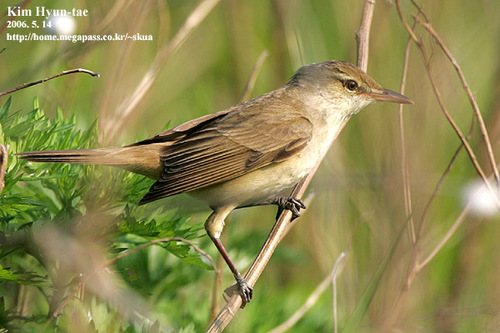 rouxinol-grande-oriental
 marsh grassbird
Em resumo
A marca de campo mais confiável entre o rouxinol-grande-oriental e o marsh grassbird é as pontas pálidas distintas das penas da cauda do rouxinol-grande-oriental, visíveis em todas as plumagens e especialmente úteis quando o pássaro está em voo ou balançando a cauda. O rouxinol-grande-oriental também é notavelmente maior, com um bico mais pesado e longo e uma aparência mais robusta, enquanto o marsh grassbird é menor, mais esguio e não possui as pontas pálidas na cauda. Diferenças estruturais na forma do bico e da cauda, bem como distinções sutis na plumagem ao redor do rosto e das partes inferiores, ajudam a separá-los quando empoleirados. A voz e o habitat podem apoiar a identificação, mas são menos diagnósticos do que a cauda e o tamanho.
Dicas de identificação
- Pontas pálidas na cauda (todas as idades): O rouxinol-grande-oriental sempre apresenta pontas brancas distintas nas penas da cauda, visíveis quando empoleirado ou em voo. O marsh grassbird nunca mostra essa característica; se você ver pontas pálidas na cauda, descarte o marsh grassbird.
- Tamanho e estrutura: O rouxinol-grande-oriental é notavelmente maior e mais robusto, com um bico mais longo e pesado e um corpo mais robusto. O marsh grassbird é menor, mais esguio e mais delicado, com um bico mais fino.
- Cor e forma do bico: O bico do rouxinol-grande-oriental é marron acima, rosa abaixo, com uma abertura laranja brilhante—especialmente óbvia em pássaros frescos ou quando cantando. O bico do marsh grassbird é mais curto, mais fino e não possui a abertura laranja.
- Forma da cauda: O rouxinol-grande-oriental tem uma cauda mais curta e com extremidade mais quadrada em comparação com a cauda mais longa e graduada de alguns outros rouxinóis, mas a cauda do marsh grassbird não é descrita como quadrada ou com pontas pálidas.
- Padrão do rosto: O rouxinol-grande-oriental apresenta uma forte faixa ocular escura e um supercílios esbranquiçado (sobrancelha). O rosto do marsh grassbird é mais simples, com um supercílios menos distinto e menos contraste facial.
- Listras na garganta e no peito: O rouxinol-grande-oriental tem listras estreitas acinzentadas na garganta e no peito, que podem ser vistas de perto. O marsh grassbird não menciona tais listras, sugerindo uma parte inferior mais simples.
- Partes inferiores: O rouxinol-grande-oriental é esbranquiçado abaixo com flancos mais marrons e coberturas da cauda. As partes inferiores do marsh grassbird são geralmente mais simples e menos contrastantes.
- Cor das patas: O rouxinol-grande-oriental tem patas cinzas, o que pode ajudar se visto bem; a cor das patas do marsh grassbird não é especificada, mas é improvável que seja tão distinta.
- Comportamento de empoleiramento: O rouxinol-grande-oriental frequentemente canta ou chama de poleiros expostos no topo de juncos ou arbustos. O marsh grassbird é mais secreto, raramente empoleirando-se abertamente.
- Comportamento em voo: O rouxinol-grande-oriental parece maior e mais poderoso em voo, enquanto o marsh grassbird é mais leve e mais agitado.
- Contexto do habitat: Se o pássaro estiver em um juncal alto e aberto e cantando de um poleiro proeminente, é mais provável que seja um rouxinol-grande-oriental. Se estiver se movendo por um pântano denso e gramado, é mais provável que seja um marsh grassbird.
- Vocalizações: Se você ouvir um 'chack' alto e áspero ou uma mistura de notas de trinado e crocitar de um poleiro exposto, suspeite do rouxinol-grande-oriental. A canção do marsh grassbird não é descrita aqui, então use cautela.
- Estação e localização: Ambas as espécies podem se sobrepor no Leste Asiático, mas o rouxinol-grande-oriental é mais provável em juncais extensos, especialmente durante a migração e reprodução.
- Confusão juvenil: Mesmo em plumagens juvenis ou de primeiro inverno, as pontas pálidas da cauda do rouxinol-grande-oriental permanecem um separador chave do marsh grassbird.
- Quando em dúvida: Se o pássaro não tiver pontas pálidas na cauda, for pequeno e esguio, com um rosto e partes inferiores simples, e estiver se comportando secretamente em um pântano gramado, incline-se para o marsh grassbird.
Tamanho
O rouxinol-grande-oriental é um grande rouxinol, medindo 18–20 cm de comprimento com uma envergadura de 23–26 cm [wikipedia]. O marsh grassbird é menor e mais esguio no geral, sem medidas diretas fornecidas aqui, mas é notavelmente menos volumoso e mais delicado em estrutura. O bico mais longo e pesado do rouxinol-grande-oriental e seu corpo mais robusto são aparentes quando ambas as espécies são vistas lado a lado ou com experiência. As proporções do marsh grassbird são mais típicas de Locustellidae: esguias, com um bico mais fino e uma presença menos imponente.
Plumagem
- Juvenil/imaturo/primeiro inverno (e adulto) em voo: O rouxinol-grande-oriental apresenta pontas brancas óbvias nas penas da cauda, uma característica não presente no marsh grassbird em nenhuma idade. Esta ponta pálida da cauda é visível tanto quando o pássaro está empoleirado quanto especialmente em voo, e é um separador chave em todas as plumagens.
- Adultos (empoleirados): O rouxinol-grande-oriental é marron acima com um rabo mais claro, partes inferiores esbranquiçadas e flancos e coberturas da cauda mais marrons. Ele tem uma faixa ocular escura e um supercílios esbranquiçado (faixa acima do olho), com listras estreitas acinzentadas na garganta e no peito. O marsh grassbird não possui a ponta pálida da cauda e tipicamente tem menos contraste no padrão do rosto, com um supercílios menos distinto e nenhuma menção de listras na garganta/peito nas notas disponíveis. As partes inferiores do marsh grassbird são geralmente mais simples e menos contrastantes do que as do rouxinol-grande-oriental.
- Bico e patas: O bico do rouxinol-grande-oriental é mais longo, mais pesado, marron acima e rosa abaixo com uma abertura laranja brilhante; as patas são cinzas. O bico do marsh grassbird é mais curto e mais fino, sem menção de uma abertura colorida.
Comportamento
O rouxinol-grande-oriental frequentemente canta de um poleiro proeminente, como o topo de um caule de junco ou arbusto, tornando-se conspícuo. Sua aparência é mais ereta e robusta, combinando com seu tamanho maior e bico mais pesado. O marsh grassbird, típico de Locustellidae, é mais furtivo e menos propenso a empoleirar-se abertamente, frequentemente se movendo através da vegetação densa do pântano e mostrando um comportamento mais secreto e de rastejamento. Em voo, o rouxinol-grande-oriental parece maior e mais poderoso, enquanto o marsh grassbird é mais leve e mais agitado.
Habitat
Ambas as espécies ocorrem em habitats de zonas úmidas, mas o rouxinol-grande-oriental está mais estritamente associado a juncais, especialmente juncos altos e bordas arbustivas. O marsh grassbird prefere pântanos e charcas com vegetação densa e gramada, frequentemente em áreas onde os juncos são menos dominantes. Embora seus habitats se sobreponham no Leste Asiático, o microhabitat pode ser uma pista: o rouxinol-grande-oriental prefere juncais abertos e poleiros visíveis, enquanto o marsh grassbird é mais frequentemente escondido em áreas gramadas, de junco ou pantanosas.
Voz
A canção do rouxinol-grande-oriental é uma mistura de frases de trinado e notas guturais e crocitar, frequentemente entregues de um poleiro proeminente. Ele também emite um chamado alto e áspero 'chack'. As vocalizações do marsh grassbird não são descritas nas notas fornecidas, então a voz é menos confiável para separação, a menos que a canção ou o chamado distintivo do rouxinol-grande-oriental seja ouvido.
rouxinol-grande-oriental · marsh grassbird · Minhas aves difíceis