

borrelho-oriental vs tibetan sand-plover
Anarhynchus veredus versus Anarhynchus atrifrons
Jogue um quiz com borrelho-oriental e tibetan sand-plover
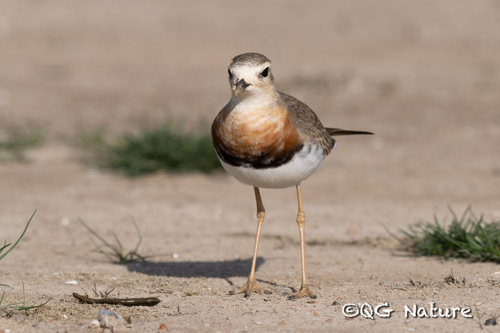 borrelho-oriental
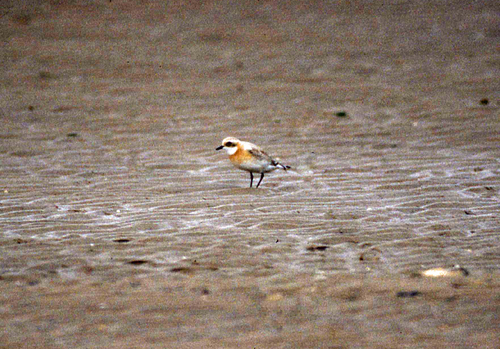 tibetan sand-plover
Em resumo
A marca de campo mais confiável entre borrelho-oriental e tibetan sand-plover é a distinta faixa peitoral castanha larga do borrelho-oriental em machos adultos em época de reprodução, que nunca é exibida pelo tibetan sand-plover. Para aves não reprodutoras e imaturas, o borrelho-oriental é maior, com pernas e asas mais longas, apresentando um rosto geralmente mais claro e uma faixa branca acima do olho, enquanto o tibetan sand-plover é menor e exibe uma máscara preta e um peito laranja em plumagem de reprodução. Aves juvenis e não reprodutoras de ambas as espécies podem ser confusas, mas o borrelho-oriental tende a parecer mais esguio e mais claro no geral. Em voo ou à distância, a estrutura e o tamanho são frequentemente mais úteis do que a plumagem. A sobreposição de habitat é possível durante a migração, mas o borrelho-oriental inverna mais ao sudeste.
Dicas de identificação
- Tamanho e estrutura: O borrelho-oriental é maior, com pernas e asas mais longas do que o tibetan sand-plover. Use isso especialmente quando as aves estão lado a lado ou em bandos mistos.
- Postura: O borrelho-oriental frequentemente fica mais ereto e parece mais esguio, enquanto o tibetan sand-plover é mais compacto e horizontal.
- Plumagem de macho adulto em reprodução: Machos de borrelho-oriental apresentam uma ampla faixa peitoral castanha rica, contornada acima por uma faixa preta estreita e um rosto/garganta brancos—essa combinação é única e diagnóstica. O tibetan sand-plover nunca exibe esse padrão.
- Padrão facial da plumagem de reprodução: O tibetan sand-plover em plumagem de reprodução tem uma máscara preta distinta e um peito e pescoço laranja claro. O borrelho-oriental não possui a máscara preta e tem uma faixa peitoral castanha muito mais rica em vez disso.
- Plumagem não reprodutora e juvenil: Ambas as espécies são discretas, mas o borrelho-oriental tipicamente apresenta um rosto mais claro com um supercílios branco (faixa acima do olho), enquanto o tibetan sand-plover é mais uniformemente marrom acima e menos contrastante no rosto.
- Marcas faciais: Procure pela faixa branca acima do olho no borrelho-oriental (todas as idades, exceto machos adultos em reprodução, onde o rosto é principalmente branco). O tibetan sand-plover pode ter um pouco de branco na testa, mas não possui o forte supercílios.
- Cor da parte inferior: Na época de reprodução, a faixa peitoral castanha do borrelho-oriental é muito mais ampla e rica do que o laranja pálido do tibetan sand-plover. Fora da reprodução, ambos são principalmente brancos na parte inferior, mas o borrelho-oriental pode parecer mais limpo e brilhante.
- Projeção das asas e cauda: O borrelho-oriental tem asas e pernas mais longas, que podem ser vistas quando a ave está em pé ou em voo. O tibetan sand-plover é mais compacto.
- Bico: Nenhuma diferença forte é notada nas fontes disponíveis, mas o borrelho-oriental pode parecer ter um bico proporcionalmente mais fino devido ao seu tamanho maior.
- Habitat e distribuição: Na Austrália e na Indonésia, o borrelho-oriental é esperado; na África, apenas o tibetan sand-plover ocorre. No Sul e Sudeste Asiático, verifique todas as outras marcas cuidadosamente, pois ambos podem estar presentes.
- Diferenças sexuais: No tibetan sand-plover, os machos são mais claros do que as fêmeas em plumagem de reprodução. As fêmeas e os machos não reprodutores do borrelho-oriental são semelhantes e menos distintivos do que os machos em reprodução.
- Armadilhas: Aves não reprodutoras e juvenis de ambas as espécies podem ser muito semelhantes, especialmente à distância. Confie na estrutura e no padrão facial se a faixa peitoral ou a máscara não forem visíveis.
- Visões em voo: Nenhuma diferença distintiva de padrão de asa superior ou de voo é descrita para essas espécies nas notas disponíveis. Use tamanho, estrutura e padrão da parte inferior se visíveis.
- Bandos mistos: Se ambas as espécies estiverem presentes, o borrelho-oriental se destacará como a ave maior, mais clara e com pernas mais longas.
- Contexto sazonal: A plumagem de reprodução é exibida no verão do hemisfério norte; fora desse período, ambas as espécies são mais apagadas, então pistas estruturais e faciais se tornam mais importantes.
Tamanho
O borrelho-oriental é notavelmente maior (21–25 cm de comprimento, 46–53 cm de envergadura, 95 g) do que o tibetan sand-plover, que é descrito como de tamanho médio, mas é menor e mais compacto no geral [wikipedia]. O borrelho-oriental também parece ter pernas e asas mais longas, dando-lhe um perfil mais esticado e ereto. Quando vistos juntos, o borrelho-oriental se destaca como a ave maior e mais esguia.
Plumagem
- Plumagem juvenil e não reprodutora: Ambas as espécies apresentam partes superiores cinza-marrons e partes inferiores brancas, mas os juvenis e aves não reprodutoras do borrelho-oriental frequentemente têm um rosto mais claro com um supercílios branco (faixa acima do olho), enquanto o tibetan sand-plover é mais uniformemente marrom acima, com menos contraste facial e mais branco variável na testa e nas costas. Nenhuma diferença distintiva de padrão de asa superior ou de voo é descrita para imaturos nas notas disponíveis.
- Plumagem de reprodução de adultos: O macho do borrelho-oriental é inconfundível com seu rosto, garganta e coroa frontal brancos, nitidamente contornados por uma faixa preta estreita e uma ampla faixa peitoral castanha rica. Fêmeas e borrelhos-orientais não reprodutores são mais discretos, mas ainda mostram um rosto claro e uma faixa branca acima do olho. O tibetan sand-plover em plumagem de reprodução tem uma máscara preta e um peito e pescoço laranja claro, mas o laranja é mais pálido do que o castanho do borrelho-oriental, e a máscara é uma característica única não mostrada pelo borrelho-oriental. Fêmeas são, em média, mais claras do que machos no tibetan sand-plover.
Comportamento
Nenhuma diferença comportamental forte é descrita nas notas disponíveis. Ambas as espécies são típicas de borrelhos, forrageando em solo aberto. O borrelho-oriental pode parecer mais ereto e majestoso devido às suas pernas e pescoço mais longos, especialmente quando alerta. O tibetan sand-plover é mais compacto e pode parecer mais ativo ou agachado.
Habitat
Ambas as espécies se reproduzem em regiões de estepes ou planaltos da Ásia Central, mas suas áreas de não reprodução diferem. O borrelho-oriental inverna na Indonésia, Nova Guiné e no norte da Austrália, enquanto o tibetan sand-plover inverna em toda a África oriental e meridional, sul, leste e sudeste da Ásia. A sobreposição é possível no sul e sudeste da Ásia durante a migração, mas o borrelho-oriental é mais provável na Austrália e Indonésia, e o tibetan sand-plover é mais amplamente distribuído na África e no sul da Ásia.
borrelho-oriental · tibetan sand-plover · Minhas aves difíceis