

Motmot

orchard oriole vs black-throated gray warbler

Icterus spurius versus Setophaga nigrescens

Jogue um quiz com orchard oriole e black-throated gray warbler
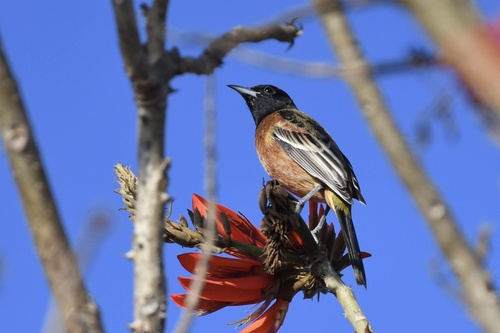
orchard oriole (Icterus spurius) orchard oriole
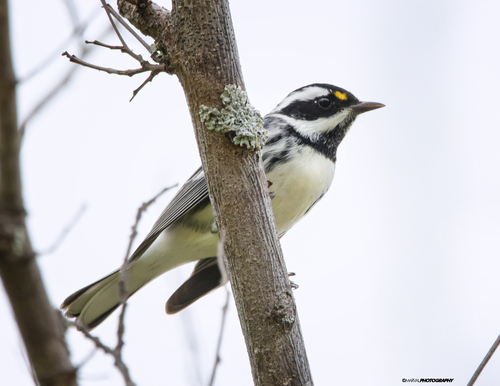
black-throated gray warbler (Setophaga nigrescens) black-throated gray warbler

Mídia

Carregando…

Em resumo

The most reliable field mark to separate Orchard Oriole from Black-throated Gray Warbler is overall coloration and pattern: Orchard Oriole (especially adult males) shows rich chestnut or ochre underparts with black elsewhere, while Black-throated Gray Warbler always has gray and white plumage with bold black striping and a small yellow spot in front of the eye. Immature and female Orchard Orioles can be confused with warblers due to their yellowish and olive tones, but the warbler’s crisp black-and-white head stripes and yellow lore spot are unique. Structure is also helpful: Orchard Oriole is noticeably larger and bulkier with a pointed, longer bill, while the warbler is smaller and more delicate. In flight, Orchard Oriole often shows white wing bars and a more swooping, low flight style, while the warbler’s flight is quicker and more fluttery.

Dicas de identificação

  1. Overall Size and Structure: Orchard Oriole is much larger and bulkier than Black-throated Gray Warbler. Use this when both species are seen in the same area or with familiar birds for scale.
  2. Bill Shape: Orchard Oriole has a long, pointed, and thick black bill with some blue-gray at the base of the lower mandible; the warbler has a short, fine, pointed bill typical of warblers. This is visible even at a distance with binoculars.
  3. Adult Male Plumage: Adult male Orchard Oriole is deep chestnut (or ochre in I. s. fuertesi) below and on the rump, with black elsewhere. Black-throated Gray Warbler males are never chestnut or ochre, always gray, white, and black with a solid black throat and crown.
  4. Female and Immature Plumage: Female and juvenile Orchard Orioles are olive-green above and yellowish below, with white wing bars. First-year males may show black lores and a small bib. Black-throated Gray Warbler females are gray above, white below, with black streaks on the flanks and a white throat; never olive or yellowish overall.
  5. White Wing Bars: Orchard Oriole (all ages) shows clear white wing bars; Black-throated Gray Warbler has more subtle wing patterning without bold white bars.
  6. Head Pattern: Black-throated Gray Warbler always shows a crisp black-and-white striped head with a small yellow spot in front of the eye (lore). Orchard Oriole never shows this pattern or yellow lore spot.
  7. Throat Color: Male Black-throated Gray Warbler has a solid black throat; female has a white throat. Orchard Oriole males have a black throat but it is not set off by white as in the warbler, and females/immatures lack a black throat.
  8. Flank Streaking: Warbler shows black streaks on the flanks; Orchard Oriole does not.
  9. Underpart Color: Orchard Oriole (adult male) has rich chestnut or ochre underparts; warbler is always white below with black streaks.
  10. Flight Style: Orchard Oriole flies with strong, swooping, low flights, often at or below treetop level. Warbler flight is lighter, quicker, and more fluttery.
  11. Habitat: In breeding season, Orchard Oriole is found in open, park-like areas with deciduous trees near water in the east; Black-throated Gray Warbler is in open woodlands and pine-oak forests in the west. Overlap is rare except on migration.
  12. Vocalizations: Warbler gives sharp 'tup' or 'thick' calls and buzzy songs; oriole’s song is more melodic and whistled (not described in detail here).
  13. Tail Shape and Length: Orchard Oriole has a longer, more graduated tail; warbler’s tail is shorter and more square.
  14. Behavior: Warbler is more active and restless, often flicking wings and tail; oriole moves more deliberately and may be seen feeding on fruit or nectar as well as insects.
  15. Common Pitfall: Immature/female Orchard Orioles can be mistaken for warblers due to their yellowish tones, but always check for the oriole’s larger size, thicker bill, and white wing bars versus the warbler’s crisp head stripes and yellow lore spot.

Tamanho

Orchard Oriole is significantly larger: 15–18 cm (5.9–7.1 in) in length, 16–28 g (0.6–1.0 oz) in weight, and a wingspan of about 25 cm (9.8 in) [wikipedia][avonet]. Black-throated Gray Warbler is much smaller, at 13 cm (5.1 in) long, 8.4 g (0.30 oz) in weight, and a wingspan of 19–19.7 cm (7.5–7.8 in) [wikipedia][avonet]. The oriole appears bulkier and more robust, with a proportionally longer, thicker bill and a longer tail. The warbler is slim, with a short, fine bill and a compact jizz.

Plumagem

Juvenile and female Orchard Orioles are olive-green above and yellowish below, with white wing bars and a pointed bill. First-year males are similar but may show black lores and a small black bib. Adult males are unmistakable with chestnut (or ochre in I. s. fuertesi) underparts, shoulder, and rump, and black elsewhere. All Orchard Orioles have white wing bars regardless of age. In contrast, Black-throated Gray Warbler of all ages and sexes is gray above with black streaks, white below with black flank streaks, and always shows a bold black-and-white head pattern and a small yellow spot in front of the eye. Adult males have a solid black throat and crown, while females are paler with a white throat and less distinct black. The warbler never shows chestnut or ochre, nor the overall olive/yellow tones of the oriole. The warbler’s wings lack bold white bars, instead showing a more subtle pattern, and the yellow lore spot is unique to this species.

Comportamento

Orchard Oriole typically forages in trees and shrubs, often near water, and may be seen swooping low in flight, usually at or below treetop level. Their flight is strong and direct, often close to the ground. Black-throated Gray Warbler is much more active and restless, moving quickly through foliage, gleaning insects, and often flicking its wings and tail. Its flight is lighter, quicker, and more fluttery, typical of small warblers. Courtship displays are only described for the oriole (bowing, seesawing, and wing-fluttering).

Habitat

Orchard Oriole breeds in semi-open areas with deciduous trees, often near lakes and streams, and prefers shaded trees in parks and riparian corridors across eastern North America and into Mexico [wikipedia]. Black-throated Gray Warbler breeds in western North America, especially in open woodlands, pine-oak forests, and brushy areas, and winters mostly in Mexico. While both can be found in trees, their ranges overlap little except on migration, and their habitat preferences are distinct: oriole favors more open, park-like settings near water, while the warbler prefers drier, coniferous or mixed woodlands.

Voz

Orchard Oriole’s song is not described in the notes, but it is generally a series of whistled phrases. Black-throated Gray Warbler gives a sharp 'tup' or 'thick' call, and the male’s song is a series of buzzy notes, with doubled early notes and a high next-to-last note. The warbler’s calls are flat and unmusical, unlike the oriole’s more melodic song. In the field, the warbler’s sharp calls and buzzy song are distinctive and quite different from any oriole vocalization.

Enviar uma descrição melhor

Use as mesmas seções da comparação. Seu texto é publicado na hora.

The most reliable field mark to separate Orchard Oriole from Black-throated Gray Warbler is overall coloration and pattern: Orchard Oriole (especially adult males) shows rich chestnut or ochre underparts with black elsewhere, while Black-throated Gray Warbler always has gray and white plumage with bold black striping and a small yellow spot in front of the eye. Immature and female Orchard Orioles can be confused with warblers due to their yellowish and olive tones, but the warbler’s crisp black-and-white head stripes and yellow lore spot are unique. Structure is also helpful: Orchard Oriole is noticeably larger and bulkier with a pointed, longer bill, while the warbler is smaller and more delicate. In flight, Orchard Oriole often shows white wing bars and a more swooping, low flight style, while the warbler’s flight is quicker and more fluttery.

  1. Overall Size and Structure: Orchard Oriole is much larger and bulkier than Black-throated Gray Warbler. Use this when both species are seen in the same area or with familiar birds for scale.
  2. Bill Shape: Orchard Oriole has a long, pointed, and thick black bill with some blue-gray at the base of the lower mandible; the warbler has a short, fine, pointed bill typical of warblers. This is visible even at a distance with binoculars.
  3. Adult Male Plumage: Adult male Orchard Oriole is deep chestnut (or ochre in I. s. fuertesi) below and on the rump, with black elsewhere. Black-throated Gray Warbler males are never chestnut or ochre, always gray, white, and black with a solid black throat and crown.
  4. Female and Immature Plumage: Female and juvenile Orchard Orioles are olive-green above and yellowish below, with white wing bars. First-year males may show black lores and a small bib. Black-throated Gray Warbler females are gray above, white below, with black streaks on the flanks and a white throat; never olive or yellowish overall.
  5. White Wing Bars: Orchard Oriole (all ages) shows clear white wing bars; Black-throated Gray Warbler has more subtle wing patterning without bold white bars.
  6. Head Pattern: Black-throated Gray Warbler always shows a crisp black-and-white striped head with a small yellow spot in front of the eye (lore). Orchard Oriole never shows this pattern or yellow lore spot.
  7. Throat Color: Male Black-throated Gray Warbler has a solid black throat; female has a white throat. Orchard Oriole males have a black throat but it is not set off by white as in the warbler, and females/immatures lack a black throat.
  8. Flank Streaking: Warbler shows black streaks on the flanks; Orchard Oriole does not.
  9. Underpart Color: Orchard Oriole (adult male) has rich chestnut or ochre underparts; warbler is always white below with black streaks.
  10. Flight Style: Orchard Oriole flies with strong, swooping, low flights, often at or below treetop level. Warbler flight is lighter, quicker, and more fluttery.
  11. Habitat: In breeding season, Orchard Oriole is found in open, park-like areas with deciduous trees near water in the east; Black-throated Gray Warbler is in open woodlands and pine-oak forests in the west. Overlap is rare except on migration.
  12. Vocalizations: Warbler gives sharp 'tup' or 'thick' calls and buzzy songs; oriole’s song is more melodic and whistled (not described in detail here).
  13. Tail Shape and Length: Orchard Oriole has a longer, more graduated tail; warbler’s tail is shorter and more square.
  14. Behavior: Warbler is more active and restless, often flicking wings and tail; oriole moves more deliberately and may be seen feeding on fruit or nectar as well as insects.
  15. Common Pitfall: Immature/female Orchard Orioles can be mistaken for warblers due to their yellowish tones, but always check for the oriole’s larger size, thicker bill, and white wing bars versus the warbler’s crisp head stripes and yellow lore spot.

Orchard Oriole is significantly larger: 15–18 cm (5.9–7.1 in) in length, 16–28 g (0.6–1.0 oz) in weight, and a wingspan of about 25 cm (9.8 in) [wikipedia][avonet]. Black-throated Gray Warbler is much smaller, at 13 cm (5.1 in) long, 8.4 g (0.30 oz) in weight, and a wingspan of 19–19.7 cm (7.5–7.8 in) [wikipedia][avonet]. The oriole appears bulkier and more robust, with a proportionally longer, thicker bill and a longer tail. The warbler is slim, with a short, fine bill and a compact jizz.

Juvenile and female Orchard Orioles are olive-green above and yellowish below, with white wing bars and a pointed bill. First-year males are similar but may show black lores and a small black bib. Adult males are unmistakable with chestnut (or ochre in I. s. fuertesi) underparts, shoulder, and rump, and black elsewhere. All Orchard Orioles have white wing bars regardless of age. In contrast, Black-throated Gray Warbler of all ages and sexes is gray above with black streaks, white below with black flank streaks, and always shows a bold black-and-white head pattern and a small yellow spot in front of the eye. Adult males have a solid black throat and crown, while females are paler with a white throat and less distinct black. The warbler never shows chestnut or ochre, nor the overall olive/yellow tones of the oriole. The warbler’s wings lack bold white bars, instead showing a more subtle pattern, and the yellow lore spot is unique to this species.

Orchard Oriole typically forages in trees and shrubs, often near water, and may be seen swooping low in flight, usually at or below treetop level. Their flight is strong and direct, often close to the ground. Black-throated Gray Warbler is much more active and restless, moving quickly through foliage, gleaning insects, and often flicking its wings and tail. Its flight is lighter, quicker, and more fluttery, typical of small warblers. Courtship displays are only described for the oriole (bowing, seesawing, and wing-fluttering).

Orchard Oriole breeds in semi-open areas with deciduous trees, often near lakes and streams, and prefers shaded trees in parks and riparian corridors across eastern North America and into Mexico [wikipedia]. Black-throated Gray Warbler breeds in western North America, especially in open woodlands, pine-oak forests, and brushy areas, and winters mostly in Mexico. While both can be found in trees, their ranges overlap little except on migration, and their habitat preferences are distinct: oriole favors more open, park-like settings near water, while the warbler prefers drier, coniferous or mixed woodlands.

Orchard Oriole’s song is not described in the notes, but it is generally a series of whistled phrases. Black-throated Gray Warbler gives a sharp 'tup' or 'thick' call, and the male’s song is a series of buzzy notes, with doubled early notes and a high next-to-last note. The warbler’s calls are flat and unmusical, unlike the oriole’s more melodic song. In the field, the warbler’s sharp calls and buzzy song are distinctive and quite different from any oriole vocalization.

Descartar as alterações?

Você tem edições não salvas. Se sair agora, elas serão perdidas.

orchard oriole · black-throated gray warbler · Minhas aves difíceis