

limpa-folha-ocráceo vs limpa-folha-do-brejo
Anabacerthia lichtensteini versus Syndactyla dimidiata
Jogue um quiz com limpa-folha-ocráceo e limpa-folha-do-brejo
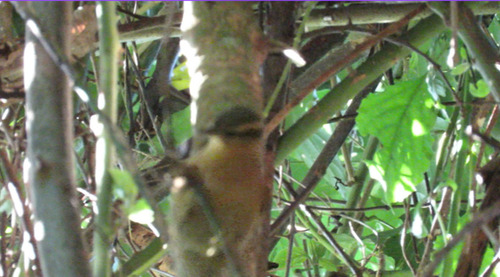 limpa-folha-ocráceo
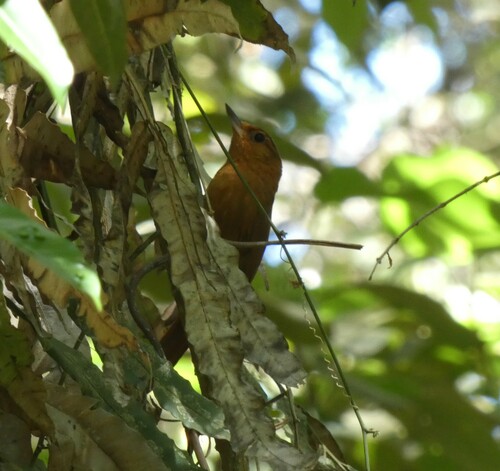 limpa-folha-do-brejo
Em resumo
The most reliable field mark between Ochre-breasted and Russet-mantled (Planalto) Foliage-gleaners is the face pattern: Ochre-breasted shows a sharply defined pale supercilium and ochraceous eye ring, while Russet-mantled has a deeper rufescent-orange face with a more diffuse, richer supercilium. Juvenile plumages differ: Ochre-breasted juveniles have gray-tipped, less uniform underparts, while Russet-mantled juveniles show a whitish throat and brown-barred breast. Structurally, Russet-mantled is heavier and has a longer, more pointed bill. Both species are similar in overall shape and tail color, but careful attention to head pattern and underpart color in all ages is key. Habitat overlap is significant, so context alone is not reliable.
Dicas de identificação
- Face pattern (all ages): Ochre-breasted shows a sharply defined pale ochraceous supercilium and eye ring, with a dark brownish post-ocular stripe and dull rufous-ochre ear coverts. Russet-mantled has a richer, deeper rufescent-orange face, with the supercilium and ear coverts blending into the overall face color and lacking sharp definition.
- Juvenile underparts: Ochre-breasted juveniles have gray-tipped, mottled underparts, while Russet-mantled juveniles have a whitish throat and brown-barred breast—if you see a barred-breasted juvenile, it's Russet-mantled.
- Bill shape: Ochre-breasted has a short, wedge-shaped bill (shortest in its genus), while Russet-mantled's bill is longer and more pointed. This is best judged in profile or when the bird is feeding.
- Bill color: Ochre-breasted's bill is brownish gray above and light gray below; Russet-mantled's is dark brown above, horn-colored below with a pinkish base. Subtle, but can help in good light.
- Crown and back color: Ochre-breasted has a dull gray-brown crown with vague pale streaks and a rufescent brown back. Russet-mantled's crown and back are brighter rufescent brown with a cinnamon tinge, often appearing warmer overall.
- Tail color: Both species have rufous tails, but Russet-mantled's is described as rufous-chestnut, sometimes with a slightly brighter tone. Not always reliable, but can support other marks.
- Wing pattern: Both have rufous brown wings, but Russet-mantled's primaries have brighter edges, which may be visible in good light or in flight.
- Underpart color (adults): Ochre-breasted's underparts are ochraceous buff, brightest on the throat and upper breast, duller below. Russet-mantled's are unmarked ochraceous rufous with faint pale streaks on the breast and an olive cast on the flanks.
- Size and structure: In direct comparison, Russet-mantled is heavier (29 g vs 21 g) and may appear bulkier, especially in the head and bill. Length overlap is significant, but Ochre-breasted can be notably smaller at the lower end.
- Leg and foot color: Ochre-breasted has greenish gray legs and feet; Russet-mantled's are olive. Subtle, but can help at close range.
- Iris color: Both have brown irises—this is not a separator.
- Sex differences: Both species are sexually monomorphic; do not use sex as a separator.
- Habitat: Both species overlap in habitat and range; do not rely on location alone for identification.
- Vocalizations: If you hear a series of 'tsjek' notes, ascending and stuttering, or a loud nasal 'cheh', you are likely hearing Russet-mantled. Absence of song is not diagnostic.
- Pitfalls: Beware of lighting conditions that can obscure subtle face and underpart color differences. Juvenile plumages are especially important for separation—look for barred breasts (Russet-mantled) versus gray-tipped, mottled underparts (Ochre-breasted).
Tamanho
Russet-mantled Foliage-gleaner is consistently larger and heavier than Ochre-breasted: 29 g vs 21 g average adult mass, and both species are about 17 cm in length, but Ochre-breasted can be as small as 15 cm. In the field, Russet-mantled may appear bulkier, especially around the head and bill. Bill shape is also a clue: Ochre-breasted has the shortest, wedge-shaped bill in its genus, while Russet-mantled's bill is longer and more pointed.
Plumagem
- Juveniles: Ochre-breasted juveniles have less uniformly colored underparts with grayish tips, giving a mottled look below. Russet-mantled juveniles have a distinctive whitish throat and brown bars across the breast, which is unique among these two and diagnostic if seen well.
- Adults: Ochre-breasted adults show a sharply defined, pale ochraceous supercilium and eye ring, with a dull gray-brown crown and rufescent brown back. The throat and upper breast are bright ochraceous buff, with the rest of the underparts duller ochraceous buff. Russet-mantled adults have a richer, deeper rufescent-orange face, especially on the supercilium and ear coverts, a cinnamon-tinged rufescent brown crown and back, and unmarked ochraceous rufous underparts with faint pale streaks on the breast and an olive cast on the flanks. The tail in both is rufous to rufous-chestnut, but Russet-mantled's is described as rufous-chestnut and the wings have brighter edges on the primaries. Bill color also differs subtly: Ochre-breasted has a brownish gray maxilla and light gray mandible, while Russet-mantled has a dark brown maxilla and a horn-colored mandible with a pinkish base.
Comportamento
Both species forage in the forest understory to mid-story, often in pairs or mixed flocks, moving through foliage and probing for arthropods. There is no strong behavioral difference noted in the sources that is diagnostic in the field.
Habitat
Both species occur in Brazil and Paraguay, with Ochre-breasted also reaching Argentina. They share lowland tropical evergreen forest and gallery forest, and both can be found in wooded cerrado. Russet-mantled is noted as rare and sensitive to disturbance, but habitat overlap is significant and not a reliable field mark.
Voz
Only Russet-mantled's voice is described: its song is a series of 'tsjek' notes, ascending and stuttering at the start and end, and its call is a loud, nasal 'cheh'. There is no vocal description for Ochre-breasted in the provided notes, so voice is not a reliable separator unless Russet-mantled's distinctive song is heard.
limpa-folha-ocráceo · limpa-folha-do-brejo · Minhas aves difíceis