

northern barred-woodcreeper vs spotted woodcreeper
Dendrocolaptes sanctithomae versus Xiphorhynchus erythropygius
Jogue um quiz com northern barred-woodcreeper e spotted woodcreeper
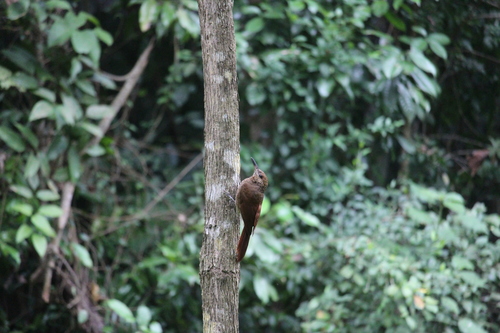 northern barred-woodcreeper
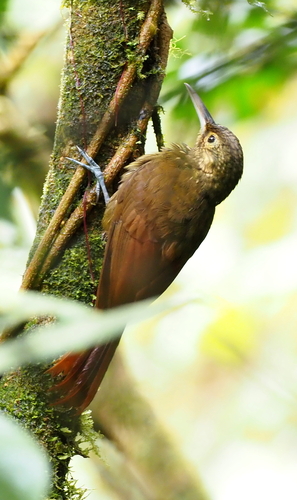 spotted woodcreeper
Em resumo
A marca de campo mais confiável entre northern barred-woodcreeper e spotted woodcreeper é o padrão das partes inferiores: o northern barred apresenta listras pretas nítidas e estreitas em um fundo dourado a canela, enquanto o spotted woodcreeper tem grandes manchas em forma de lágrima de um buff pálido em uma base verde-oliva pálida. Os juvenis de ambos são semelhantes aos adultos, mas com marcas menos distintas. Estruturalmente, o northern barred é maior, mais robusto e tem um bico mais reto e pesado, enquanto o spotted é mais esbelto, com um bico ligeiramente curvado e afilado. Em voo ou empoleirado, procure os tons ruivos mais ricos e as listras mais pesadas do northern barred em comparação com a aparência manchada e estriada do spotted. Ambos podem ser encontrados em habitats florestais semelhantes, então a atenção cuidadosa a essas diferenças de plumagem e estrutura é fundamental.
Dicas de identificação
- Padrão das partes inferiores (todas as idades): O northern barred-woodcreeper apresenta listras pretas nítidas e estreitas nas partes inferiores douradas a canela, incluindo a garganta e o ventre. O spotted woodcreeper tem grandes manchas em forma de lágrima de um buff pálido nas partes inferiores verde-oliva pálidas, com uma garganta buffy e estreitamente listrada. Esta é a marca mais confiável em todas as estações.
- Diferenças juvenis: O juvenil northern barred tem listras mais difusas abaixo, coberturas de cauda mais vermelhas e um bico totalmente preto; o juvenil spotted é mais marrom no geral, com manchas menos distintas abaixo. Essas diferenças são sutis, mas podem ajudar se vistas bem.
- Padrão da coroa e das costas: O northern barred tem listras pretas na coroa e nas costas, dando uma aparência claramente listrada acima. O spotted woodcreeper tem pequenas manchas buff e bordas escuras estreitas na coroa/nuca, e largas listras e manchas buff nas costas e coberturas das asas.
- Forma e cor do bico: O bico do northern barred é reto, de comprimento médio e principalmente escuro (totalmente preto em juvenis), parecendo mais pesado em algumas subespécies. O bico do spotted woodcreeper é ligeiramente curvado, afilado gradualmente, com uma maxila escura e uma mandíbula mais clara (às vezes com uma faixa clara). A forma do bico é frequentemente visível mesmo à distância.
- Padrão do rosto: O northern barred tem um supercílios ruivo fraco e um rosto canela-marrom com finas listras; o spotted tem um supercílios buff mais proeminente e um anel ocular, com coberturas auriculares escuras e oliveiras estriadas de buff.
- Cor do rabo e da cauda: Ambos têm caudas ruivo-castanhas, mas o rabo e a cauda do northern barred são de um ruivo-canela mais rico, enquanto os do spotted são de um ruivo-canela escuro, com as costas mais de um marrom-oliva ou marrom-tawny.
- Padrão das asas em voo: Ambos mostram penas de voo ruivo-castanhas, mas as do northern barred são mais uniformes, enquanto as do spotted têm bordas marrom-oliva e pontas escuras nas primárias.
- Tamanho e estrutura geral: O northern barred é visivelmente maior e mais robusto, com um bico mais pesado e reto; o spotted é mais esbelto e menor, com um bico mais delicado e curvado. Use isso quando ambos forem vistos juntos ou quando o tamanho for aparente em relação a objetos familiares.
- Cor das pernas e pés: As pernas e pés do northern barred são variáveis (marrom escuro, preto, verde acinzentado, azuladas ou cor de chifre), enquanto os do spotted são cinza azulado ou esverdeado a cinza ardósia. Isso raramente é diagnóstico em campo.
- Sexos: Ambas as espécies são monomórficas sexualmente em plumagem, então o sexo não é um separador útil.
- Variação de subespécies: Algumas subespécies de northern barred (por exemplo, D. s. punctipectus) têm bicos mais pesados e tons mais marrons-pretos; as subespécies do spotted woodcreeper variam em tamanho, tons ruivos e extensão de manchas/listras, mas o padrão básico das partes inferiores permanece diagnóstico.
- Contexto de habitat: Ambos podem ocorrer juntos em florestas úmidas, mas o northern barred é mais sensível à fragmentação e menos provável em habitats perturbados ou marginais.
- Comportamento em enxames de formigas: Ambos seguem formigas do exército, mas o northern barred é mais provável de ser visto sozinho ou em pares, às vezes até quatro; os números do spotted em enxames não são especificados, mas o comportamento é semelhante.
- Vocalizações: Não descritas nas notas fornecidas; não confie em canções ou chamadas para separação com essas informações.
- Armadilhas: Em luz fraca, as listras do northern barred podem parecer manchadas, e as manchas do spotted woodcreeper podem parecer listras. Foque na forma e clareza das marcas, especialmente no peito e no ventre, e use a forma e o tamanho do bico como respaldo.
Tamanho
O northern barred-woodcreeper é claramente maior e mais pesado: 25–29 cm de comprimento, com machos pesando 53–72 g e fêmeas 54–83 g. O spotted woodcreeper é menor, com 19–24 cm e mais leve, com machos pesando 40–54 g e fêmeas 40–46 g [wikipedia][wikidata]. Essa diferença de tamanho é frequentemente óbvia em comparação direta, mas pode ser sutil em campo, a menos que ambos sejam vistos juntos. O northern barred também parece mais robusto e robusto no geral.
Plumagem
-
Plumagem juvenil/imatura: Os juvenis de ambas as espécies se assemelham aos adultos, mas com marcas menos distintas. O juvenil northern barred-woodcreeper apresenta listras mais difusas abaixo, coberturas de cauda mais vermelhas e um bico totalmente preto. O juvenil spotted woodcreeper é mais marrom no geral, com manchas menos distintas nas partes inferiores.
-
Partes inferiores adultas: O northern barred-woodcreeper tem partes inferiores douradas a canela com listras pretas estreitas e bem definidas em toda parte (incluindo garganta e ventre). O spotted woodcreeper tem partes inferiores verde-oliva pálidas com grandes manchas em forma de lágrima de um buff pálido, especialmente ousadas no peito e no ventre, e uma garganta buffy e estreitamente listrada.
-
Partes superiores: O northern barred apresenta listras pretas na coroa e nas costas, com costas marrom-oliva e rabo e cauda canela/ruiva. O spotted woodcreeper tem pequenas manchas buff e bordas escuras estreitas na coroa/nuca, e largas listras e manchas buff nas costas e coberturas das asas, com um rabo e cauda ruivo-canela escuros.
-
Asas e cauda em voo: Ambos têm penas de voo e cauda ruivo-castanhas, mas as do northern barred são mais ricas e uniformes, enquanto as do spotted têm bordas marrom-oliva e pontas escuras nas primárias.
-
Bico: O bico do northern barred é reto, principalmente escuro (juvenil totalmente preto), mais pesado em algumas subespécies; o do spotted é ligeiramente curvado, escuro a marrom escuro na maxila, mandíbula mais clara.
-
Rosto: O northern barred tem um supercílios ruivo fraco e um rosto canela-marrom com finas listras; o spotted tem um supercílios buff e um anel ocular, coberturas auriculares escuras e oliveiras com listras de buff.
Comportamento
Ambas as espécies frequentemente seguem enxames de formigas do exército para se alimentar de presas perturbadas pelas formigas, às vezes sozinhas ou em pares. O northern barred-woodcreeper é descrito como exigindo uma área de vida maior e sendo mais sensível à fragmentação florestal. A forrageamento e movimento do spotted woodcreeper são semelhantes, mas não é notado como sendo tão sensível à fragmentação do habitat. Nenhuma das espécies é particularmente gregária, e ambas são tipicamente vistas se movendo metódicamente ao longo de troncos e grandes galhos.
Habitat
Ambas as espécies se sobrepõem amplamente nas florestas da América Central e do norte da América do Sul, ocorrendo do sul do México através da América Central até a Colômbia e o Equador [wikipedia]. Ambas preferem florestas úmidas, mas o northern barred-woodcreeper é geralmente menos comum em altitudes mais elevadas e em habitats marginais, e é mais sensível à fragmentação florestal. O spotted woodcreeper é encontrado em uma faixa semelhante de tipos de floresta, incluindo florestas maduras e secundárias, e não é notado como sendo tão sensível à perturbação. A abundância local pode variar, então o habitat sozinho não é um separador confiável.
northern barred-woodcreeper · spotted woodcreeper · Minhas aves difíceis