
mountain hawk-eagle vs bútio-de-faces-cinzentas
Nisaetus nipalensis versus Butastur indicus
Jogue um quiz com mountain hawk-eagle e bútio-de-faces-cinzentas
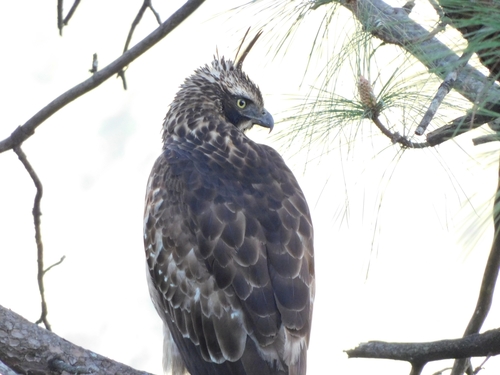 mountain hawk-eagle
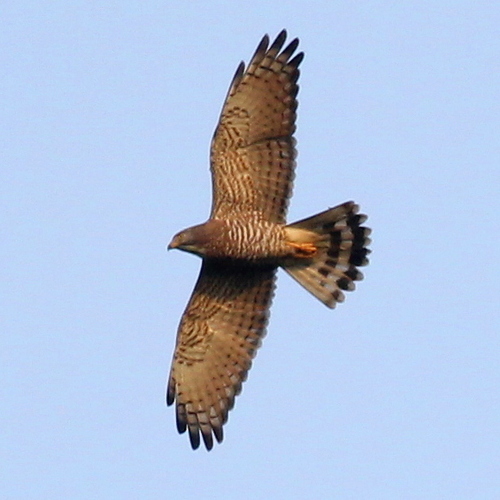 bútio-de-faces-cinzentas
Em resumo
A marca de campo mais confiável para separar o mountain hawk-eagle e o bútio-de-faces-cinzentas, especialmente em voo, é a estrutura geral: o Hawk-Eagle é muito maior, mais robusto, com asas largas e arredondadas e uma cabeça e crista proeminentes, enquanto o Buzzard é distintamente menor, com asas longas, estreitas e pontudas e uma cabeça proporcionalmente menor. As plumagens juvenis podem ser confusas, mas o juvenil do Hawk-Eagle apresenta um ventre tawny liso e um efeito escamado acima, enquanto o juvenil do Buzzard é pálido embaixo com listras marrons e um supercílios branco ousado. Os adultos também são facilmente separados pelo padrão da cabeça e pelas barras nas partes inferiores. Sempre considere o tamanho e a aparência primeiro, depois verifique a crista e a forma da cabeça, e finalmente procure detalhes da plumagem se as vistas permitirem.
Dicas de identificação
- Tamanho e estrutura: O mountain hawk-eagle é muito maior e mais robusto que o bútio-de-faces-cinzentas. Se você ver ambos juntos, o Hawk-Eagle ofusca o Buzzard. Use isso como sua primeira verificação, especialmente em voo ou empoleirados à distância.
- Forma da asa em voo: O Hawk-Eagle tem asas largas e arredondadas com secundárias salientes e uma cabeça/pescoço proeminente; o Buzzard tem asas longas, estreitas e pontudas, dando uma silhueta mais parecida com a de um falcão. Isso é especialmente notável em aves que estão planando ou deslizando.
- Crista: O Hawk-Eagle sempre exibe uma crista preta proeminente (com uma ponta clara ou branca dependendo da idade), visível tanto empoleirado quanto em voo. O Buzzard não possui crista alguma — sua cabeça é lisa e arredondada.
- Padrão da cabeça (adultos): O adulto do Hawk-Eagle tem uma cabeça avermelhada com listras pretas ousadas e um efeito de colar ruivo; o adulto do Buzzard tem uma cabeça, peito e pescoço cinzentos limpos, com uma garganta branca e listras pretas na região da bigode/mésial. O rosto do Buzzard é mais nitidamente padronizado e carece das listras do Hawk-Eagle.
- Partes inferiores juvenis: O juvenil do Hawk-Eagle é liso e tawny embaixo (sem barras ou listras); o juvenil do Buzzard é pálido embaixo com listras marrons. Se você ver uma parte inferior lisa e sem listras, é um juvenil de Hawk-Eagle; se tiver listras ou barras, é um Buzzard.
- Supercílios (juvenis): Os juvenis do Buzzard têm um supercílios branco largo e um rosto marrom, dando uma aparência 'mascarada'. Os juvenis do Hawk-Eagle não têm um supercílios forte e têm uma coroa e nuca mais uniformes e listradas.
- Padrão da asa superior (juvenis): Os juvenis do Hawk-Eagle mostram um efeito escamado acima a partir das bordas das penas claras e manchas tawny no meio da asa; os juvenis do Buzzard são mais uniformemente marrons e manchados, sem uma aparência escamada forte.
- Padrão da cauda: A cauda do Hawk-Eagle é marrom-cinza com bandas pretas obscuras e uma ponta esbranquiçada (em ambas as idades); a cauda do Buzzard é marrom acinzentada com barras horizontais claras (adultos e juvenis). As barras da cauda do Buzzard geralmente são mais distintas.
- Padrão da asa inferior: O adulto do Hawk-Eagle tem forros de asa avermelhados com manchas escuras e barras pretas nas secundárias acinzentadas; o adulto do Buzzard tem barras marrons nas asas inferiores brancas. O juvenil do Hawk-Eagle tem mais tawny embaixo e pontas de asa escuras; o juvenil do Buzzard é mais pálido com listras.
- Cor dos olhos: O adulto do Hawk-Eagle tem olhos dourados a amarelo-alaranjados; os juvenis têm olhos azul-acinzentados a amarelo pálido. Os adultos do Buzzard têm íris amarelas brilhantes, os juvenis são marrons com buff.
- Postura empoleirada: O Hawk-Eagle se senta ereto, muitas vezes com a crista levantada e uma postura poderosa, com pernas grossas. O Buzzard se empoleira mais horizontalmente, com um perfil mais elegante e menor e sem crista.
- Penas nas pernas: O Hawk-Eagle tem pernas fortemente plumadas (daí 'com penas nos pés'); as pernas do Buzzard são menos plumadas e parecem mais finas.
- Bico e pés: O Hawk-Eagle tem um bico maior e mais robusto e pés mais grossos; o bico e os pés do Buzzard são proporcionalmente menores e mais finos.
- Contexto do habitat: Em florestas densas de montanha, espere encontrar o Hawk-Eagle; em áreas de floresta aberta, bordas de floresta ou terras agrícolas, o Buzzard é mais provável.
- Estilo de voo: O voo do Hawk-Eagle é pesado, com batidas rasas e deslizamentos, com as asas frequentemente mantidas em um V raso; o Buzzard é mais leve, com um voo mais ágil e flutuante e asas pontudas.
Tamanho
O mountain hawk-eagle é um grande rapinante, substancialmente maior e mais robusto que o bútio-de-faces-cinzentas. O tamanho do Hawk-Eagle é mais próximo de um grande buteo ou de uma pequena águia, com uma construção poderosa e asas largas, enquanto o Buzzard é um pequeno rapinante (41–46 cm), muito mais esbelto e compacto. Em comparação direta, o Buzzard parecerá visivelmente menor, mais leve e mais ágil, com um bico mais curto e fino e pés menores. Essa diferença de tamanho é óbvia mesmo à distância ou em bandos mistos de rapinantes.
Plumagem
-
Juvenis: Os juvenis do mountain hawk-eagle são marrons escuros acima com bordas de penas claras a esbranquiçadas que dão uma aparência escamada, e um ventre liso tawny a tawny (sem barras ou listras), com uma crista preta com ponta branca. Sua cauda é finamente listrada de marrom com uma ponta esbranquiçada. Em contraste, os juvenis do bútio-de-faces-cinzentas são marrons e manchados acima, pálidos embaixo com listras marrons (não lisos), e têm um supercílios branco largo e um rosto marrom. Suas partes inferiores são listradas, não lisas, e o rosto é mais padronizado.
-
Adultos: Os adultos do mountain hawk-eagle são marrons escuros acima, avermelhados na cabeça com listras pretas ousadas, e têm uma crista preta com uma ponta clara. As partes inferiores são ousadamente barradas de ruivo sobre branco, com uma garganta e área malar marcadas de forma contrastante. A cauda é marrom-cinza com bandas pretas obscuras. Os adultos do bútio-de-faces-cinzentas têm uma cabeça, peito e pescoço cinzentos, garganta branca, listras pretas na região da bigode e mesial, costas e asas marrons, e barras marrons nas partes inferiores e asas inferiores brancas. A cabeça do Buzzard é cinza limpa com uma garganta branca marcante e marcas faciais pretas, enquanto a cabeça do Hawk-Eagle é avermelhada e listrada, com uma crista proeminente.
-
Em voo: O Hawk-Eagle exibe asas largas e arredondadas com secundárias salientes e uma cabeça/crista proeminente; os adultos têm forros de asas avermelhados e secundárias barradas. Os juvenis têm mais tawny embaixo e pontas de asas escuras. Os Buzzards têm asas pontudas e estreitas com penas de voo translúcidas, e os adultos mostram barras marrons nas asas inferiores brancas; os juvenis são mais pálidos embaixo com listras, não barras.
Comportamento
O mountain hawk-eagle é poderoso e ágil, frequentemente planando com as asas em um V raso ou deslizando com batidas de asas fortes e rasas e asas niveladas. Seu voo é pesado e manobrável, com uma cabeça proeminente e asas curtas e arredondadas. O bútio-de-faces-cinzentas é mais leve e mais flutuante, com um voo rápido e ágil, frequentemente visto deslizando ou planando em asas estreitas e pontudas. O voo do Buzzard é menos poderoso, mais parecido com o de um falcão, e a ave parece mais aerodinâmica e menos robusta. Empoleirado, o Hawk-Eagle se senta ereto com a crista levantada, enquanto o Buzzard parece menor, com um perfil mais elegante e sem crista.
Habitat
Ambas as espécies são rapinantes asiáticos, mas o mountain hawk-eagle está associado a montanhas e encostas florestadas, frequentemente nos Himalaias e em regiões montanhosas semelhantes. O bútio-de-faces-cinzentas se reproduz na Ásia Oriental temperada (Manchúria, Coreia, Japão) e inverna no Sudeste Asiático, frequentemente em florestas abertas, bordas de florestas ou áreas agrícolas. Em zonas de sobreposição, o contexto pode ajudar: um grande rapinante em uma floresta montanhosa profunda é mais provável que seja um Hawk-Eagle, enquanto um rapinante menor em habitats abertos ou de borda pode ser um Buzzard.
mountain hawk-eagle · bútio-de-faces-cinzentas · Minhas aves difíceis