
mountain hawk-eagle vs changeable hawk-eagle
Nisaetus nipalensis versus Nisaetus cirrhatus
Jogue um quiz com mountain hawk-eagle e changeable hawk-eagle
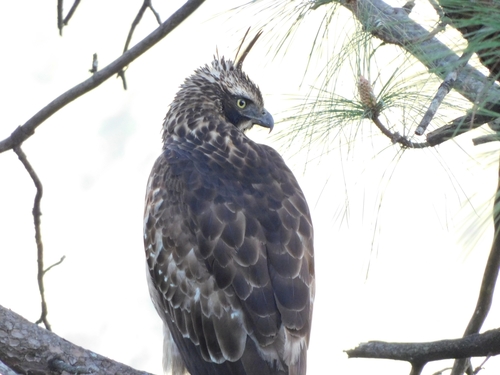 mountain hawk-eagle
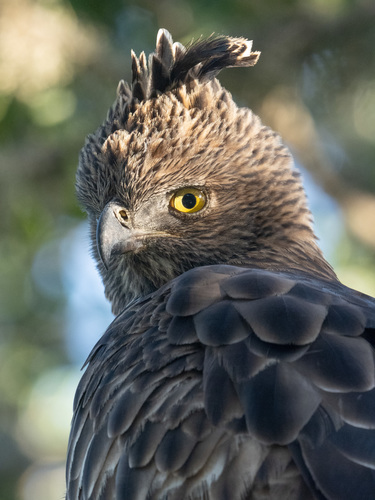 changeable hawk-eagle
Em resumo
Juvenis de mountain hawk-eagle e changeable hawk-eagle podem parecer confusamente semelhantes em voo, mas a melhor marca de campo é o padrão da parte inferior da asa e das partes inferiores: juvenis de mountain hawk-eagle apresentam uma parte inferior simples, de cor buffy a tawny, com mínima estriação, enquanto juvenis de changeable hawk-eagle são geralmente muito mais brancos embaixo, com finas estrias ou manchas no peito e um padrão de cabeça mais variável. Os adultos são mais fáceis: mountain hawk-eagles têm uma parte inferior rufosa com listras ousadas e uma cabeça enferrujada e estriada, enquanto changeable hawk-eagles são estriados embaixo com uma base branca ou buff e têm uma crista mais variável. Ambos têm asas curtas e largas e caudas longas, mas as asas do mountain hawk-eagle são mais arredondadas e salientes, dando uma aparência comprimida na base traseira. A estrutura e o estilo de voo diferem sutilmente, mas a plumagem—especialmente em imaturos—é o separador mais confiável.
Dicas de identificação
- Cor da parte inferior juvenil: Juvenis de mountain hawk-eagle são simples, de cor buffy a tawny embaixo, com pouca ou nenhuma estriação, enquanto juvenis de changeable hawk-eagle são muito mais brancos embaixo, frequentemente com finas estrias ou manchas no peito e um padrão de cabeça mais variável. Esta é a marca mais confiável para imaturos.
- Coberturas da asa superior juvenil: Juvenis de mountain hawk-eagle têm um efeito escamado nas coberturas da asa superior com manchas tawny no meio da asa; juvenis de changeable hawk-eagle têm uma escala branca mais extensa, às vezes com coberturas medianas quase todas brancas.
- Padrão da cabeça juvenil: Juvenis de mountain hawk-eagle têm estrias escuras na coroa, bochecha, nuca e pescoço posterior, mas o restante da cabeça é buffy; juvenis de changeable hawk-eagle podem ter uma cabeça buff ou esbranquiçada com manchas ou estrias escuras na coroa traseira e nuca, e uma crista preta com ponta branca (especialmente na Índia peninsular e no Sri Lanka).
- Padrão da cauda juvenil: Ambos têm uma cauda com ponta clara e listrada, mas as listras do mountain hawk-eagle são menos distintas e menos numerosas, enquanto a cauda do changeable hawk-eagle é marrom claro com cerca de sete barras escuras finas.
- Padrão da parte inferior adulta: Adultos de mountain hawk-eagle são listrados de rufoso sobre branco embaixo, com listras pretas ousadas na garganta; changeable hawk-eagles são brancos a buff embaixo com listras pretas ou marrons escuras ousadas, não listras.
- Cabeça e crista adulta: Adultos de mountain hawk-eagle têm uma cabeça enferrujada, fortemente estriada e uma crista predominantemente preta com uma ponta buffy; adultos de changeable hawk-eagle têm uma cabeça estriada de forma variável, às vezes com um tom rufoso, e uma crista escura, muitas vezes flácida (às vezes ausente).
- Padrão da cauda adulta: Adultos de mountain hawk-eagle têm uma cauda marrom cinza com listras pretas obscuras; adultos de changeable hawk-eagle têm uma cauda marrom mais clara com uma ampla faixa subterminal escura e 3–4 barras mais estreitas.
- Padrão da parte inferior da asa em voo: Adultos de mountain hawk-eagle mostram forros de asa inferiores enferrujados com manchas escuras e largas listras pretas nas secundárias; adultos de changeable hawk-eagle têm forros de asa inferiores mais claros e listras menos contrastantes.
- Forma da asa em voo: O mountain hawk-eagle mostra secundárias salientes e uma base da asa traseira comprimida, dando uma aparência arredondada e larga; o changeable hawk-eagle tem bordas traseiras mais retas e uma asa ligeiramente mais esbelta.
- Comprimento da asa em aves empoleiradas: Em aves empoleiradas, as asas do changeable hawk-eagle alcançam apenas cerca de um terço a metade da cauda, uma marca sutil, mas às vezes útil.
- Estilo de voo: O mountain hawk-eagle planifica com batidas rasas e um V raso, com as asas pressionadas para frente; o voo do changeable hawk-eagle é poderoso, mas com um V menos pronunciado e asas mais niveladas.
- Cor dos olhos: Adultos de mountain hawk-eagles têm olhos dourados a laranja-amarelados; adultos de changeable hawk-eagle têm olhos amarelos a laranja-amarelados. Os juvenis diferem: juvenis de mountain hawk-eagle têm olhos azulados a cinza pálido a amarelo pálido; juvenis de changeable hawk-eagle têm olhos marrom-cinza a verde pálido.
- Forma e presença da crista: A crista do mountain hawk-eagle é predominantemente preta com uma pequena ponta buffy e sempre presente; a crista do changeable hawk-eagle é escura, muitas vezes flácida ou às vezes ausente, e pode variar em comprimento.
- Cor das penas das pernas: Juvenis de mountain hawk-eagles têm penas das pernas esbranquiçadas; juvenis de changeable hawk-eagle mostram listras tawny ou são menos distintamente coloridos.
- Contexto do habitat: Em florestas de montanha de alta altitude ou densas, o mountain hawk-eagle é mais provável; em áreas de baixa altitude, florestas abertas ou plantações, o changeable hawk-eagle é favorecido. Sempre use o habitat como evidência de apoio, não como uma marca primária.
Tamanho
Ambas as espécies são grandes, poderosos raptores com tamanho e proporções gerais semelhantes. Não há diferença de tamanho confiável em campo: ambas têm asas curtas e largas e caudas longas. Qualquer diferença de tamanho percebida é provavelmente devido à postura ou ângulo, em vez de medições reais. [wikipedia][avonet]
Plumagem
- Juvenil/imaturo (primeiros 2–3 anos):
- Mountain Hawk-Eagle juvenis são marrons escuros acima com bordas de penas claras de creme a esbranquiçadas, criando um efeito escamado nas coberturas das asas e manchas mais tawny no meio da asa. As partes inferiores são simples, de cor buffy a tawny, estendendo-se até a cabeça e flancos do pescoço, com estrias escuras apenas na coroa, bochecha, nuca e pescoço posterior. Os forros da asa inferior também são buff a tawny, e as pontas das asas são pretas, às vezes formando um arco carpal vago. A cauda é finamente listrada de marrom com uma ponta esbranquiçada.
- Changeable Hawk-Eagle juvenis também são marrons escuros acima, mas têm bordas brancas muito mais conspícuas na manta e nas asas, às vezes com coberturas medianas amplamente brancas. As partes inferiores são mais variáveis: em grande parte da Índia e do Sri Lanka, mostram finas estrias marrons no peito ou pequenas manchas no peito, com listras tawny obscuras nas coxas e pernas; em outros lugares, podem ser quase completamente brancas embaixo. A cabeça pode ser buff com uma crista preta com ponta branca ou quase toda esbranquiçada, mas sempre com alguma mancha ou estriação escura na coroa traseira e nuca. A cauda é marrom claro com cerca de sete barras escuras finas e uma ponta esbranquiçada.
- Adultos:
- Mountain Hawk-Eagle adultos são marrons escuros acima com bordas mais claras nas coberturas, uma cabeça enferrujada com fortes estrias pretas, uma crista predominantemente preta com uma ponta buffy, e uma cauda com listras pretas obscuras. A garganta tem listras pretas ousadas, e as partes inferiores são listradas de rufoso sobre um fundo esbranquiçado. Os forros da asa inferior são enferrujados, mais claros na parte frontal, e as secundárias são amplamente listradas de preto sobre cinza. As primárias têm base mais branca e ponta mais escura.
- Changeable Hawk-Eagle adultos são marrons escuros acima com bordas pálidas fracas nas coberturas, uma cabeça estriada de forma variável e com tom rufoso, e uma crista escura (às vezes flácida ou ausente). A cauda é marrom mais clara com uma ampla faixa subterminal escura e 3–4 barras mais estreitas. As partes inferiores são brancas a buff com listras pretas ou marrons escuras ousadas, mais sutis no abdômen e mais óbvias nas pernas. Também existem morfos intermediários e escuros, mas o morfo pálido é mais semelhante ao mountain hawk-eagle.
- Idade: Ambas as espécies levam até 4 anos para alcançar a plumagem adulta completa, mas juvenis de mountain hawk-eagle permanecem muito mais simples embaixo por mais tempo, enquanto juvenis de changeable hawk-eagle desenvolvem estrias e perdem branco mais rapidamente.
Comportamento
Ambas as espécies empoleiram-se eretas e podem ser vistas em áreas abertas ou semi-abertas, mas o mountain hawk-eagle é mais provável de ser encontrado em florestas densas ou em altitudes mais elevadas, frequentemente planando com batidas rasas e deslizamentos, com as asas em um V raso e pressionadas ligeiramente para frente. O changeable hawk-eagle empoleira-se ereto e pode usar poleiros mais abertos. Em voo, o mountain hawk-eagle mostra uma cabeça proeminente e secundárias salientes, criando uma aparência comprimida na base da asa traseira, enquanto o changeable hawk-eagle tem bordas traseiras um pouco mais retas e uma forma de asa mais esbelta. Ambos são ágeis e poderosos, mas o mountain hawk-eagle é notado por um voo especialmente rápido e manobrável.
Habitat
O mountain hawk-eagle é tipicamente associado a florestas montanhosas ou de colinas, especialmente nos Himalaias e em outras áreas elevadas. O changeable hawk-eagle é mais adaptável, encontrado em uma gama mais ampla de habitats florestais, desde florestas densas até florestas abertas e até plantações, frequentemente em altitudes mais baixas. Se visto em florestas densas de montanha, o mountain hawk-eagle é mais provável; em áreas abertas ou de baixa altitude, o changeable hawk-eagle é favorecido.
mountain hawk-eagle · changeable hawk-eagle · Minhas aves difíceis