

caturrita vs cuiú-cuiú
Myiopsitta monachus versus Pionopsitta pileata
Jogue um quiz com caturrita e cuiú-cuiú
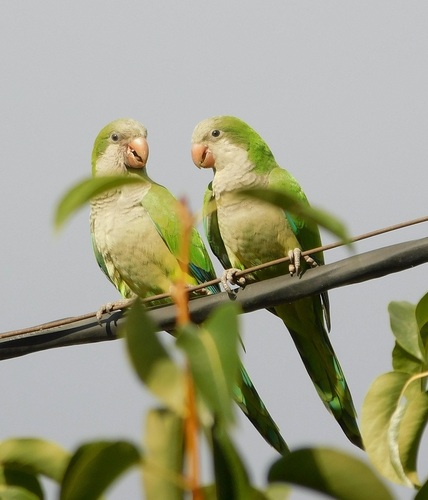 caturrita
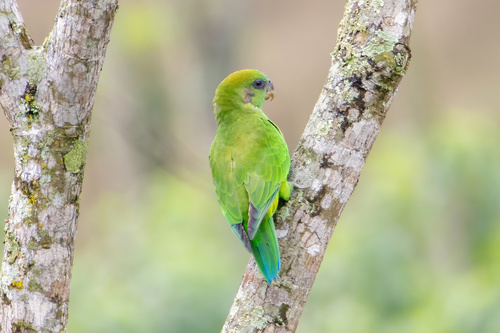 cuiú-cuiú
Em resumo
A marca de campo mais confiável entre a caturrita e o cuiú-cuiú é a coloração da cabeça e das partes inferiores: a caturrita apresenta uma testa e um peito cinza claro e escamado, enquanto o cuiú-cuiú (macho adulto) tem uma coroa e lore vermelhas marcantes, e a fêmea não possui vermelho, mas pode apresentar um leve tom azul. Ambas as espécies são papagaios verdes com azul nas asas, mas a caturrita é maior, com cauda mais longa e um bico laranja distinto. Em voo ou em repouso, o rosto e o peito claros da caturrita contrastam com seu corpo verde, enquanto o cuiú-cuiú aparece todo verde com uma touca colorida (vermelha nos machos, azul clara nas fêmeas). Os cuiú-cuiús imaturos podem ser confusos, mas a ausência de um rosto cinza claro e a presença de algum azul ou vermelho reduzido na cabeça ajudam a separá-los.
Dicas de identificação
- Cor da cabeça e do rosto: A caturrita sempre apresenta uma testa e um peito cinza claro e escamado, independentemente da idade ou sexo. O cuiú-cuiú nunca apresenta isso; os machos têm uma coroa e lore vermelhas, as fêmeas um leve tom azul, e os imaturos têm vermelho ou azul reduzidos, mas nunca cinza claro.
- Cor do bico: A caturrita tem um bico laranja proeminente, enquanto o bico do cuiú-cuiú não é descrito como laranja e é menos conspícuo no campo.
- Formato e comprimento da cauda: A caturrita tem uma cauda longa e afilada, frequentemente se estendendo bem além das pontas das asas quando empoleirada. A cauda do cuiú-cuiú é mais curta e menos pontuda.
- Tamanho do corpo: A caturrita é significativamente mais longa (29 cm) e mais robusta do que o cuiú-cuiú (20–22 cm), embora seus pesos se sobreponham. Use isso com cautela, a menos que ambas as espécies sejam vistas juntas.
- Partes inferiores: A caturrita apresenta um abdômen verde-amarelado com um peito cinza claro; o cuiú-cuiú é verde com um abdômen amarelado, mas não possui o peito cinza claro.
- Coloração das asas em voo: Ambas as espécies têm azul nas asas, mas o azul da caturrita é restrito às remiges e geralmente é visível como um flash em voo. O azul do cuiú-cuiú é mais opaco e encontrado nas primárias, coberturas primárias e bordas da cauda.
- Dimorfismo sexual: Apenas o cuiú-cuiú apresenta forte dimorfismo sexual: os machos têm cabeça vermelha, as fêmeas não. Os sexos da caturrita são visualmente indistinguíveis no campo.
- Confusão juvenil: Os cuiú-cuiús imaturos podem carecer de cor forte na cabeça, mas nunca apresentam um rosto cinza claro; os juvenis da caturrita se parecem com os adultos.
- Comportamento social: A caturrita é frequentemente encontrada em grandes bandos barulhentos e pode ser vista construindo ou ocupando grandes ninhos de gravetos. O cuiú-cuiú é mais frequentemente encontrado em pares ou pequenos grupos e não constrói ninhos comunitários.
- Habitat: A caturrita é comum em áreas urbanas, suburbanas e agrícolas, frequentemente longe da floresta. O cuiú-cuiú é uma espécie florestal e raramente é encontrado em habitats abertos ou urbanos.
- Postura empoleirada: A caturrita parece mais longa, com uma cauda proporcionalmente mais longa e uma postura mais ereta. O cuiú-cuiú é mais compacto e menos alongado.
- Vocalizações: A caturrita é muito barulhenta, com chamadas ásperas e roucas. Se você ouvir um bando social alto em uma cidade ou área aberta, é provável que seja a caturrita.
- Morfos de cor: Embora a caturrita possa apresentar morfos azuis, amarelos ou brancos em cativeiro, os pássaros selvagens são quase sempre verdes com o padrão padrão. O cuiú-cuiú não apresenta tais morfos de cor.
- Associação de ninho: Se você ver um grande ninho de gravetos com múltiplas câmaras, a caturrita é o único construtor provável; o cuiú-cuiú não constrói tais ninhos.
- Armadilha: Fêmeas e imaturos de cuiú-cuiú podem ser confundidos com a caturrita se a cor da cabeça vermelha ou azul for fraca, mas a ausência de um rosto cinza claro e o contexto do habitat devem ajudar a esclarecer a identificação.
Tamanho
A caturrita é visivelmente maior, com uma média de 29 cm de comprimento, envergadura de 48 cm e peso de 95–120 g. O cuiú-cuiú é menor, com 20–22 cm de comprimento e 98–120 g. Embora seus pesos se sobreponham, a caturrita é mais longa e mais robusta no geral, com uma cauda afilada e proporcionalmente mais longa. O tamanho sozinho pode não ser diagnóstico à distância, mas o corpo e a cauda mais longos da caturrita são frequentemente aparentes quando empoleirados ou em voo.
Plumagem
- Pássaros juvenis/imaturos: Os imaturos da caturrita se assemelham aos adultos, com rosto e peito cinza claro e azul nas asas, sem padrões de asas específicos de idade fortes. Os imaturos do cuiú-cuiú (machos) apresentam menos vermelho na cabeça do que os adultos, enquanto as fêmeas têm menos azul nas asas e um leve tom azul na testa e no peito, mas nunca um rosto cinza claro.
- Adultos: A caturrita tem uma testa e um peito cinza claro com escamação mais escura, partes superiores verde brilhante, partes inferiores verde-amareladas, remiges azul-escuras e uma cauda longa e afilada. O bico laranja é proeminente. Os adultos do cuiú-cuiú são essencialmente todos verdes com um abdômen amarelado e primárias, coberturas primárias e bordas da cauda azul opaco. Os machos adultos têm uma testa, coroa, lore e coberturas superiores das orelhas vermelhas; as fêmeas não têm vermelho, mas podem apresentar um leve azul na testa e no peito. Ambos os sexos do cuiú-cuiú não têm o rosto e o peito cinza claro da caturrita. Em voo, as penas azuis de voo da caturrita e o rosto claro se destacam, enquanto o cuiú-cuiú mostra um corpo principalmente verde com azul nas asas e na cauda, e uma touca colorida nos machos.
Comportamento
A caturrita é altamente gregária, frequentemente vista em bandos barulhentos e conhecida por construir grandes ninhos comunitários de gravetos, às vezes com múltiplas câmaras. O cuiú-cuiú é menos colonial e mais propenso a ser visto em pares ou pequenos grupos, sem o elaborado comportamento de nidificação comunitária. As caturritas são frequentemente conspícuas devido ao seu comportamento social e tendência a se reunir em áreas urbanas ou abertas, enquanto os cuiú-cuiús são mais discretos e associados a florestas.
Habitat
A caturrita é adaptável e frequentemente encontrada em habitats abertos ou urbanos, incluindo parques, bordas de cidades e áreas agrícolas, especialmente em populações ferais. O cuiú-cuiú é mais restrito a habitats florestais na Argentina, Brasil e Paraguai, e é menos provável de ser encontrado em ambientes urbanos. O contexto do habitat pode ser uma pista útil: a caturrita é mais provável de ser encontrada em cidades ou terras agrícolas, enquanto o cuiú-cuiú é um pássaro florestal.
Voz
A caturrita tem um chamado alto e rouco descrito como chape(-yee) ou quak quaki quak-wi quarr, com gritos ásperos (skveet). As vocalizações do cuiú-cuiú não são detalhadas nas notas fornecidas, então os chamados não são confiavelmente diagnósticos aqui, mas os chamados barulhentos e sociais da caturrita são distintos em ambientes urbanos e abertos.