

tordoveia vs melro-de-colar
Turdus viscivorus versus Turdus torquatus
Jogue um quiz com tordoveia e melro-de-colar
 tordoveia
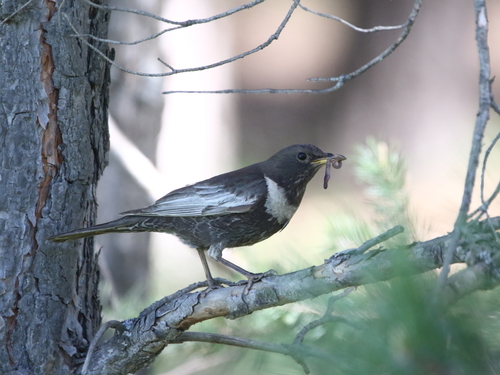 melro-de-colar
Em resumo
A marca de campo mais confiável para separar a tordoveia do melro-de-colar é a presença de um ousado crescente branco no peito dos melros-de-colar adultos, que nunca é exibido pela tordoveia. Melros-de-colar juvenis e fêmeas podem ter um crescente fraco ou ausente, mas ainda são muito mais escuros no geral do que a tordoveia e frequentemente mostram um painel de asa pálido. A tordoveia é muito maior, mais clara e mais marrom, com manchas pretas redondas e irregulares em um ventre amarelo ou off-white e uma cauda mais longa. Em voo ou à distância, o tamanho, a postura e a falta de qualquer faixa branca no peito são fundamentais para a tordoveia, enquanto a plumagem escura, quase preta, do melro-de-colar e o crescente branco (se visível) são diagnósticos. Ambas as espécies são tordos do gênero Turdus, mas a confusão é mais provável com fêmeas ou juvenis de melros-de-colar, especialmente em luz fraca ou à distância.
Dicas de identificação
- Crescente branco no peito: O melro-de-colar adulto (especialmente os machos) sempre mostra um ousado crescente branco no peito; a tordoveia nunca faz isso. Em fêmeas e juvenis, o crescente pode ser fraco ou ausente, mas alguma marcação pálida geralmente é visível em machos de primeiro inverno.
- Escuridão geral: O melro-de-colar é muito mais escuro no geral, aparecendo quase negro (macho) ou marrom escuro (fêmea/juvenil), enquanto a tordoveia é cinza-marrom pálido acima e amarelo ou off-white abaixo.
- Manchas vs. escamas: A tordoveia tem manchas pretas redondas e irregulares nas partes inferiores; o melro-de-colar tem escamas finas acinzentadas na barriga e nas partes superiores, mas não as manchas ousadas e redondas da tordoveia.
- Painel de asa: O melro-de-colar (especialmente os machos e alguns de primeiro inverno) mostra um painel de asa pálido formado por bordas pálidas nas penas da asa, visível em repouso e em voo; a tordoveia não possui essa característica.
- Padrão da cauda: A tordoveia tem uma cauda longa com pontas brancas nas penas externas, visível em voo ou quando aberta; o melro-de-colar não mostra isso.
- Cor da parte inferior da asa: A tordoveia tem coberturas brancas na parte inferior da asa, que podem ser impressionantes em voo; a parte inferior da asa do melro-de-colar não é tão pálida ou contrastante.
- Tamanho e estrutura: A tordoveia é muito maior, mais robusta e com cauda mais longa, com uma postura mais ereta; o melro-de-colar é mais esguio, com cauda mais curta e tamanho mais próximo ao de um melro.
- Confusão juvenil: O melro-de-colar juvenil não possui o crescente branco e pode ser confundido com a tordoveia, mas é sempre muito mais escuro e mostra um painel de asa pálido. A tordoveia juvenil é mais clara, com marcas em forma de gota de creme acima e manchas redondas e menores abaixo.
- Cor do bico: O melro-de-colar tem um bico amarelo (especialmente nos machos), enquanto a tordoveia tem um bico acinzentado com uma base amarelada na mandíbula inferior.
- Cor das pernas: A tordoveia tem pernas e pés amarelo-acinzentados; as pernas do melro-de-colar são marrom acinzentado.
- Habitat: A tordoveia geralmente está em florestas abertas, parques ou campos; o melro-de-colar prefere habitats montanhosos, rochosos ou de alta altitude, especialmente na época de reprodução.
- Comportamento: A tordoveia é mais ousada, frequentemente vista em áreas abertas, ereta e às vezes em bandos; o melro-de-colar é mais tímido, mais solitário e rápido para voar.
- Estilo de voo: A tordoveia tem um voo ondulante e saltitante com deslizamentos; o melro-de-colar é mais direto e rápido.
- Diferenças sexuais: Tanto o macho quanto a fêmea da tordoveia parecem semelhantes; no melro-de-colar, os machos são mais escuros com um crescente mais ousado, enquanto as fêmeas são mais marrons com um crescente mais apagado.
- Contexto sazonal: O melro-de-colar é visto principalmente durante a migração ou em áreas de reprodução de alta altitude; a tordoveia está presente durante todo o ano em grande parte de sua área de distribuição, frequentemente em habitats mais baixos e abertos.
Tamanho
A tordoveia é visivelmente maior e mais robusta do que o melro-de-colar. A tordoveia mede 27–28 cm de comprimento com uma envergadura de 45 cm e pesa cerca de 130 g, enquanto o melro-de-colar tem 23–24 cm de comprimento e pesa 90–138 g. No campo, a tordoveia parece ter cauda mais longa, mais robusta e fica mais ereta, enquanto o melro-de-colar é mais esguio e mais próximo em tamanho a um melro. Se vistos juntos, a diferença de tamanho é impressionante, mas cuidado com aves solitárias onde o tamanho pode ser difícil de julgar.
Plumagem
Aves juvenis e de primeiro inverno: Os juvenis de melro-de-colar se assemelham a fêmeas de melros apagados, com plumagem marronada e um crescente no peito fraco ou ausente, mas ainda mostram um painel de asa mais pálido e são muito mais escuros no geral do que a tordoveia. Os juvenis de tordoveia são mais marrons acima com centros em forma de gota de creme nas penas e manchas pretas redondas menores nas partes inferiores amareladas. No primeiro inverno, a tordoveia é quase semelhante a um adulto, mas mantém um tom mais amarelo abaixo.
Adultos: Os machos adultos de melro-de-colar são quase negros com um impressionante crescente branco no peito, bordas pálidas nas penas da asa (às vezes formando um painel pálido) e escamas acinzentadas estreitas nas partes superiores e na barriga. As fêmeas são mais marrons, com um crescente mais apagado, mas ainda muito mais escuras do que a tordoveia. Os adultos de tordoveia são cinza-marrom pálido acima, com um peito amarelo-amarelado, ventre off-white e manchas pretas redondas e irregulares (nunca em forma de coração ou em linhas organizadas). A cauda é longa com pontas brancas nas penas externas, e as coberturas da parte inferior da asa são brancas. Ambos os sexos são semelhantes na tordoveia.
Em voo: A tordoveia mostra uma parte inferior da asa pálida, quase branca, e cauda longa; o melro-de-colar pode mostrar um painel de asa pálido, especialmente nos machos, e sempre parece muito mais escuro no geral.
Comportamento
A tordoveia é mais terrestre, frequentemente vista ereta e alerta em solo aberto, às vezes em bandos no final do verão ou outono. Ela pula com a cabeça erguida e agita as asas e a cauda quando excitada. O melro-de-colar é mais tímido, frequentemente encontrado sozinho ou em pequenos grupos, e prefere habitats montanhosos ou rochosos. É menos provável que seja visto em campos abertos e é mais cauteloso, voando rapidamente quando perturbado. Em voo, a tordoveia tem um voo ondulante e saltitante com deslizamentos, enquanto o melro-de-colar é mais direto e rápido.
Habitat
A tordoveia é amplamente distribuída pela Europa, Ásia temperada e Norte da África, comumente encontrada em florestas abertas, parques e às vezes jardins, especialmente fora da época de reprodução. É residente durante todo o ano em grande parte de sua área de distribuição, embora populações do norte migrem. O melro-de-colar é principalmente europeu e prefere áreas montanhosas, rochosas ou de alta altitude, especialmente durante a reprodução. É um migrante, frequentemente visto em passagem em áreas de baixa altitude, mas se reproduz em terrenos mais remotos e altos. A sobreposição é possível durante a migração, mas a preferência de habitat geralmente é uma pista forte.