

papagaio-moleiro vs maracanã-do-buriti
Amazona farinosa versus Orthopsittaca manilatus
Jogue um quiz com papagaio-moleiro e maracanã-do-buriti
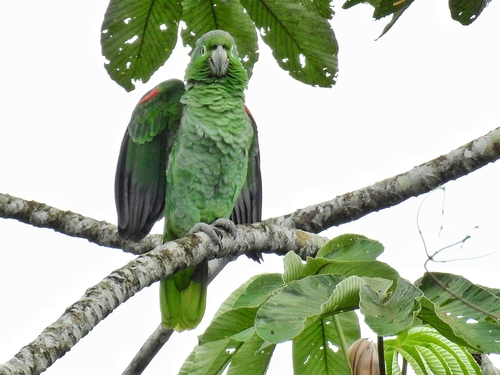 papagaio-moleiro
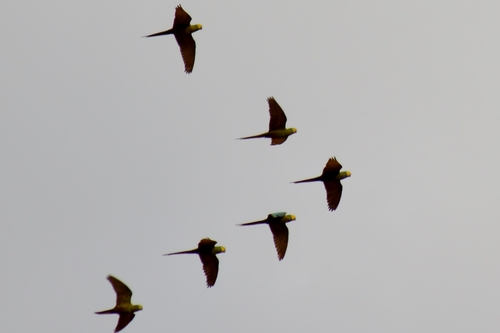 maracanã-do-buriti
Em resumo
A marca de campo mais confiável para separar o papagaio-moleiro do maracanã-do-buriti é a presença de uma grande mancha marrom na barriga e uma cauda longa e pontuda no maracanã-do-buriti, em comparação com o corpo verde uniforme do papagaio-moleiro, que tem um dorso e nuca com tonalidade esbranquiçada e uma cauda curta e quadrada. Em voo, os papagaios-moleiros mostram uma borda traseira azulada e um especulum vermelho na asa, enquanto os maracanãs-do-buriti têm asas inferiores de um amarelo-oliva opaco e uma cauda longa e afilada. Os maracanãs-do-buriti juvenis também apresentam uma faixa branca distinta ao longo do topo do bico, que os papagaios-moleiros nunca têm. Estrutura, forma da cauda e cor do rosto são fundamentais, especialmente quando os pássaros estão empoleirados ou em bandos mistos.
Dicas de identificação
- Mancha na Barriga (Todas as Idades): O maracanã-do-buriti sempre mostra uma grande mancha marrom na parte inferior da barriga, visível tanto empoleirado quanto em voo. O papagaio-moleiro nunca mostra essa característica.
- Forma da Cauda (Todas as Idades): O papagaio-moleiro tem uma cauda curta e quadrada; o maracanã-do-buriti tem uma cauda longa e pontuda. Isso é especialmente aparente em voo ou quando empoleirado de lado.
- Pele Facial (Adultos): O maracanã-do-buriti tem pele nua de cor mostarda ao redor do cera e na maior parte do rosto; o papagaio-moleiro tem um rosto coberto de penas com um largo anel ocular branco, mas sem pele amarela nua.
- Tonalidade do Dorso/Nuca (Adultos): O papagaio-moleiro mostra uma tonalidade esbranquiçada ou com pó de farinha no dorso e na nuca, não presente no maracanã-do-buriti.
- Coroa/Testa (Adultos): O maracanã-do-buriti tem uma testa azulada; o papagaio-moleiro pode mostrar algumas penas amarelas na coroa, mas é principalmente verde.
- Marca no Bico Juvenil: Os maracanãs-do-buriti juvenis têm uma faixa branca ao longo do topo do bico (culmen), que está ausente no papagaio-moleiro de qualquer idade.
- Padrão da Asa em Voo (Adultos): O papagaio-moleiro mostra uma borda traseira azulada e um especulum vermelho na asa; o maracanã-do-buriti tem asas inferiores de um amarelo-oliva opaco e sem especulum vermelho.
- Cor da Cauda (Adultos): A cauda do papagaio-moleiro é bicolor, com a ponta mais clara e amarelada do que a base; a cauda do maracanã-do-buriti é de cor uniforme e muito mais longa.
- Cor do Bico: Ambos têm bicos cinza-escuros como adultos, mas apenas o maracanã-do-buriti juvenil mostra a faixa branca no culmen.
- Estrutura Corporal: O papagaio-moleiro é mais robusto e pesado, com uma aparência mais compacta; o maracanã-do-buriti é mais esbelto e mais alongado devido à sua cauda.
- Contexto de Habitat: Em pântanos de palmeiras ou savanas com palmeiras Moriche, espere encontrar o maracanã-do-buriti; em florestas úmidas ou plantações, o papagaio-moleiro é mais provável.
- Composição do Bando: Os papagaios-moleiros podem ser vistos com outros papagaios, incluindo araras, mas os maracanãs-do-buriti geralmente estão em áreas dominadas por palmeiras, frequentemente em bandos de uma única espécie.
- Voz: Se você ouvir um chamado alto e marcadamente diferente, isso pode ajudar, mas os detalhes não são fornecidos aqui.
- Armadilha da Coroa: Alguns papagaios-moleiros podem mostrar pouca ou nenhuma cor amarela na coroa, então a falta de amarelo não é um diagnóstico para o maracanã-do-buriti.
- Diferenças Sexuais: Ambas as espécies são monomórficas sexualmente em plumagem; a diferença de tamanho (machos ligeiramente maiores no maracanã-do-buriti) é sutil e não confiável em campo.
Tamanho
O papagaio-moleiro é significativamente mais pesado e robusto (540–700 g, 38–41 cm) do que o maracanã-do-buriti (cerca de 300 g, 46 cm). Apesar de ser mais longo no geral, o comprimento do maracanã-do-buriti se deve à sua cauda muito longa e pontuda, enquanto o papagaio-moleiro é mais robusto com uma cauda curta e quadrada. No campo, os papagaios-moleiros aparecem como papagaios grandes e pesados, enquanto os maracanãs-do-buriti são mais esbeltos e mais alongados em silhueta.
Plumagem
- Juvenis: Os maracanãs-do-buriti juvenis têm uma faixa branca conspícua ao longo do topo do bico (culmen), que é única entre esses dois; os juvenis do papagaio-moleiro não têm essa marca. Os maracanãs-do-buriti juvenis também são mais opacos no geral.
- Adultos: O papagaio-moleiro é principalmente verde com uma tonalidade esbranquiçada no dorso e na nuca, às vezes com algumas penas amarelas na coroa. A cauda é curta e bicolor (mais amarelada na ponta). Em voo, os adultos mostram uma borda traseira azulada e um especulum vermelho na asa. Os adultos do maracanã-do-buriti também são principalmente verdes, mas com uma testa azulada, pele facial nua de cor mostarda e uma grande mancha marrom na parte inferior da barriga. Sua cauda é longa e pontuda, e as asas/cauda inferiores são de um amarelo-oliva opaco. Ambos os sexos são semelhantes em ambas as espécies.
Comportamento
Ambas as espécies são sociais, frequentemente vistas em pares ou bandos, mas os papagaios-moleiros são geralmente mais silenciosos e mais dóceis (especialmente em cativeiro), enquanto os maracanãs-do-buriti são altamente dependentes de palmeiras e podem ser vistos em bandos ao redor de palmeiras Moriche. Os papagaios-moleiros podem interagir com outros papagaios, incluindo araras, mas os maracanãs-do-buriti são mais especializados em seu uso de habitat e comportamento alimentar.
Habitat
Os papagaios-moleiros são encontrados em florestas úmidas a semiúmidas e plantações em toda a América Central e do Sul, raramente em habitats secos ou abertos, exceto ao longo de florestas de galeria. Os maracanãs-do-buriti estão fortemente ligados a pântanos de palmeiras Moriche e savanas arenosas com palmeiras na América do Sul amazônica e Trinidad. Se você ver um grande papagaio verde em um pântano de palmeiras, especialmente se alimentando de frutos de palmeira, é muito mais provável que seja um maracanã-do-buriti; em ambientes florestais ou de plantações mais amplos, espera-se encontrar o papagaio-moleiro.
Voz
Suas vozes são marcadamente diferentes, mas as notas não fornecem detalhes. Os papagaios-moleiros são geralmente mais silenciosos, mas podem ser barulhentos ao amanhecer e ao anoitecer. Os maracanãs-do-buriti não são descritos vocalmente aqui.
papagaio-moleiro · maracanã-do-buriti · Minhas aves difíceis