
Mealy Amazon vs Red-bellied Macaw
Amazona farinosa contro Orthopsittaca manilatus
Fai un quiz con Mealy Amazon e Red-bellied Macaw
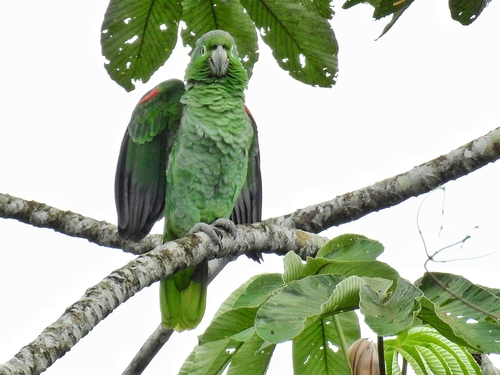 Mealy Amazon
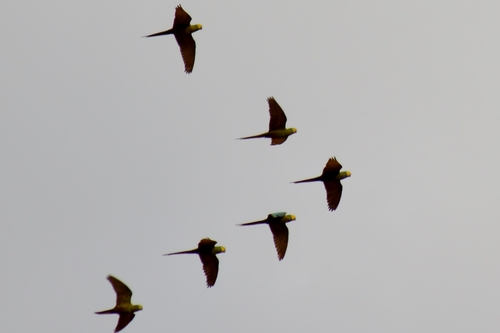 Red-bellied Macaw
In breve
Il segno di campo più affidabile per separare Mealy Amazon da Red-bellied Macaw è la presenza di una grande macchia di pancia color maroon e di una lunga coda appuntita sul Red-bellied Macaw, rispetto al corpo verde uniforme del Mealy Amazon con un dorso e una nuca di colore bianco e una coda corta e quadrata. In volo, i Mealy Amazons mostrano un bordo posteriore bluastro-nero e uno speculum rosso sull'ala, mentre i Red-bellied Macaws hanno ali inferiori di un giallo oliva opaco e una lunga coda affusolata. I giovani Red-bellied Macaws mostrano anche una distintiva striscia bianca lungo la parte superiore del becco, che i Mealy Amazons non hanno mai. La struttura, la forma della coda e il colore del viso sono fondamentali, soprattutto quando gli uccelli sono posati o in stormi misti.
Consigli di identificazione
- Belly Patch (All Ages): Il Red-bellied Macaw mostra sempre una grande macchia maroon sulla parte inferiore della pancia, visibile sia posato che in volo. Il Mealy Amazon non mostra mai questa caratteristica.
- Tail Shape (All Ages): Il Mealy Amazon ha una coda corta e quadrata; il Red-bellied Macaw ha una coda lunga e appuntita. Questo è particolarmente evidente in volo o quando è posato di lato.
- Facial Skin (Adults): Il Red-bellied Macaw ha pelle gialla senape nuda attorno al cere e gran parte del viso; il Mealy Amazon ha un viso piumato con un ampio anello oculare bianco, ma nessuna pelle gialla nuda.
- Back/Nape Tint (Adults): Il Mealy Amazon mostra una sfumatura biancastra o impastata sul dorso e sulla nuca, non presente nel Red-bellied Macaw.
- Crown/Forehead (Adults): Il Red-bellied Macaw ha una fronte bluastra; il Mealy Amazon può mostrare alcune piume gialle sulla corona ma è per lo più verde.
- Juvenile Bill Mark: I giovani Red-bellied Macaws hanno una striscia bianca lungo la parte superiore del becco (culmen), che è assente nel Mealy Amazon di qualsiasi età.
- Wing Pattern in Flight (Adults): Il Mealy Amazon mostra un bordo posteriore bluastro-nero e uno speculum rosso sull'ala; il Red-bellied Macaw ha ali inferiori di un giallo oliva opaco e nessuno speculum rosso.
- Tail Color (Adults): La coda del Mealy Amazon è bicolore, con la punta più chiara e gialla rispetto alla base; la coda del Red-bellied Macaw è uniformemente colorata e molto più lunga.
- Bill Color: Entrambi hanno becchi grigio scuro da adulti, ma solo il giovane Red-bellied Macaw mostra la striscia bianca sul culmen.
- Body Structure: Il Mealy Amazon è più massiccio e pesante, con un aspetto più compatto; il Red-bellied Macaw è più snello e allungato a causa della sua coda.
- Habitat Context: Nei paludi di palma o nelle savane con palme Moriche, aspettati il Red-bellied Macaw; nella foresta umida o nelle piantagioni, è più probabile trovare il Mealy Amazon.
- Flock Composition: I Mealy Amazons possono essere visti con altri pappagalli, inclusi i macaws, ma i Red-bellied Macaws sono solitamente in aree dominate da palme, spesso in stormi di una sola specie.
- Voice: Se senti un richiamo forte e sorprendentemente diverso, questo potrebbe aiutare, ma i dettagli non sono forniti qui.
- Crown Color Pitfall: Alcuni Mealy Amazons possono mostrare poco o nessun giallo sulla corona, quindi la mancanza di giallo non è diagnostica per il Red-bellied Macaw.
- Sex Differences: Entrambe le specie sono sessualmente monomorfiche nel piumaggio; la differenza di dimensione (i maschi leggermente più grandi nel Red-bellied Macaw) è sottile e non affidabile sul campo.
Taglia
Il Mealy Amazon è significativamente più pesante e massiccio (540–700 g, 38–41 cm) rispetto al Red-bellied Macaw (circa 300 g, 46 cm). Nonostante sia più lungo nel complesso, la lunghezza del Red-bellied Macaw è dovuta alla sua coda molto lunga e appuntita, mentre il Mealy Amazon è più robusto con una coda corta e quadrata. Sul campo, i Mealy Amazons appaiono come grandi pappagalli dal corpo pesante, mentre i Red-bellied Macaws sono più snelli e più allungati nella silhouette.
Piumaggio
- Juveniles: I giovani Red-bellied Macaws hanno una striscia bianca evidente lungo la parte superiore del becco (culmen), che è unica tra questi due; i giovani Mealy Amazon non hanno affatto questo segno. I giovani Red-bellied Macaws sono anche più opachi nel complesso.
- Adults: Il Mealy Amazon è per lo più verde con una sfumatura biancastra sul dorso e sulla nuca, a volte con alcune piume gialle sulla corona. La coda è corta e bicolore (più chiara e giallastra alla punta). In volo, gli adulti mostrano un bordo posteriore bluastro-nero e uno speculum rosso sull'ala. Gli adulti del Red-bellied Macaw sono anch'essi per lo più verdi, ma con una fronte bluastra, pelle facciale nuda di colore giallo senape e una grande macchia maroon sulla parte inferiore della pancia. La loro coda è lunga e appuntita, e le ali inferiori/il sottocoda sono di un giallo oliva opaco. Entrambi i sessi sono simili in entrambe le specie.
Comportamento
Entrambe le specie sono sociali, spesso viste in coppie o stormi, ma i Mealy Amazons sono generalmente più silenziosi e più docili (soprattutto in cattività), mentre i Red-bellied Macaws dipendono fortemente dai boschetti di palme e possono essere visti in stormi attorno alle palme Moriche. I Mealy Amazons possono interagire con altri pappagalli, inclusi i macaws, ma i Red-bellied Macaws sono più specializzati nel loro uso dell'habitat e nel comportamento alimentare.
Habitat
I Mealy Amazons si trovano in foreste umide a semi-umide e piantagioni in tutta l'America Centrale e Meridionale, raramente in habitat asciutti o aperti tranne che lungo le foreste galleria. I Red-bellied Macaws sono fortemente legati a paludi di palme Moriche e savane sabbiose con boschetti di palme nell'America del Sud amazzonica e a Trinidad. Se vedi un grande pappagallo verde in una palude di palme, specialmente mentre si nutre di frutti di palma, è molto più probabile che sia un Red-bellied Macaw; in contesti forestali o di piantagione più ampi, ci si aspetta di trovare un Mealy Amazon.
Voce
Le loro voci sono sorprendentemente diverse, ma le note non forniscono dettagli. I Mealy Amazons sono generalmente più silenziosi ma possono essere rumorosi al crepuscolo e all'alba. I Red-bellied Macaws non sono descritti vocalmente qui.