

papa-lagarta-do-mangue vs lesser antillean bullfinch
Coccyzus minor versus Loxigilla noctis
Jogue um quiz com papa-lagarta-do-mangue e lesser antillean bullfinch
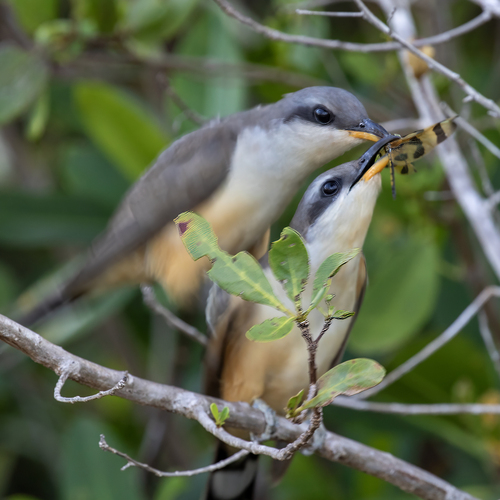 papa-lagarta-do-mangue
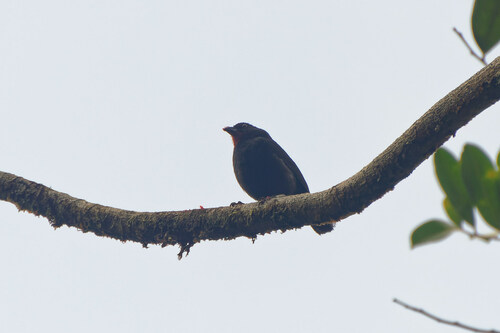 lesser antillean bullfinch
Em resumo
A marca de campo mais confiável para separar o papa-lagarta-do-mangue do lesser antillean bullfinch é a estrutura geral: o cuculo é muito maior, esguio e de cauda longa, com uma distinta máscara facial preta e partes inferiores amareladas, enquanto o bullfinch é um pássaro cantor compacto, de cauda curta, com um bico grosso e, nos machos, plumagem predominantemente preta com um supercílios vermelho e garganta. Fêmeas e jovens bullfinches são marrons quentes e não possuem a máscara e a forma do bico do cuculo. Mesmo à distância, a longa cauda e o perfil esguio do cuculo se destacam contra a aparência robusta e semelhante a um tentilhão do bullfinch. Se você ver um pássaro com um bico curvado e anel ocular amarelo, é o cuculo; se for um pássaro atarracado e de bico grosso, é o bullfinch.
Dicas de identificação
- Tamanho e forma: O papa-lagarta-do-mangue é muito maior e de cauda mais longa do que o bullfinch; use isso como seu primeiro verificador, especialmente se você tiver uma referência de tamanho.
- Forma do bico: O cuculo tem um bico longo e levemente curvado com amarelo na mandíbula inferior; o bullfinch tem um bico curto e muito grosso (preto nos machos, bicolor nas fêmeas).
- Cauda: A cauda do cuculo é longa, marrom por cima, e preta e branca por baixo; a cauda do bullfinch é curta e não apresenta padrão contrastante.
- Marcas faciais: O cuculo tem uma máscara facial preta ousada e anel ocular amarelo; os machos do bullfinch têm um supercílios vermelho e garganta, as fêmeas têm lore enferrujados, mas nenhum dos sexos apresenta máscara ou anel ocular amarelo.
- Partes inferiores: As partes inferiores do cuculo são amareladas; as partes inferiores do macho bullfinch são pretas com uma garganta vermelha, as da fêmea são cinza quente com coberturas de cauda inferiores enferrujadas.
- Partes superiores: O cuculo é marrom por cima; o macho bullfinch é preto, a fêmea é marrom quente.
- Dimorfismo sexual: O bullfinch é dimórfico sexualmente—machos pretos com vermelho, fêmeas marrons; os sexos do cuculo são semelhantes.
- Cor das pernas: Ambos têm pernas escuras, não sendo um separador útil.
- Cor dos olhos: O bullfinch tem íris marrom escura; o anel ocular amarelo do cuculo é mais visível no campo.
- Comportamento: O cuculo pousa silenciosamente, muitas vezes em manguezais; o bullfinch é mais ativo, salta e forrageia como um tentilhão.
- Habitat: O cuculo é restrito a manguezais; o bullfinch é encontrado em habitats variados, muitas vezes longe de manguezais.
- Voz: Se você ouvir um "gawk gawk gawk" gutural repetido, é o cuculo; a voz do bullfinch não é descrita aqui.
- Variação de subespécies: As subespécies do bullfinch diferem no tamanho e na escuridão da mancha da garganta, mas nenhuma se assemelha à máscara ou estrutura do cuculo.
- Pássaros imaturos/juvenis: Nenhuma marca distintiva de asa ou voo imaturo é descrita para nenhum dos dois, mas os jovens bullfinches são sempre estruturalmente semelhantes a tentilhões e não possuem máscara.
- Armadilhas: As fêmeas do bullfinch são marrons e podem ser confundidas com um pássaro sem graça, mas sua estrutura, bico e falta de máscara são separadores claros do cuculo.
Tamanho
O papa-lagarta-do-mangue é dramaticamente maior e mais pesado (massa corporal ~66 g, comprimento 28–34 cm) em comparação com o lesser antillean bullfinch (massa corporal ~18.4 g, comprimento 14–15.5 cm). A envergadura do cuculo (38–43 cm) e a longa cauda fazem com que ele pareça alongado e quase do tamanho de uma gralha, enquanto o bullfinch é do tamanho de um pardal, compacto e de cauda curta. O tamanho sozinho é muitas vezes suficiente para separá-los se vistos juntos ou com espécies familiares para escala.
Plumagem
Nenhuma marca de padrão de asa ou voo específica para a idade é descrita para nenhuma das espécies, então o foco está na plumagem adulta e específica para o sexo. O adulto papa-lagarta-do-mangue é marrom por cima, com uma máscara facial preta, anel ocular amarelo e partes inferiores amareladas. Sua cauda é longa, marrom por cima e preta e branca por baixo. O bico é preto com amarelo na mandíbula inferior. Em contraste, o macho adulto do lesser antillean bullfinch (nominate) é predominantemente preto com um supercílios vermelho curto e garganta laranja avermelhada; as fêmeas são marrons quentes por cima, com lore enferrujados e bordas nas coberturas maiores, e partes inferiores cinza quente com coberturas de cauda inferiores enferrujadas. As subespécies variam no tamanho e na escuridão da mancha da garganta, mas todos os bullfinches carecem da máscara facial do cuculo e têm um bico muito mais grosso. Ambos os sexos do bullfinch têm íris escuras e pernas escuras, enquanto o anel ocular amarelo do cuculo é distinto. Plumagens juvenis/imaturas não são detalhadas, mas as diferenças estruturais e faciais persistem em todas as idades.
Comportamento
O papa-lagarta-do-mangue tende a se mover deliberadamente através de matas de mangue, muitas vezes pousando silenciosamente e permanecendo parcialmente oculto. Seus movimentos são mais lentos e ele pode sentar-se ereto com a longa cauda pendendo. O lesser antillean bullfinch é mais ativo e frequentemente visto pulando ou voando em vegetação baixa, às vezes em pares ou pequenos grupos. A alimentação do bullfinch é mais rápida e semelhante à de um tentilhão, frequentemente visto quebrando sementes ou forrageando por frutas.
Habitat
O papa-lagarta-do-mangue está fortemente associado a florestas de mangue e matas costeiras densas nos Neotrópicos. Ele raramente é encontrado longe de manguezais. O lesser antillean bullfinch é encontrado em uma gama mais ampla de habitats nas Pequenas Antilhas, incluindo jardins, arbustos, bordas de florestas e crescimento secundário, não restrito a manguezais. Assim, o contexto pode ser uma pista: um pássaro profundo em manguezais é mais provável que seja um cuculo, enquanto um em áreas abertas ou perturbadas é mais provável que seja um bullfinch.
Voz
O papa-lagarta-do-mangue emite um "gawk gawk gawk gawk gauk gauk" gutural repetido e às vezes um único "whit". A canção e os chamados do lesser antillean bullfinch não são descritos nessas notas, então a voz é apenas diagnóstica se você ouvir o chamado distinto do cuculo.
papa-lagarta-do-mangue · lesser antillean bullfinch · Minhas aves difíceis