

Motmot

マングローブカッコウ 対 コクロアカウソ

Coccyzus minor 対 Loxigilla noctis

マングローブカッコウとコクロアカウソのクイズ
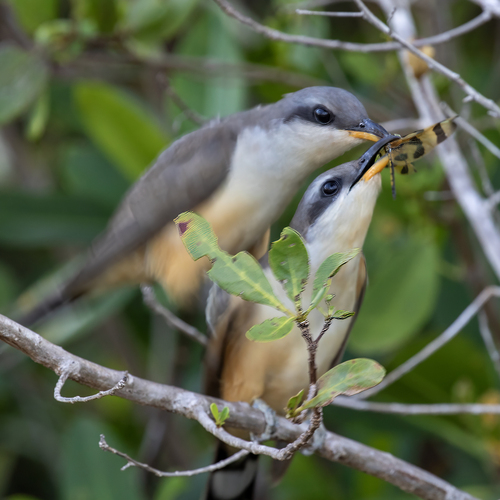
マングローブカッコウ (Coccyzus minor) マングローブカッコウ
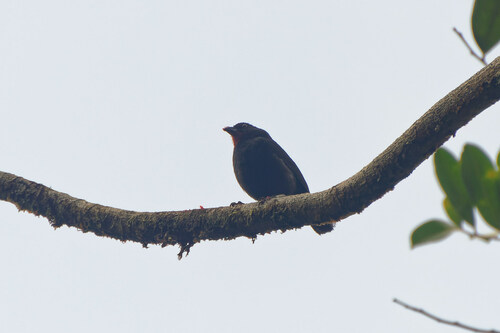
コクロアカウソ (Loxigilla noctis) コクロアカウソ

メディア

読み込み中…

要点

マングローブカッコウとコクロアカウソを区別する最も信頼できるフィールドマークは全体的な構造です:カッコウははるかに大きく、細長く、長い尾を持ち、特徴的な黒い顔のマスクと淡い腹部を持っています。一方、アカウソはコンパクトで短い尾を持つ歌鳥で、太いくちばしを持ち、オスは主に黒い羽毛に赤い眉斑と喉を持っています。メスと若いアカウソは温かみのある茶色で、カッコウのマスクとくちばしの形がありません。距離があっても、カッコウの長い尾と細いプロファイルは、アカウソのずんぐりとしたフィンチのような外観に対して際立っています。曲がったくちばしと黄色のアイリングを持つ鳥を見たら、それはカッコウです;ずんぐりした太いくちばしの鳥なら、それはアカウソです。

識別のコツ

  1. サイズと形: マングローブカッコウはアカウソよりもはるかに大きく、長い尾を持っています;サイズの参考がある場合は、これを最初のチェックとして使用してください。
  2. くちばしの形: カッコウは長く、わずかに下向きのくちばしを持ち、下顎に黄色があります;アカウソは短く、非常に太い円錐形のくちばしを持っています(オスは黒、メスは二色です)。
  3. 尾: カッコウの尾は長く、上面は茶色、下面は黒と白です;アカウソの尾は短く、対照的なパターンはありません。
  4. 顔のマーキング: カッコウは大胆な黒い顔のマスクと黄色のアイリングを持っています;アカウソのオスは赤い眉斑と喉を持ち、メスはさび色の顔の部分を持っていますが、どちらの性別もマスクや黄色のアイリングはありません。
  5. 腹部: カッコウの腹部は淡い色です;オスのアカウソの腹部は黒く、赤い喉を持ち、メスは温かみのある灰色でさび色の尾羽の覆いを持っています。
  6. 上面: カッコウは上面が茶色です;オスのアカウソは黒、メスは温かみのある茶色です。
  7. 性差: アカウソは性差があり、オスは赤を伴う黒、メスは茶色です;カッコウの性別は似ています。
  8. 足の色: 両者ともに暗い足を持ち、区別には役立ちません。
  9. 目の色: アカウソは暗い茶色の虹彩を持っています;カッコウの黄色のアイリングはフィールドでより目立ちます。
  10. 行動: カッコウは静かに止まり、しばしばマングローブにいます;アカウソはより活発で、フィンチのように跳ねたり食べ物を探したりします。
  11. 生息地: カッコウはマングローブに制限されています;アカウソはさまざまな生息地で見られ、しばしばマングローブから離れています。
  12. 声: 繰り返される喉の深い「ガーク ガーク ガーク」を聞いたら、それはカッコウです;アカウソの声はここでは説明されていません。
  13. 亜種の変異: アカウソの亜種は喉の斑点の大きさや黒さが異なりますが、どれもカッコウのマスクや構造には似ていません。
  14. 未熟/幼鳥: どちらの種にも特徴的な未熟な翼や飛行のマークは説明されていませんが、若いアカウソは常に構造的にフィンチのようで、マスクがありません。
  15. 落とし穴: メスのアカウソは茶色で地味な鳥と間違えられることがありますが、彼らの構造、くちばし、マスクの欠如はカッコウとの明確な区別です。

大きさ

マングローブカッコウはコクロアカウソと比較して劇的に大きく、重い(体重約66g、長さ28〜34cm)です。カッコウの翼幅(38〜43cm)と長い尾は、ほぼカケスサイズに見えますが、アカウソはスズメサイズで、コンパクトで短い尾を持っています。サイズだけでも、共に見られたり、スケールのために馴染みのある種と一緒に見られた場合には、しばしば彼らを区別するのに十分です。

羽色

どちらの種にも年齢特有の上翼や飛行パターンのマークは説明されていないため、成鳥と性別特有の羽毛に焦点を当てます。成鳥のマングローブカッコウは上面が茶色で、黒い顔のマスク、黄色のアイリング、淡い腹部を持っています。尾は長く、上面は茶色、下面は黒と白です。くちばしは黒で、下顎に黄色があります。対照的に、成鳥のオスのコクロアカウソ(標準型)は主に黒で、短い赤い眉斑とオレンジがかった赤い喉を持っています;メスは上面が温かみのある茶色で、さび色の顔の部分と大きな覆いの縁を持ち、温かみのある灰色の腹部とさび色の尾羽の覆いを持っています。亜種は喉の斑点の大きさや黒さが異なりますが、すべてのアカウソはカッコウの顔のマスクを欠き、はるかに太いくちばしを持っています。両性のアカウソは暗い虹彩と暗い足を持ち、カッコウの黄色のアイリングは特徴的です。幼鳥/未熟な羽毛は詳細には説明されていませんが、構造的および顔の違いは年齢を通じて持続します。

行動

マングローブカッコウはマングローブの茂みを通って慎重に移動する傾向があり、しばしば静かに止まり、部分的に隠れています。その動きはより緩慢で、長い尾を垂らして直立して座ることがあります。コクロアカウソはより活発で、低い植生の中を跳ねたり飛び回ったりするのがよく見られ、時にはペアや小グループで見られます。アカウソの食事はより迅速でフィンチのようで、種を割ったり果物を探したりするのがよく見られます。

生息環境

マングローブカッコウはネオトロピクスのマングローブ林や密な沿岸の茂みと強く関連しています。マングローブから遠く離れて見つかることはほとんどありません。コクロアカウソは、庭、低木、森林の端、二次成長を含む、より広範な生息地で見られ、マングローブに制限されません。したがって、文脈が手がかりになることがあります:マングローブの奥深くにいる鳥はカッコウである可能性が高く、開けた場所や乱れた場所にいる鳥はアカウソである可能性が高いです。

声

マングローブカッコウは喉の深い、繰り返される「ガーク ガーク ガーク ガーク ガウク ガウク」を出し、時には単独の「ウィット」を出します。コクロアカウソの歌や鳴き声はこれらのメモには説明されていないため、声はカッコウの特徴的な呼び声を聞いた場合にのみ診断的です。

より良い説明を送る

比較と同じ項目を使ってください。文章はすぐに公開されます。

The most reliable field mark to separate Mangrove Cuckoo from Lesser Antillean Bullfinch is overall structure: the cuckoo is much larger, slender, and long-tailed, with a distinctive black facial mask and buffy underparts, while the bullfinch is a compact, short-tailed songbird with a thick bill and, in males, mostly black plumage with a red supercilium and throat. Females and young bullfinches are warm brown and lack the cuckoo’s mask and bill shape. Even at a distance, the cuckoo’s long tail and slim profile stand out against the bullfinch’s chunky, finch-like appearance. If you see a bird with a curved bill and yellow eyering, it’s the cuckoo; if it’s a stubby, thick-billed bird, it’s the bullfinch.

  1. Size and shape: Mangrove Cuckoo is much larger and longer-tailed than the bullfinch; use this as your first check, especially if you have a size reference.
  2. Bill shape: Cuckoo has a long, slightly decurved bill with yellow on the lower mandible; bullfinch has a short, very thick conical bill (black in males, bicolored in females).
  3. Tail: Cuckoo’s tail is long, brown above, and black-and-white below; bullfinch’s tail is short and does not show contrasting pattern.
  4. Facial markings: Cuckoo has a bold black facial mask and yellow eyering; bullfinch males have a red supercilium and throat, females have rusty lores, but neither sex shows a mask or yellow eyering.
  5. Underparts: Cuckoo’s underparts are buffy; male bullfinch underparts are black with a red throat, female’s are warm gray with rusty undertail coverts.
  6. Upperparts: Cuckoo is brown above; male bullfinch is black, female is warm brown.
  7. Sexual dimorphism: Bullfinch is sexually dimorphic—males black with red, females brown; cuckoo sexes look alike.
  8. Leg color: Both have dark legs, not a useful separator.
  9. Eye color: Bullfinch has a dark brown iris; cuckoo’s yellow eyering is more visible in the field.
  10. Behavior: Cuckoo perches quietly, often in mangroves; bullfinch is more active, hops and forages like a finch.
  11. Habitat: Cuckoo is mangrove-restricted; bullfinch is found in varied habitats, often away from mangroves.
  12. Voice: If you hear a repeated guttural "gawk gawk gawk", it’s the cuckoo; bullfinch’s voice is not described here.
  13. Subspecies variation: Bullfinch subspecies differ in throat patch size and blackness, but none resemble the cuckoo’s mask or structure.
  14. Immature/juvenile birds: No distinctive immature wing or flight marks are described for either, but young bullfinches are always structurally finch-like and lack a mask.
  15. Pitfalls: Female bullfinches are brown and could be mistaken for a drab bird, but their structure, bill, and lack of mask are clear separators from the cuckoo.

Mangrove Cuckoo is dramatically larger and heavier (body mass ~66 g, length 28–34 cm) compared to the Lesser Antillean Bullfinch (body mass ~18.4 g, length 14–15.5 cm). The cuckoo’s wingspan (38–43 cm) and long tail make it appear elongated and almost jay-sized, while the bullfinch is sparrow-sized, compact, and short-tailed. Size alone is often enough to separate them if seen together or with familiar species for scale.

No age-specific upperwing or flight pattern marks are described for either species, so focus is on adult and sex-specific plumage. Adult Mangrove Cuckoo is brown above, with a black facial mask, yellow eyering, and buffy underparts. Its tail is long, brown above, and black-and-white below. The bill is black with yellow on the lower mandible. In contrast, adult male Lesser Antillean Bullfinch (nominate) is mostly black with a short red supercilium and orangish red throat; females are warm brown above, with rusty lores and edges to the greater coverts, and warm gray underparts with rusty undertail coverts. Subspecies vary in throat patch size and blackness, but all bullfinches lack the cuckoo’s facial mask and have a much thicker bill. Both sexes of bullfinch have dark irises and dark legs, while the cuckoo’s yellow eyering is distinctive. Juvenile/immature plumages are not detailed, but the structural and facial differences persist across ages.

Mangrove Cuckoo tends to move deliberately through mangrove thickets, often perching quietly and remaining partially concealed. Its movements are more languid and it may sit upright with its long tail drooping. Lesser Antillean Bullfinch is more active and often seen hopping or flitting about in low vegetation, sometimes in pairs or small groups. The bullfinch’s feeding is more rapid and finch-like, often seen cracking seeds or foraging for fruit.

Mangrove Cuckoo is strongly associated with mangrove forests and dense coastal thickets in the Neotropics. It is rarely found far from mangroves. Lesser Antillean Bullfinch is found in a wider range of habitats across the Lesser Antilles, including gardens, scrub, forest edges, and secondary growth, not restricted to mangroves. Thus, context can be a clue: a bird deep in mangroves is more likely a cuckoo, while one in open or disturbed areas is likely a bullfinch.

Mangrove Cuckoo gives a guttural, repeated "gawk gawk gawk gawk gauk gauk" and sometimes a single "whit". Lesser Antillean Bullfinch’s song and calls are not described in these notes, so voice is only diagnostic if you hear the cuckoo’s distinctive call.

変更を破棄しますか?

保存していない編集があります。今離れると失われます。

マングローブカッコウ · コクロアカウソ · 苦手な鳥