
pato-real vs marrequinha
Anas platyrhynchos versus Anas crecca
Jogue um quiz com pato-real e marrequinha
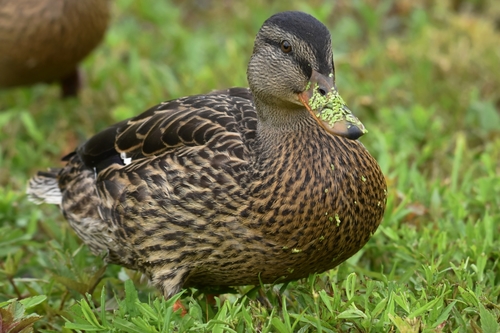 pato-real
 marrequinha
Em resumo
A marca de campo mais confiável para separar o pato-real da marrequinha é o tamanho: mesmo à distância ou em voo, o pato-real é muito maior e mais pesado, enquanto a marrequinha é notavelmente pequena e compacta. Em voo, ambas as espécies mostram um especulum verde iridescente, mas o da marrequinha é bordado por branco e frequentemente exibe um triângulo amarelado na cauda, enquanto o especulum do pato-real é bordado com branco apenas na borda posterior. Fêmeas e juvenis de ambas as espécies são marrons manchadas, mas a marrequinha é muito mais finamente padronizada e delicada em geral. A estrutura, especialmente o tamanho do bico e a forma do corpo, é um forte respaldo: o pato-real tem um bico largo e plano e um corpo longo e pesado; a marrequinha tem pescoço curto, bico curto e é rápida. Identificações erradas frequentemente ocorrem com aves fêmeas ou juvenis, especialmente em bandos mistos ou em luz fraca.
Dicas de identificação
- O tamanho é a primeira verificação: O pato-real é muito maior e mais pesado que a marrequinha. Se você ver um pato que parece delicado e pequeno, especialmente em um bando misto, é provável que seja a marrequinha.
- Padrão do especulum em voo: Ambas mostram um especulum verde, mas o do pato-real é bordado de branco apenas na borda posterior, enquanto o da marrequinha é bordado por branco tanto na frente quanto atrás, e frequentemente exibe um triângulo amarelado nas laterais da cauda (todas as idades/sexos).
- Estrutura do bico: O pato-real tem um bico largo e plano; o bico da marrequinha é curto e arrumado, nunca parecendo largo à distância.
- Forma do corpo e postura: O pato-real é de corpo longo, senta-se baixo na água e tem um pescoço longo. A marrequinha é compacta, de pescoço curto e senta-se mais alta, frequentemente parecendo flutuante.
- Plumagem de fêmeas/juvenis: A fêmea do pato-real é grosseiramente manchada com forte contraste e um rosto pálido; a fêmea da marrequinha é finamente listrada e escamosa, com uma aparência mais uniforme e delicada.
- Plumagem de reprodução do macho: O macho do pato-real tem uma cabeça verde, colar branco e peito castanho; o macho da marrequinha tem uma cabeça castanha com um ousado crescente verde e uma faixa vertical branca na lateral.
- Plumagem de eclipse: O macho da marrequinha em eclipse se assemelha à fêmea, mas é mais escuro por cima; os machos do pato-real em eclipse ainda são maiores e mais robustos, com uma versão mais opaca de sua plumagem usual.
- Padrão da cauda em voo: A marrequinha mostra um triângulo amarelado brilhante nas laterais da cauda; o pato-real não.
- Comprimento e forma das asas: As asas da marrequinha são curtas e pontudas, proporcionando um voo rápido e tremulante; as do pato-real são mais largas e o voo é mais estável.
- Estrutura do bando: A marrequinha frequentemente voa em bandos apertados e torcidos; os bandos de pato-real são mais soltos e menos coordenados.
- Comportamento ao serem assustados: A marrequinha se assusta rapidamente e de forma errática; o pato-real sobe mais lentamente e de forma constante.
- Voz: Ouça assobios agudos (marrequinha) versus grasnidos mais profundos (pato-real).
- Contexto do habitat: Em parques urbanos ou grandes águas abertas, o pato-real domina; em zonas úmidas rasas, lamacentas ou vegetadas, especialmente com bandos apertados, procure pela marrequinha.
- Cor das partes nuas: Machos do pato-real têm bicos amarelos, fêmeas laranja e preto; os bicos da marrequinha são cinza escuro (machos) ou rosados/amarelados na base (fêmeas/juvenis), mas isso é sutil à distância.
- Tamanho dos filhotes: Os filhotes são semelhantes em cor, mas os filhotes da marrequinha são muito menores e mais leves.
Tamanho
O pato-real é um pato de tamanho médio-grande: 50–65 cm de comprimento, 0,7–1,6 kg, com uma envergadura de 81–98 cm [wikipedia][avonet]. A marrequinha é muito menor: 34–43 cm de comprimento, 340–360 g, com uma envergadura de 53–59 cm [wikipedia][avonet]. Mesmo sem comparação direta, a marrequinha parece notavelmente pequena e leve, enquanto o pato-real é robusto e pesado. A diferença é óbvia em voo, na água ou em terra. O bico e o tarso também são proporcionalmente muito mais curtos na marrequinha.
Plumagem
Os juvenis e fêmeas do pato-real são grosseiramente manchados de marrom com um forte contraste entre o buff e o marrom escuro em cada pena, um rosto pálido com uma coroa escura e faixa ocular, e um especulum azul ou violeta bordado de branco apenas na borda posterior. Os juvenis e fêmeas da marrequinha são muito menores, com listras mais finas e densas na cabeça e pescoço, um padrão escamoso no corpo, e um especulum verde bordado por branco tanto na frente quanto atrás, além de um triângulo amarelado nas laterais da cauda em voo. Na plumagem de reprodução adulta, o macho do pato-real é inconfundível com uma cabeça verde brilhante, colar branco e peito castanho; o macho da marrequinha tem uma cabeça castanha com um ousado crescente verde do olho até a nuca, uma faixa vertical branca na lateral e uma mancha amarelada na cauda. Na plumagem de eclipse (não reprodutiva), o macho da marrequinha se assemelha à fêmea, mas é mais escuro por cima e mantém um bico acinzentado. Os machos do pato-real em eclipse são mais opacos, mas ainda maiores e mais robustos que qualquer marrequinha. Os filhotes de ambos são amarelos por baixo e escuros por cima, mas os filhotes da marrequinha são muito menores.
Comportamento
Os patos-reais são frequentemente vistos em grandes bandos soltos, alimentando-se em águas abertas ou mergulhando na borda, e geralmente são menos cautelosos. As marrequinhas são mais compactas, frequentemente em grupos apertados, e se assustam rapidamente com um voo rápido e torcido. Na água, as marrequinhas sentam-se mais altas e parecem mais flutuantes, enquanto o pato-real é mais pesado e senta-se mais baixo. As marrequinhas são mais ágeis e rápidas em voo, com batidas de asa rápidas, enquanto o pato-real tem uma batida de asa mais constante e lenta.
Habitat
Ambas as espécies utilizam zonas úmidas, mas o pato-real é mais generalista, encontrado em uma ampla gama de águas abertas, lagoas urbanas e pântanos. A marrequinha prefere zonas úmidas rasas, vegetadas, bordas lamacentas, e é menos provável de ser encontrada em locais urbanos ou fortemente perturbados. Durante a migração e no inverno, as marrequinhas frequentemente se reúnem em grandes bandos em lagos rasos ou campos alagados, às vezes com patos-reais, mas geralmente em grupos mais densos e coesos.
Voz
Os machos do pato-real emitem um suave grasnido ou 'quack', enquanto as fêmeas têm o familiar e alto 'quack'. Os machos da marrequinha assobiam com um claro e alto 'cryc' ou 'creelycc', e as fêmeas emitem um 'keh' ou 'neeh' quack mais suave. As marrequinhas são geralmente mais vocais e de tom mais agudo, especialmente em voo ou quando assustadas. Os chamados do pato-real são mais profundos e ressonantes.