
chilreta vs trinta-réis-boreal
Sternula albifrons versus Sterna hirundo
Jogue um quiz com chilreta e trinta-réis-boreal
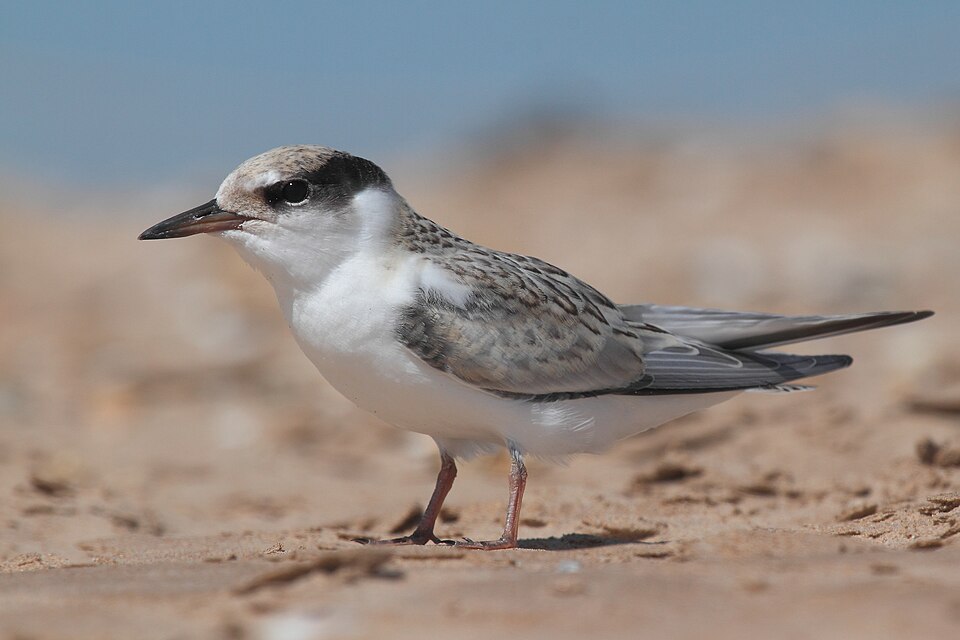 chilreta
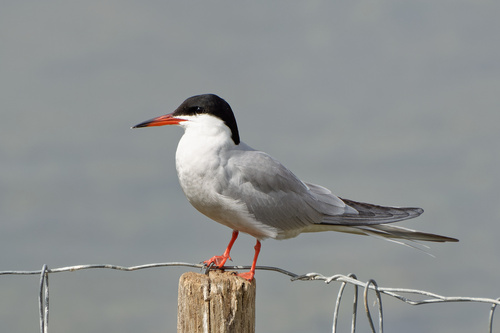 trinta-réis-boreal
Em resumo
A marca de campo mais confiável entre a chilreta e o trinta-réis-boreal é o tamanho: a chilreta é distintamente menor e mais delicada, com um bico pequeno e afiado e asas e cauda curtas, enquanto o trinta-réis-boreal é muito maior e mais robusto. Na plumagem de reprodução, a chilreta exibe uma testa branca marcante e um bico amarelo com a ponta preta, enquanto o trinta-réis-boreal tem uma touca preta completa e um bico mais longo, laranja-avermelhado, com a ponta preta. As aves juvenis e não reprodutoras podem ser mais complicadas, mas a chilreta sempre parece mais delicada, com asas mais curtas e angulares e pernas amareladas. Observe primeiro a estrutura e a cor do bico, especialmente à distância ou em bandos mistos.
Dicas de identificação
- O tamanho é a primeira verificação: A chilreta é muito menor e mais delicada que o trinta-réis-boreal. Em bandos mistos, procure pela menor e mais compacta das aves.
- Cor e forma do bico: Na plumagem de reprodução, a chilreta tem um bico curto, fino e amarelo com a ponta preta; o bico do trinta-réis-boreal é mais longo, mais robusto e laranja-avermelhado com a ponta preta. Na não reprodução, o bico da chilreta torna-se preto, mas permanece curto e fino.
- Cor das pernas: A chilreta tem pernas amarelas na reprodução, mais apagadas no inverno; o trinta-réis-boreal tem pernas vermelhas brilhantes na reprodução, mais escuras, mas ainda avermelhadas na não reprodução.
- Padrão da testa: A chilreta sempre mostra uma testa branca na plumagem de reprodução, estendendo-se mais para trás na não reprodução. O trinta-réis-boreal tem uma touca preta completa na reprodução, perdendo-a no inverno, mas nunca mostra o contraste agudo da testa branca da chilreta.
- Estrutura das asas e cauda: A chilreta tem asas curtas e angulares e uma cauda curta, dando uma aparência compacta. As asas do trinta-réis-boreal são mais longas, mais triangulares, e a cauda é mais longa e mais profundamente bifurcada.
- Estilo de voo: A chilreta é leve e flutuante, frequentemente pairando antes de mergulhar. O trinta-réis-boreal é mais direto e poderoso, com batidas de asas mais firmes e planagens mais longas.
- Postura empoleirada: A chilreta se senta baixa e compacta, frequentemente parecendo 'sem pescoço'. O trinta-réis-boreal fica mais alto, com um pescoço e pernas mais longos.
- Plumagem na não reprodução: Ambas as espécies perdem um pouco do contraste facial, mas a chilreta mantém uma testa branca e continua menor e mais delicada. O trinta-réis-boreal pode mostrar um rabo acinzentado e não apresenta o contraste agudo da testa branca.
- Confusão juvenil: Para aves imaturas, confie no tamanho, forma do bico e estrutura, pois os padrões de asas juvenis detalhados não são descritos aqui.
- Contexto de habitat: Se vista em uma pequena lagoa abrigada ou em um banco de areia, a chilreta é mais provável. Em grandes lagos ou costas abertas, o trinta-réis-boreal é mais frequente.
- Associação em grupo: A chilreta frequentemente forrageia e nidifica em pequenos grupos compactos. O trinta-réis-boreal pode estar em colônias maiores e mais dispersas.
- Voz: Não descrita aqui, então não confie em chamadas para separação com essas notas.
- Mudanças sazonais: No inverno, ambas as espécies tornam-se mais apagadas, mas a chilreta permanece muito menor e mantém um bico e pernas proporcionalmente mais curtos.
- Cor do bico e pernas em eclipse: Na não reprodução, o bico e as pernas da chilreta escurecem, mas o bico permanece curto e fino. O bico e as pernas do trinta-réis-boreal também escurecem, mas o bico permanece mais longo e pesado.
- Quando em dúvida: Sempre verifique o tamanho e a estrutura do bico primeiro, especialmente à distância ou quando a plumagem é ambígua.
Tamanho
A chilreta é muito menor, com uma massa corporal de cerca de 57g [wikidata], em comparação com o trinta-réis-boreal, que é substancialmente mais pesado (sem figura precisa nas notas, mas visivelmente maior em campo). A chilreta mede apenas 21–25 cm de comprimento com uma envergadura de 41–47 cm [wikipedia], tornando-a notavelmente mais petite e compacta do que o trinta-réis-boreal. O trinta-réis-boreal tem uma cabeça maior, pescoço mais grosso, pernas mais longas e asas mais longas e triangulares, conferindo-lhe um perfil de voo mais poderoso e direto.
Plumagem
- Aves juvenis/imaturas: As notas não fornecem diferenças detalhadas de padrão de asa ou de voo para juvenis da chilreta, mas os juvenis do trinta-réis-boreal são ditos ser facilmente separados de aves de outras espécies de idade semelhante (detalhes não especificados aqui). Para ambos, procure por estrutura geral e cor do bico como pistas primárias em aves jovens.
- Adultos em reprodução: A chilreta na plumagem de reprodução mostra uma testa branca, bico amarelo com ponta preta e pernas amarelas. O trinta-réis-boreal tem uma touca preta completa, bico laranja-avermelhado com ponta preta e pernas vermelhas brilhantes. A testa branca é uma marca chave para a chilreta na temporada de reprodução.
- Adultos não reprodutores: A chilreta desenvolve uma testa mais extensivamente branca, o bico torna-se preto e as pernas ficam mais apagadas. O trinta-réis-boreal na plumagem não reprodutora pode mostrar um rabo acinzentado e perde a touca preta completa, mas retém um bico mais longo e robusto e um tamanho geral maior. Ambas as espécies perdem um pouco do contraste facial, mas a chilreta permanece muito menor e mais delicada.
- Voo: As asas da chilreta são curtas e angulares, combinando com seu tamanho pequeno, enquanto as asas do trinta-réis-boreal são mais longas, mais triangulares e mais rígidas em voo.
Comportamento
A chilreta geralmente parece mais leve e flutuante em voo, refletindo seu tamanho menor e construção mais leve. Ela frequentemente paira sobre a água antes de mergulhar. O trinta-réis-boreal tem um voo mais poderoso e direto, com batidas de asas mais firmes e uma fase de planagem mais longa. Quando empoleirado, o trinta-réis-boreal fica mais alto sobre pernas mais longas, enquanto a chilreta parece baixa e compacta.
Habitat
A chilreta nidifica em costas arenosas ou pedregosas e em vias navegáveis interiores, frequentemente em pequenas colônias, e é mais provável de ser encontrada em estuários ou lagoas abrigadas. O trinta-réis-boreal tem uma faixa mais ampla, nidificando ao longo de costas temperadas e subárticas e grandes lagos e rios interiores. Ambas podem ocorrer juntas, mas o trinta-réis-boreal é mais provável em grandes corpos d'água e em uma gama mais ampla de habitats.