

little sparrowhawk vs rufous-breasted sparrowhawk
Tachyspiza minulla versus Accipiter rufiventris
Jogue um quiz com little sparrowhawk e rufous-breasted sparrowhawk
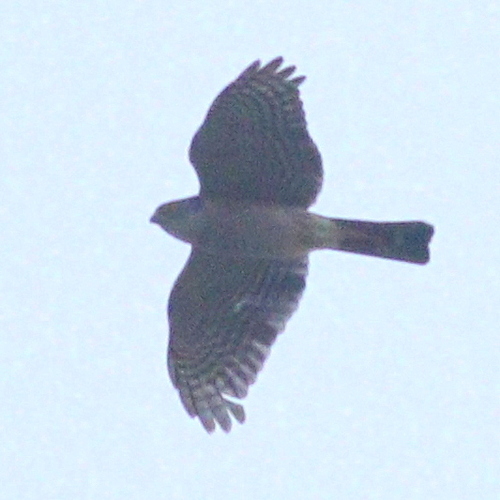 little sparrowhawk
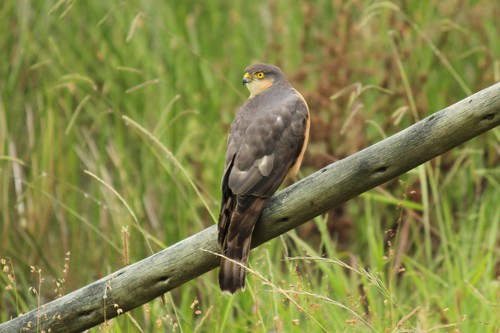 rufous-breasted sparrowhawk
Em resumo
The most reliable field mark between Little Sparrowhawk and Rufous-breasted Sparrowhawk is size: Little Sparrowhawk is much smaller and more delicate, with a wingspan barely over half that of Rufous-breasted. In flight, Little Sparrowhawk (especially juveniles) shows two white spots under the central tail and a narrow white lower rump patch, while Rufous-breasted Sparrowhawk lacks these and instead displays bold dark bars across wings and tail. Adult underparts are also a strong clue: Little Sparrowhawk is finely barred rufous and white (male) or browner barred (female), while Rufous-breasted is solidly rufous below. Juvenile patterns differ: Little Sparrowhawk juveniles are spotted below and browner, while Rufous-breasted juveniles have streaked underparts. Use structure and leg color as supporting marks, but focus on size, tail/rump pattern, and underpart color for the quickest separation.
Dicas de identificação
- Size is a primary clue: Little Sparrowhawk is much smaller and more delicate than Rufous-breasted Sparrowhawk. If the bird looks tiny for a sparrowhawk, suspect Little.
- Tail and rump pattern: Look for two white spots under the central tail and a narrow white lower rump patch (especially in adults) on Little Sparrowhawk. Rufous-breasted never shows these; instead, look for bold dark bars across tail and wings.
- Underpart color (adults): Little Sparrowhawk males have white underparts finely barred rufous; females are browner and less finely barred. Rufous-breasted Sparrowhawk adults are solid rufous below, not barred or spotted.
- Juvenile underparts: Little Sparrowhawk juveniles are spotted brown below, not streaked or barred. Rufous-breasted Sparrowhawk juveniles always have dark shaft streaks on the underparts, never spots.
- Upperpart color: Little Sparrowhawk males are dark grey (almost black) above; females and juveniles are browner. Rufous-breasted Sparrowhawk is slate-grey above in adults, with no strong sexual dimorphism.
- Flight pattern: In flight, Little Sparrowhawk looks fluttery and light, with a short, rounded wing and long toes. Rufous-breasted appears more robust and direct.
- Leg and toe color: Little Sparrowhawk has long yellow legs and toes; Rufous-breasted's leg color is less distinctive in the field but not as strikingly long or yellow.
- Eye and cere color: Both adults have yellow eyes, but juvenile Little Sparrowhawk has brown eyes and a yellow-green cere, which can help if seen well.
- Bill: Both have black bills, so this is not useful for separation.
- Sexual dimorphism: Little Sparrowhawk shows more sexual dimorphism in upperpart and underpart color than Rufous-breasted, which is more uniform between sexes.
- Habitat overlap: Both can occur in similar habitats, so don't rely on location alone, but Rufous-breasted is more likely at higher altitudes and forest edges.
- Behavior: If you see the bird hunting actively on the wing, especially for non-bird prey, Rufous-breasted is more likely. Little Sparrowhawk is more secretive and agile in dense cover.
- Perched posture: Little Sparrowhawk often appears more upright and dainty when perched, with proportionally longer toes visible.
- Pitfalls: Juvenile plumages can be confusing; focus on underpart pattern (spots vs streaks), tail/rump marks, and overall size for best results.
- Do not rely on range or voice: Both species can overlap widely, and no distinctive vocalizations are available for separation in the notes.
Tamanho
Little Sparrowhawk is significantly smaller, with a length of 23–27 cm and wingspan of 39–50 cm, and males weighing 74–85 g (females up to 105 g). Rufous-breasted Sparrowhawk is larger, about 30 cm long with a 72 cm wingspan and a body mass of 195 g. In the field, Little Sparrowhawk appears notably daintier and more compact, with proportionally longer legs and toes relative to its body size. If seen side by side, the size difference is striking, but even alone, a small, delicate sparrowhawk in Africa is very likely Little Sparrowhawk.
Plumagem
- Juvenile/immature: Little Sparrowhawk juveniles are brown above with pale tips to upperpart feathers, spotted brown below (not barred), and have only white tips to rump feathers (rump otherwise dark). Rufous-breasted Sparrowhawk juveniles are variable below (from rufous to more white), but always show dark shaft streaks on the underparts, not spots or bars. In flight, Little Sparrowhawk juveniles may show the rump and tail spots less clearly, but the overall brown and spotted look is distinctive.
- Adult male: Little Sparrowhawk males are dark grey above (almost black), with white throat and fine rufous barring on white underparts. Rufous-breasted Sparrowhawk adults are dark grey-slate above, but the underparts are a solid rufous (not barred), and the barring is restricted to bold dark bars on wings and tail in flight.
- Adult female: Female Little Sparrowhawk is browner above and has broader, browner barring below than the male. Rufous-breasted Sparrowhawk females are similar to males but may be slightly duller; underparts remain solid rufous.
- Tail and rump: Little Sparrowhawk (all ages) shows two white spots under the central tail and a narrow white lower rump patch (adults; juveniles only white tips). Rufous-breasted Sparrowhawk lacks these features, instead showing bold dark bars on tail and wings.
- Soft parts: Both species have black bills and yellow eyes in adults, but Little Sparrowhawk juveniles have brown eyes and a yellow-green cere.
Comportamento
Both species hunt small birds and may strike from a perch, but Rufous-breasted Sparrowhawk is more often seen actively hunting on the wing, sometimes taking insects, small mammals, or reptiles. Little Sparrowhawk's delicate build and long toes are adapted for quick, agile movements in dense cover. In flight, Little Sparrowhawk appears more fluttery and light, while Rufous-breasted is more robust and direct.
Habitat
Both species are Afrotropical and can occur in overlapping regions, but Rufous-breasted Sparrowhawk is found in a wider range across southern and eastern Africa. Habitat is not strongly diagnostic between the two, as both may be seen in wooded areas, but Rufous-breasted is more likely in higher altitude forests and forest edges, while Little Sparrowhawk is often found in denser thickets and riverine woodland.
little sparrowhawk · rufous-breasted sparrowhawk · Minhas aves difíceis