

Motmot

アフリカツミ 対 ムネアカハイタカ

Tachyspiza minulla 対 Accipiter rufiventris

アフリカツミとムネアカハイタカのクイズ
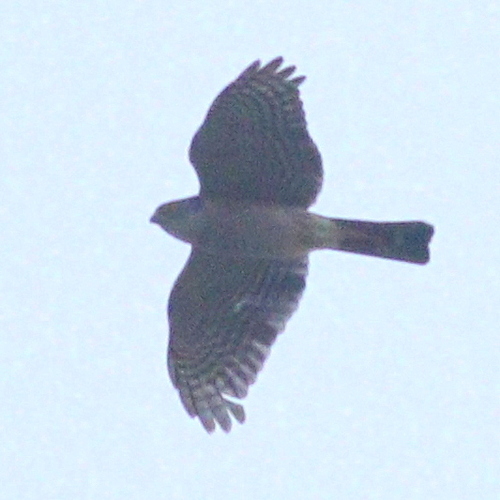
アフリカツミ (Tachyspiza minulla) アフリカツミ
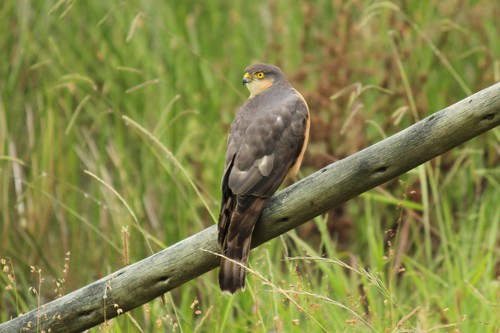
ムネアカハイタカ (Accipiter rufiventris) ムネアカハイタカ

メディア

読み込み中…

要点

アフリカツミとムネアカハイタカの最も信頼できるフィールドマークはサイズです:アフリカツミははるかに小さく、より繊細で、翼幅はムネアカハイタカの半分にも満たないほどです。飛行中、アフリカツミ(特に幼鳥)は中央の尾の下に2つの白い斑点と狭い白い下部尾羽のパッチを示しますが、ムネアカハイタカはこれらを欠き、代わりに翼と尾に大胆な暗いバーを示します。成鳥の下部も強い手がかりです:アフリカツミは細かく赤褐色と白の縞模様(オス)または茶色の縞模様(メス)を持ち、ムネアカハイタカは下部がしっかりと赤褐色です。幼鳥の模様は異なります:アフリカツミの幼鳥は下部に斑点があり、より茶色ですが、ムネアカハイタカの幼鳥はストライプ状の下部を持っています。構造と脚の色を補助的なマークとして使用しますが、サイズ、尾/尾羽のパターン、下部の色に焦点を当てて迅速に区別します。

識別のコツ

  1. Size is a primary clue: アフリカツミはムネアカハイタカよりもはるかに小さく、繊細です。もしその鳥がツミにしては小さく見えるなら、アフリカツミを疑ってください。
  2. Tail and rump pattern: アフリカツミの中央の尾の下に2つの白い斑点と狭い白い下部尾羽のパッチ(特に成鳥で)を探してください。ムネアカハイタカはこれらを決して示しません;代わりに、尾と翼に大胆な暗いバーを探してください。
  3. Underpart color (adults): アフリカツミのオスは白い下部に細かく赤褐色の縞模様を持ち、メスは茶色で縞模様が少ないです。ムネアカハイタカの成鳥は下部がしっかりと赤褐色で、縞模様や斑点はありません。
  4. Juvenile underparts: アフリカツミの幼鳥は下部に茶色の斑点があり、ストライプや縞模様はありません。ムネアカハイタカの幼鳥は常に下部に暗いシャフトのストライプを持ち、斑点はありません。
  5. Upperpart color: アフリカツミのオスは上面が暗灰色(ほぼ黒)で、メスと幼鳥は茶色です。ムネアカハイタカは成鳥で上面がスレートグレーで、強い性差はありません。
  6. Flight pattern: 飛行中、アフリカツミはふわふわして軽やかに見え、短く丸い翼と長い足を持っています。ムネアカハイタカはより頑丈で直接的に見えます。
  7. Leg and toe color: アフリカツミは長い黄色の脚と足を持ち、ムネアカハイタカの脚の色はフィールドではあまり特徴的ではありませんが、長さや黄色さはそれほど目立ちません。
  8. Eye and cere color: 両方の成鳥は黄色の目を持っていますが、幼鳥のアフリカツミは茶色の目と黄緑色のセレを持ち、よく見えれば役立ちます。
  9. Bill: 両方とも黒いくちばしを持っているので、これでは区別には役立ちません。
  10. Sexual dimorphism: アフリカツミは上面と下面の色においてムネアカハイタカよりも多くの性差を示し、ムネアカハイタカは性別間でより均一です。
  11. Habitat overlap: 両方は似たような生息地に出現する可能性があるため、場所だけに頼らないでくださいが、ムネアカハイタカはより高い標高や森林の端で見られる可能性が高いです。
  12. Behavior: 鳥が特に非鳥類の獲物を狩っているのを見た場合、ムネアカハイタカの可能性が高いです。アフリカツミは密なカバーの中でより秘密主義的で敏捷です。
  13. Perched posture: アフリカツミは止まっているときにより直立して優雅に見え、相対的に長い足が見えます。
  14. Pitfalls: 幼鳥の羽毛は混乱を招くことがあります;最良の結果を得るために、下部のパターン(斑点対ストライプ)、尾/尾羽のマーク、および全体のサイズに焦点を当ててください。
  15. Do not rely on range or voice: 両方の種は広く重複する可能性があり、メモの中で区別のための特有の声はありません。

大きさ

アフリカツミはかなり小さく、全長23〜27 cm、翼幅39〜50 cm、オスは74〜85 g(メスは最大105 g)です。ムネアカハイタカは大きく、全長約30 cm、翼幅72 cm、体重195 gです。フィールドでは、アフリカツミは目立って繊細でコンパクトに見え、体のサイズに対して相対的に長い脚と足を持っています。並べて見た場合、サイズの違いは際立っていますが、単独で見ても、アフリカの小さくて繊細なツミは非常にアフリカツミである可能性が高いです。

羽色

行動

両方の種は小さな鳥を狩り、止まり木から攻撃することがありますが、ムネアカハイタカはより頻繁に飛行中に積極的に狩りをしているのが見られ、時には昆虫、小さな哺乳類、または爬虫類を捕まえることがあります。アフリカツミの繊細な体型と長い足は、密なカバーの中で迅速で敏捷な動きに適応しています。飛行中、アフリカツミはよりふわふわして軽やかに見え、ムネアカハイタカはより頑丈で直接的に見えます。

生息環境

両方の種はアフロトロピカルで、重複する地域に出現する可能性がありますが、ムネアカハイタカは南部および東部アフリカ全体でより広い範囲に分布しています。生息地は両者の間で強く診断的ではなく、両方とも森林地域で見られる可能性がありますが、ムネアカハイタカはより高い標高の森林や森林の端で見られる可能性が高く、アフリカツミはしばしばより密な茂みや河川林で見られます。

より良い説明を送る

比較と同じ項目を使ってください。文章はすぐに公開されます。

The most reliable field mark between Little Sparrowhawk and Rufous-breasted Sparrowhawk is size: Little Sparrowhawk is much smaller and more delicate, with a wingspan barely over half that of Rufous-breasted. In flight, Little Sparrowhawk (especially juveniles) shows two white spots under the central tail and a narrow white lower rump patch, while Rufous-breasted Sparrowhawk lacks these and instead displays bold dark bars across wings and tail. Adult underparts are also a strong clue: Little Sparrowhawk is finely barred rufous and white (male) or browner barred (female), while Rufous-breasted is solidly rufous below. Juvenile patterns differ: Little Sparrowhawk juveniles are spotted below and browner, while Rufous-breasted juveniles have streaked underparts. Use structure and leg color as supporting marks, but focus on size, tail/rump pattern, and underpart color for the quickest separation.

  1. Size is a primary clue: Little Sparrowhawk is much smaller and more delicate than Rufous-breasted Sparrowhawk. If the bird looks tiny for a sparrowhawk, suspect Little.
  2. Tail and rump pattern: Look for two white spots under the central tail and a narrow white lower rump patch (especially in adults) on Little Sparrowhawk. Rufous-breasted never shows these; instead, look for bold dark bars across tail and wings.
  3. Underpart color (adults): Little Sparrowhawk males have white underparts finely barred rufous; females are browner and less finely barred. Rufous-breasted Sparrowhawk adults are solid rufous below, not barred or spotted.
  4. Juvenile underparts: Little Sparrowhawk juveniles are spotted brown below, not streaked or barred. Rufous-breasted Sparrowhawk juveniles always have dark shaft streaks on the underparts, never spots.
  5. Upperpart color: Little Sparrowhawk males are dark grey (almost black) above; females and juveniles are browner. Rufous-breasted Sparrowhawk is slate-grey above in adults, with no strong sexual dimorphism.
  6. Flight pattern: In flight, Little Sparrowhawk looks fluttery and light, with a short, rounded wing and long toes. Rufous-breasted appears more robust and direct.
  7. Leg and toe color: Little Sparrowhawk has long yellow legs and toes; Rufous-breasted's leg color is less distinctive in the field but not as strikingly long or yellow.
  8. Eye and cere color: Both adults have yellow eyes, but juvenile Little Sparrowhawk has brown eyes and a yellow-green cere, which can help if seen well.
  9. Bill: Both have black bills, so this is not useful for separation.
  10. Sexual dimorphism: Little Sparrowhawk shows more sexual dimorphism in upperpart and underpart color than Rufous-breasted, which is more uniform between sexes.
  11. Habitat overlap: Both can occur in similar habitats, so don't rely on location alone, but Rufous-breasted is more likely at higher altitudes and forest edges.
  12. Behavior: If you see the bird hunting actively on the wing, especially for non-bird prey, Rufous-breasted is more likely. Little Sparrowhawk is more secretive and agile in dense cover.
  13. Perched posture: Little Sparrowhawk often appears more upright and dainty when perched, with proportionally longer toes visible.
  14. Pitfalls: Juvenile plumages can be confusing; focus on underpart pattern (spots vs streaks), tail/rump marks, and overall size for best results.
  15. Do not rely on range or voice: Both species can overlap widely, and no distinctive vocalizations are available for separation in the notes.

Little Sparrowhawk is significantly smaller, with a length of 23–27 cm and wingspan of 39–50 cm, and males weighing 74–85 g (females up to 105 g). Rufous-breasted Sparrowhawk is larger, about 30 cm long with a 72 cm wingspan and a body mass of 195 g. In the field, Little Sparrowhawk appears notably daintier and more compact, with proportionally longer legs and toes relative to its body size. If seen side by side, the size difference is striking, but even alone, a small, delicate sparrowhawk in Africa is very likely Little Sparrowhawk.

  • Juvenile/immature: Little Sparrowhawk juveniles are brown above with pale tips to upperpart feathers, spotted brown below (not barred), and have only white tips to rump feathers (rump otherwise dark). Rufous-breasted Sparrowhawk juveniles are variable below (from rufous to more white), but always show dark shaft streaks on the underparts, not spots or bars. In flight, Little Sparrowhawk juveniles may show the rump and tail spots less clearly, but the overall brown and spotted look is distinctive.
  • Adult male: Little Sparrowhawk males are dark grey above (almost black), with white throat and fine rufous barring on white underparts. Rufous-breasted Sparrowhawk adults are dark grey-slate above, but the underparts are a solid rufous (not barred), and the barring is restricted to bold dark bars on wings and tail in flight.
  • Adult female: Female Little Sparrowhawk is browner above and has broader, browner barring below than the male. Rufous-breasted Sparrowhawk females are similar to males but may be slightly duller; underparts remain solid rufous.
  • Tail and rump: Little Sparrowhawk (all ages) shows two white spots under the central tail and a narrow white lower rump patch (adults; juveniles only white tips). Rufous-breasted Sparrowhawk lacks these features, instead showing bold dark bars on tail and wings.
  • Soft parts: Both species have black bills and yellow eyes in adults, but Little Sparrowhawk juveniles have brown eyes and a yellow-green cere.

Both species hunt small birds and may strike from a perch, but Rufous-breasted Sparrowhawk is more often seen actively hunting on the wing, sometimes taking insects, small mammals, or reptiles. Little Sparrowhawk's delicate build and long toes are adapted for quick, agile movements in dense cover. In flight, Little Sparrowhawk appears more fluttery and light, while Rufous-breasted is more robust and direct.

Both species are Afrotropical and can occur in overlapping regions, but Rufous-breasted Sparrowhawk is found in a wider range across southern and eastern Africa. Habitat is not strongly diagnostic between the two, as both may be seen in wooded areas, but Rufous-breasted is more likely in higher altitude forests and forest edges, while Little Sparrowhawk is often found in denser thickets and riverine woodland.

変更を破棄しますか?

保存していない編集があります。今離れると失われます。

アフリカツミ · ムネアカハイタカ · 苦手な鳥