

trinta-réis-grande vs trinta-réis-real
Phaetusa simplex versus Thalasseus maximus
Jogue um quiz com trinta-réis-grande e trinta-réis-real
 trinta-réis-grande
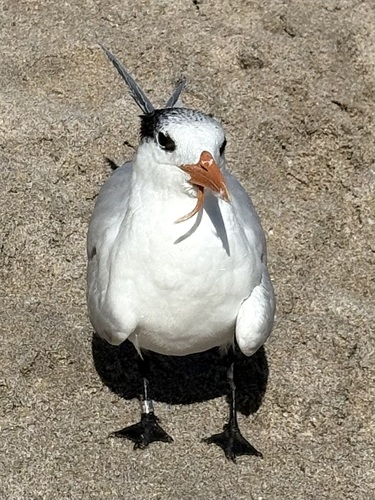 trinta-réis-real
Em resumo
A maneira mais confiável de separar o trinta-réis-grande do trinta-réis-real é pela cor do bico e das pernas: o trinta-réis-grande tem um bico amarelo grande e impressionante e pernas amarelas, enquanto o trinta-réis-real tem um bico robusto laranja-avermelhado e pernas pretas. Em todas as plumagens, o trinta-réis-grande é de cauda mais curta e mais compacto, com uma aparência única entre os trinta-réis. Os trinta-réis-reais imaturos mostram marcas mais escuras nas asas e um bico mais amarelado, mas nunca se igualam ao aspecto de pernas amarelas e bico amarelo do trinta-réis-grande. Ambas as espécies podem mostrar testas brancas fora da temporada de reprodução, então concentre-se na cor e na estrutura das partes nuas para uma identificação positiva. O tamanho não é confiável à distância, mas o trinta-réis-real é mais pesado e mais longo no geral.
Dicas de identificação
- Cor e tamanho do bico: O trinta-réis-grande sempre mostra um bico grande, grosso e amarelo brilhante; o bico do trinta-réis-real é laranja-avermelhado (ou amarelado em juvenis), nunca tão amarelo brilhante ou tão grosso quanto o do trinta-réis-grande. Esta é a marca mais confiável em todas as idades.
- Cor das pernas: O trinta-réis-grande tem pernas e pés amarelos, enquanto os do trinta-réis-real são pretos. Isso é visível quando os pássaros estão empoleirados ou em pé.
- Cauda e estrutura: O trinta-réis-grande é de cauda curta e compacto, com uma aparência 'robusta'; o trinta-réis-real é mais longo, mais aerodinâmico e de cauda mais longa. Em voo, o trinta-réis-grande parece mais pesado na frente devido ao seu bico.
- Coroa e crista: Ambas as espécies têm uma coroa preta durante a reprodução, mas a do trinta-réis-real é mais desgrenhada e se estende em uma crista. Fora da reprodução, ambas desenvolvem testas brancas, então isso nem sempre é confiável.
- Padrão de asas juvenil/imaturo: O juvenil do trinta-réis-real mostra marcas mais escuras de cinza a pretas nas asas, que o trinta-réis-grande não possui. Se você ver um jovem trinta-réis com marcas escuras nas asas e um bico amarelado, é provável que seja um trinta-réis-real.
- Formato do bico: O bico do trinta-réis-grande não é apenas amarelo, mas também proporcionalmente maior e mais grosso do que o do trinta-réis-real, que é robusto, mas mais pontudo e ligeiramente curvado para baixo.
- Partes inferiores e superiores: Ambas as espécies são cinzas claros acima e brancas abaixo; isso não é um separador útil.
- Contexto de habitat: O trinta-réis-grande é quase sempre encontrado sobre rios e lagos de água doce, especialmente no interior da América do Sul; o trinta-réis-real é costeiro e marinho. Se você ver um grande trinta-réis no interior da América do Sul, é muito mais provável que seja um trinta-réis-grande.
- Voz: Se você ouvir um 'kree' curto e claro ou um assobio rolante, é provável que seja um trinta-réis-real. O chamado do trinta-réis-grande não é descrito aqui, então a ausência desses chamados não é diagnóstica.
- Tamanho: O trinta-réis-real é muito mais pesado e longo, mas isso é difícil de julgar a menos que ambos estejam juntos. Use primeiro a estrutura e a cor do bico/pernas.
- Confusão fora da reprodução: Ambas as espécies podem mostrar testas brancas em plumagem fora da reprodução. Nesta temporada, confie na cor do bico e das pernas, não no padrão da coroa.
- Pássaros empoleirados: Procure pernas e bico amarelos (trinta-réis-grande) vs pernas pretas e bico laranja-avermelhado (trinta-réis-real).
- Aparência em voo: O trinta-réis-grande em voo parece pesado na frente e de cauda curta; o trinta-réis-real é mais longo, mais elegante e menos 'pesado na parte superior'.
- Armadilhas: O bico do juvenil do trinta-réis-real pode parecer amarelado, mas nunca tão brilhante ou grosso quanto o do trinta-réis-grande; sempre verifique a cor das pernas e a estrutura.
- Distribuição geográfica: Na América do Norte, o trinta-réis-real é esperado nas costas; o trinta-réis-grande é um vagante raro. Na América do Sul, o trinta-réis-grande domina no interior, enquanto o trinta-réis-real está nas costas.
Tamanho
trinta-réis-real is substantially larger and heavier than trinta-réis-grande, with a bill-to-tail length of 45–50 cm and a wingspan up to 135 cm, compared to trinta-réis-grande's length of about 38 cm [wikipedia]. trinta-réis-real's weight (350–500 g) is also much greater than trinta-réis-grande's (235 g) [wikidata]. In the field, this size difference can be hard to judge unless the birds are side by side, but trinta-réis-real will generally appear longer-winged and bulkier, while trinta-réis-grande is more compact and short-tailed.
Plumagem
Juvenile and non-breeding Royal Terns show darker gray to blackish marks on the wings and a yellower bill, while trinta-réis-grande juveniles are not described as having such wing markings. Adult trinta-réis-grande is pale gray above with a black crown and ear-coverts, white underparts, and a large yellow bill; in non-breeding plumage, the crown and forehead become paler. trinta-réis-real adults have a black shaggy crest in breeding, which recedes to a patchy or white forehead and crown in non-breeding plumage, with black remaining on the nape. Both species show white underparts and pale upperparts, but only trinta-réis-real develops extensive blackish wing markings as a juvenile. Leg color is a constant: yellow in Large-billed, black in Royal. Bill color is diagnostic: yellow in Large-billed, orange-red in Royal (yellower in juvenile Royal, but never as bright yellow as Large-billed).
Comportamento
Ambas as espécies são típicas de trinta-réis em voo, mas o trinta-réis-grande é notavelmente de cauda curta e compacto, com um bico pesado e proeminente que lhe confere um perfil distinto. O trinta-réis-real tem asas mais longas e é mais aerodinâmico, com um bico mais robusto e ligeiramente curvado para baixo. O trinta-réis-grande é frequentemente visto sobre rios e lagos, enquanto o trinta-réis-real é mais marinho e costeiro em seus hábitos. Empoleirado, as pernas e o bico amarelos do trinta-réis-grande são óbvios, enquanto o trinta-réis-real fica mais alto sobre pernas pretas com uma postura mais ereta.
Habitat
O trinta-réis-grande é encontrado principalmente ao longo de rios e lagos de água doce na América do Sul, a leste dos Andes e ao norte das Pampas [wikipedia]. O trinta-réis-real é uma espécie costeira, encontrada ao longo das costas marinhas em toda a América, raramente no interior. Se visto longe da costa, o trinta-réis-grande é muito mais provável, especialmente na América do Sul; o trinta-réis-real é raro no interior, exceto como um vagante.
Voz
O trinta-réis-real emite gritos curtos e claros, frequentemente descritos como 'kree' ou 'tsirr', e tem um assobio mais longo, rolante e melodioso. Nenhuma vocalização distintiva é descrita para o trinta-réis-grande nas notas fornecidas, então a voz não é um separador confiável, a menos que os chamados agudos do trinta-réis-real sejam ouvidos.
trinta-réis-grande · trinta-réis-real · Minhas aves difíceis