

Charrán Picudo vs Charrán Real Americano
Phaetusa simplex frente a Thalasseus maximus
Juega un quiz con Charrán Picudo y Charrán Real Americano
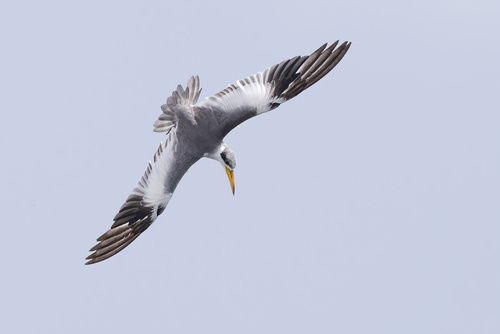 Charrán Picudo
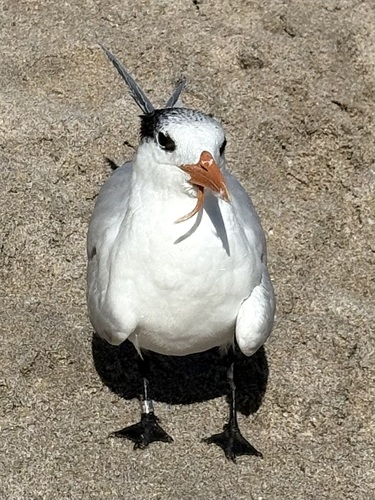 Charrán Real Americano
En breve
La forma más confiable de separar el Charrán Picudo del Charrán Real Americano es por el color del pico y las patas: el Charrán Picudo tiene un pico amarillo notablemente grande y patas amarillas, mientras que el Charrán Real Americano tiene un pico robusto de color naranja-rojo y patas negras. En todos los plumajes, el Charrán Picudo tiene una cola más corta y es más compacto, con un jizz único entre los charranes. Los Charranes Reales inmaduros muestran marcas más oscuras en las alas y un pico más amarillento, pero nunca igualan el aspecto de patas amarillas y pico amarillo del Charrán Picudo. Ambas especies pueden mostrar frentes blancas fuera de la temporada de cría, así que concéntrate en el color y la estructura de las partes desnudas para una identificación positiva. El tamaño no es confiable a distancia, pero el Charrán Real Americano es más pesado y más largo en general.
Consejos de identificación
- Color y tamaño del pico: El Charrán Picudo siempre muestra un pico grande, grueso y de un brillante color amarillo; el pico del Charrán Real Americano es naranja-rojo (o amarillento en los juveniles), nunca tan brillante ni tan grueso como el del Charrán Picudo. Esta es la marca más confiable en todas las edades.
- Color de las patas: El Charrán Picudo tiene patas y pies amarillos, mientras que los del Charrán Real Americano son negros. Esto es visible cuando los pájaros están posados o de pie.
- Cola y estructura: El Charrán Picudo es de cola corta y compacto, con un jizz 'robusto'; el Charrán Real Americano es más largo, más aerodinámico y de cola más larga. En vuelo, el Charrán Picudo parece más pesado en la parte delantera debido a su pico.
- Corona y cresta: Ambas especies tienen una corona negra en la cría, pero la del Charrán Real Americano es más desgreñada y se extiende en una cresta. En no cría, ambos desarrollan frentes blancas, así que esto no siempre es confiable.
- Patrón de alas de juvenil/inmaduro: El juvenil Charrán Real Americano muestra marcas más oscuras de gris a negruzcas en las alas, que el Charrán Picudo carece. Si ves un charrán joven con marcas oscuras en las alas y un pico amarillento, es probable que sea un Charrán Real Americano.
- Forma del pico: El pico del Charrán Picudo no solo es amarillo, sino también proporcionalmente más grande y grueso que el del Charrán Real Americano, que es robusto pero más puntiagudo y ligeramente curvado hacia abajo.
- Partes inferiores y superiores: Ambas especies son de un gris pálido por encima y blancas por debajo; esto no es un separador útil.
- Contexto de hábitat: El Charrán Picudo se encuentra casi siempre sobre ríos y lagos de agua dulce, especialmente en el interior de América del Sur; el Charrán Real Americano es costero y marino. Si ves un charrán grande en el interior de América del Sur, es mucho más probable que sea un Charrán Picudo.
- Voz: Si escuchas un 'kree' corto y claro o un silbido rodante, es probable que sea un Charrán Real Americano. El canto del Charrán Picudo no se describe aquí, así que la ausencia de estos cantos no es diagnóstica.
- Tamaño: El Charrán Real Americano es mucho más pesado y largo, pero esto es difícil de juzgar a menos que ambos estén juntos. Usa primero la estructura y el color del pico/patas.
- Confusión en no cría: Ambas especies pueden mostrar frentes blancas en plumaje de no cría. En esta temporada, confía en el color del pico y las patas, no en el patrón de la corona.
- Aves posadas: Busca patas y pico amarillos (Charrán Picudo) frente a patas negras y pico naranja-rojo (Charrán Real Americano).
- Jizz en vuelo: El Charrán Picudo en vuelo parece pesado en la parte delantera y de cola corta; el Charrán Real Americano es más largo, más elegante y menos 'pesado en la parte superior'.
- Trampas: El pico del juvenil Charrán Real Americano puede parecer amarillento, pero nunca tan brillante o grueso como el del Charrán Picudo; siempre verifica el color y la estructura de las patas.
- Rango geográfico: En América del Norte, se espera que el Charrán Real Americano esté en las costas; el Charrán Picudo es un vagabundo raro. En América del Sur, el Charrán Picudo domina en el interior, el Charrán Real Americano en las costas.
Tamaño
El Charrán Real Americano es sustancialmente más grande y pesado que el Charrán Picudo, con una longitud de pico a cola de 45–50 cm y una envergadura de hasta 135 cm, en comparación con la longitud del Charrán Picudo de aproximadamente 38 cm [wikipedia]. El peso del Charrán Real Americano (350–500 g) también es mucho mayor que el del Charrán Picudo (235 g) [wikidata]. En el campo, esta diferencia de tamaño puede ser difícil de juzgar a menos que los pájaros estén uno al lado del otro, pero el Charrán Real Americano generalmente parecerá tener alas más largas y ser más robusto, mientras que el Charrán Picudo es más compacto y de cola corta.
Plumaje
Los Charranes Reales juveniles y de no cría muestran marcas más oscuras de gris a negruzcas en las alas y un pico más amarillento, mientras que los juveniles del Charrán Picudo no se describen como teniendo tales marcas en las alas. El Charrán Picudo adulto es de un gris pálido por encima con una corona negra y cobertoras de las orejas, partes inferiores blancas y un gran pico amarillo; en plumaje de no cría, la corona y la frente se vuelven más pálidas. Los adultos del Charrán Real Americano tienen una cresta negra desgreñada en la cría, que retrocede a una frente y corona parcheadas o blancas en plumaje de no cría, con negro permaneciendo en la nuca. Ambas especies muestran partes inferiores blancas y partes superiores pálidas, pero solo el Charrán Real Americano desarrolla extensas marcas negruzcas en las alas como juvenil. El color de las patas es constante: amarillo en el Charrán Picudo, negro en el Charrán Real Americano. El color del pico es diagnóstico: amarillo en el Charrán Picudo, naranja-rojo en el Charrán Real Americano (más amarillento en el juvenil Charrán Real, pero nunca tan brillante como el amarillo del Charrán Picudo).
Comportamiento
Ambas especies son charranes típicos en vuelo, pero el Charrán Picudo es notablemente de cola corta y compacto, con un pico pesado y prominente que le da un perfil distintivo. El Charrán Real Americano tiene alas más largas y es más aerodinámico, con un pico más robusto y ligeramente curvado. El Charrán Picudo se ve a menudo sobre ríos y lagos, mientras que el Charrán Real Americano es más marino y costero en sus hábitos. Posado, las patas y el pico amarillos del Charrán Picudo son obvios, mientras que el Charrán Real Americano se mantiene más alto sobre patas negras con una postura más erguida.
Hábitat
El Charrán Picudo se encuentra principalmente a lo largo de ríos y lagos de agua dulce en América del Sur, al este de los Andes y al norte de las Pampas [wikipedia]. El Charrán Real Americano es una especie costera, que se encuentra a lo largo de las costas marinas en toda América, raramente en el interior. Si se ve lejos de la costa, es mucho más probable que sea un Charrán Picudo, especialmente en América del Sur; el Charrán Real Americano es raro en el interior excepto como vagabundo.
Voz
El Charrán Real Americano emite gritos cortos y claros, a menudo descritos como 'kree' o 'tsirr', y tiene un silbido más largo, rodante y melodioso. No se describe ninguna vocalización distintiva para el Charrán Picudo en las notas proporcionadas, así que la voz no es un separador confiable a menos que se escuchen los gritos agudos del Charrán Real Americano.
Charrán Picudo · Charrán Real Americano · Mis aves difíciles