
Motmot

cigarrinha-lanceolada vs cigarrinha-ribeirinha

Locustella lanceolata versus Locustella fluviatilis

Jogue um quiz com cigarrinha-lanceolada e cigarrinha-ribeirinha
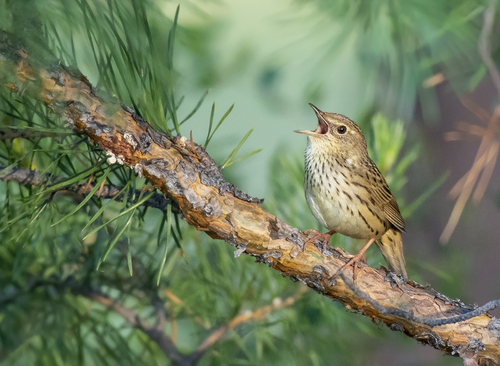
cigarrinha-lanceolada (Locustella lanceolata) cigarrinha-lanceolada
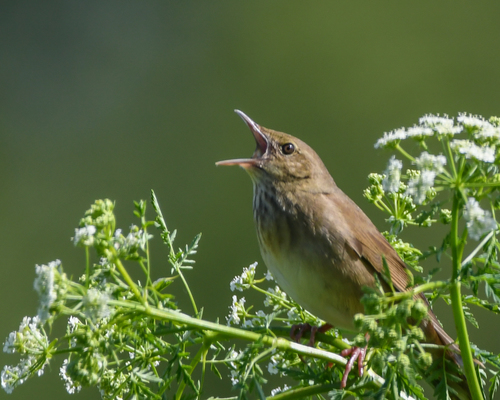
cigarrinha-ribeirinha (Locustella fluviatilis) cigarrinha-ribeirinha

Mídia

Carregando…

Em resumo

The most reliable field mark to separate Lanceolated Warbler from River Warbler is the presence of fine, dark streaks on the underparts and back in Lanceolated, versus the River Warbler's plain, unstreaked grey-brown back and mostly unmarked underparts. Both species can show some streaking on the breast, but only Lanceolated Warbler has the distinctive, sharp 'lance-head' streaks running down the flanks and undertail. Juveniles of both are yellower below, but the streaking contrast remains. River Warbler is also noticeably larger and bulkier, with a darker undertail and white feather tips. In the field, focus on underpart streaking and overall size for the quickest separation.

Dicas de identificação

  1. Underpart streaking: Lanceolated Warbler always shows fine, sharp, dark streaks on the whitish-grey underparts, flanks, and undertail coverts. River Warbler's underparts are mostly plain, with only occasional faint breast streaking.
  2. Back pattern: Lanceolated Warbler has a streaked brown back, while River Warbler's back is plain grey-brown with no streaking.
  3. Undertail coverts: River Warbler has a darker undertail with white feather tips, creating a contrasting pattern. Lanceolated Warbler's undertail coverts are streaked, not tipped.
  4. Juvenile plumage: Both species' juveniles are yellower below, but Lanceolated Warbler juveniles still show the diagnostic streaking, while River Warbler juveniles remain mostly plain.
  5. Size and structure: River Warbler is noticeably larger and heavier (18.8g vs smaller, unspecified mass for Lanceolated), appearing bulkier in the field. Lanceolated is smaller and more delicate.
  6. Breast streaking: If a River Warbler shows any breast streaking, it is never as crisp or extensive as in Lanceolated Warbler. Use caution with worn or aberrant individuals.
  7. Sex and age: Both species are sexually monomorphic; streaking and size differences apply to all ages and sexes.
  8. Song: River Warbler's song is a long, mechanical reeling, but this is not reliably diagnostic from Lanceolated Warbler without experience, as both are Locustella reeling warblers.
  9. Habitat and range: If observed in Europe, check the breeding range—River Warbler is more westerly and southerly, Lanceolated more northerly and easterly, but vagrancy is possible.
  10. Behavior: Both are skulking and rarely seen in the open, but River Warbler is particularly elusive except when singing.
  11. Undertail pattern pitfalls: Some River Warblers may show reduced dark on the undertail coverts, but the overall pattern is still of white-tipped feathers, not the fine streaks of Lanceolated.
  12. No wing panel or flight pattern difference: No distinctive upperwing or flight marks are described for either species, so do not rely on these features.
  13. Context: If you see a small Locustella warbler with sharp underpart streaks, it is almost certainly Lanceolated. If the bird is larger, plain-backed, and shows white-tipped undertail coverts, it is River Warbler.
  14. Pitfalls: Beware of worn or aberrant River Warblers with reduced undertail markings, but even these lack the sharp, lanceolate streaking of Lanceolated Warbler.
  15. Summary check: Always start with underpart and back streaking, then check undertail pattern and overall size for confirmation.

Tamanho

River Warbler is significantly larger and heavier than Lanceolated Warbler, with a body mass of about 18.8 grams [wikidata]. Lanceolated Warbler is a small warbler, appearing more delicate and compact compared to the River Warbler's 'largish' and more robust build. This difference is apparent when both are seen side by side or with experience, but can be subtle if only one bird is present. Bill and tail proportions are not described as diagnostic in the available sources.

Plumagem

For all ages, Lanceolated Warbler shows fine, dark streaks on the brown back and especially on the whitish-grey underparts, including the flanks and undertail coverts—these streaks are sharp and 'lance-head' shaped. River Warbler, in contrast, has a plain, unstreaked grey-brown back and whitish-grey underparts, with the undertail coverts showing a distinctive pattern: white feather tips on a darker background, creating a contrasting effect. Some River Warblers may show reduced dark on the undertail (with more extensive white tips), but they still lack the crisp, narrow streaking of Lanceolated. Both species' juveniles are yellower below, but the streaking pattern remains a key difference. If a River Warbler shows faint streaking on the breast, it is never as sharp or extensive as in Lanceolated Warbler. No age-specific upperwing or flight pattern differences are described in the sources.

Comportamento

Both species are secretive and prefer to skulk in dense grass or low foliage, making them difficult to observe except when singing. River Warbler is particularly noted for creeping through grass and being hard to see, except sometimes when singing. There is no mention of flight style or jizz differences between the two in the available sources.

Habitat

Lanceolated Warbler breeds from northwest European Russia across the Palearctic to northern Hokkaidō, Japan, while River Warbler breeds in eastern and central Europe. Both are migratory, but their wintering grounds do not overlap: Lanceolated winters in Southeast Asia, River Warbler in inland southern Africa. In the field, their breeding ranges are the most likely context for confusion, but habitat preferences within those ranges are not detailed in the sources.

Voz

River Warbler's song is a monotonous, mechanical, insect-like reeling, often compared to a sewing machine and delivered for long periods, especially at dusk. This is similar to other Locustella warblers, and no distinctive vocalization is described for Lanceolated Warbler in the available sources. Thus, song may not be reliably diagnostic between these two without experience.

Enviar uma descrição melhor

Use as mesmas seções da comparação. Seu texto é publicado na hora.

The most reliable field mark to separate Lanceolated Warbler from River Warbler is the presence of fine, dark streaks on the underparts and back in Lanceolated, versus the River Warbler's plain, unstreaked grey-brown back and mostly unmarked underparts. Both species can show some streaking on the breast, but only Lanceolated Warbler has the distinctive, sharp 'lance-head' streaks running down the flanks and undertail. Juveniles of both are yellower below, but the streaking contrast remains. River Warbler is also noticeably larger and bulkier, with a darker undertail and white feather tips. In the field, focus on underpart streaking and overall size for the quickest separation.

  1. Underpart streaking: Lanceolated Warbler always shows fine, sharp, dark streaks on the whitish-grey underparts, flanks, and undertail coverts. River Warbler's underparts are mostly plain, with only occasional faint breast streaking.
  2. Back pattern: Lanceolated Warbler has a streaked brown back, while River Warbler's back is plain grey-brown with no streaking.
  3. Undertail coverts: River Warbler has a darker undertail with white feather tips, creating a contrasting pattern. Lanceolated Warbler's undertail coverts are streaked, not tipped.
  4. Juvenile plumage: Both species' juveniles are yellower below, but Lanceolated Warbler juveniles still show the diagnostic streaking, while River Warbler juveniles remain mostly plain.
  5. Size and structure: River Warbler is noticeably larger and heavier (18.8g vs smaller, unspecified mass for Lanceolated), appearing bulkier in the field. Lanceolated is smaller and more delicate.
  6. Breast streaking: If a River Warbler shows any breast streaking, it is never as crisp or extensive as in Lanceolated Warbler. Use caution with worn or aberrant individuals.
  7. Sex and age: Both species are sexually monomorphic; streaking and size differences apply to all ages and sexes.
  8. Song: River Warbler's song is a long, mechanical reeling, but this is not reliably diagnostic from Lanceolated Warbler without experience, as both are Locustella reeling warblers.
  9. Habitat and range: If observed in Europe, check the breeding range—River Warbler is more westerly and southerly, Lanceolated more northerly and easterly, but vagrancy is possible.
  10. Behavior: Both are skulking and rarely seen in the open, but River Warbler is particularly elusive except when singing.
  11. Undertail pattern pitfalls: Some River Warblers may show reduced dark on the undertail coverts, but the overall pattern is still of white-tipped feathers, not the fine streaks of Lanceolated.
  12. No wing panel or flight pattern difference: No distinctive upperwing or flight marks are described for either species, so do not rely on these features.
  13. Context: If you see a small Locustella warbler with sharp underpart streaks, it is almost certainly Lanceolated. If the bird is larger, plain-backed, and shows white-tipped undertail coverts, it is River Warbler.
  14. Pitfalls: Beware of worn or aberrant River Warblers with reduced undertail markings, but even these lack the sharp, lanceolate streaking of Lanceolated Warbler.
  15. Summary check: Always start with underpart and back streaking, then check undertail pattern and overall size for confirmation.

River Warbler is significantly larger and heavier than Lanceolated Warbler, with a body mass of about 18.8 grams [wikidata]. Lanceolated Warbler is a small warbler, appearing more delicate and compact compared to the River Warbler's 'largish' and more robust build. This difference is apparent when both are seen side by side or with experience, but can be subtle if only one bird is present. Bill and tail proportions are not described as diagnostic in the available sources.

For all ages, Lanceolated Warbler shows fine, dark streaks on the brown back and especially on the whitish-grey underparts, including the flanks and undertail coverts—these streaks are sharp and 'lance-head' shaped. River Warbler, in contrast, has a plain, unstreaked grey-brown back and whitish-grey underparts, with the undertail coverts showing a distinctive pattern: white feather tips on a darker background, creating a contrasting effect. Some River Warblers may show reduced dark on the undertail (with more extensive white tips), but they still lack the crisp, narrow streaking of Lanceolated. Both species' juveniles are yellower below, but the streaking pattern remains a key difference. If a River Warbler shows faint streaking on the breast, it is never as sharp or extensive as in Lanceolated Warbler. No age-specific upperwing or flight pattern differences are described in the sources.

Both species are secretive and prefer to skulk in dense grass or low foliage, making them difficult to observe except when singing. River Warbler is particularly noted for creeping through grass and being hard to see, except sometimes when singing. There is no mention of flight style or jizz differences between the two in the available sources.

Lanceolated Warbler breeds from northwest European Russia across the Palearctic to northern Hokkaidō, Japan, while River Warbler breeds in eastern and central Europe. Both are migratory, but their wintering grounds do not overlap: Lanceolated winters in Southeast Asia, River Warbler in inland southern Africa. In the field, their breeding ranges are the most likely context for confusion, but habitat preferences within those ranges are not detailed in the sources.

River Warbler's song is a monotonous, mechanical, insect-like reeling, often compared to a sewing machine and delivered for long periods, especially at dusk. This is similar to other Locustella warblers, and no distinctive vocalization is described for Lanceolated Warbler in the available sources. Thus, song may not be reliably diagnostic between these two without experience.

Descartar as alterações?

Você tem edições não salvas. Se sair agora, elas serão perdidas.

cigarrinha-lanceolada · cigarrinha-ribeirinha · Minhas aves difíceis