

tordo-eremita vs tordo-dos-bosques
Catharus guttatus versus Hylocichla mustelina
Jogue um quiz com tordo-eremita e tordo-dos-bosques
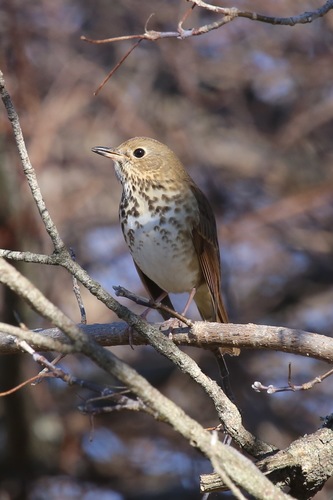 tordo-eremita
 tordo-dos-bosques
Em resumo
A marca de campo mais confiável para separar o tordo-eremita do tordo-dos-bosques é o tamanho e a mancha: o tordo-dos-bosques é visivelmente maior e mais robusto, com manchas escuras, redondas e ousadas que se estendem bem pelas laterais e flancos, enquanto o tordo-eremita é menor e mais esguio, com manchas mais finas e restritas no peito e flancos mais simples. O tordo-eremita também exibe uma cauda avermelhada contrastante, especialmente quando agitada, e uma postura mais compacta e ereta. Os juvenis do tordo-dos-bosques têm manchas extras nas partes superiores, mas ambas as espécies apresentam anéis oculares brancos e pernas rosadas, então essas características sozinhas não são diagnósticas. Em voo, ambas mostram o padrão de asa inferior do tipo Catharus, mas o volume e a envergadura mais longas do tordo-dos-bosques se destacam. Ouça o canto apenas se o pássaro estiver cantando, pois ambos têm canções lindas, semelhantes a flautas, mas com estruturas diferentes.
Dicas de identificação
- Tamanho e estrutura: O tordo-dos-bosques é muito maior e mais robusto que o tordo-eremita. Se o pássaro parecer quase do tamanho de um sabiá, é provável que seja um tordo-dos-bosques; o tordo-eremita é menor e mais esguio.
- Padrão de manchas: O tordo-dos-bosques tem manchas escuras, redondas e ousadas que se estendem do peito para os lados e flancos, criando uma aparência fortemente manchada. O tordo-eremita tem manchas mais finas e organizadas, principalmente confinadas à parte superior do peito, com a barriga e flancos muito mais simples.
- Cor da cauda: O tordo-eremita exibe uma cauda avermelhada ou ruiva contrastante, especialmente quando o pássaro agita a cauda para baixo e depois a levanta lentamente. A cauda do tordo-dos-bosques é marrom, combinando com as asas e as costas, e não apresenta contraste.
- Cor das partes superiores: O tordo-dos-bosques tem uma coroa e parte superior das costas marrom canela quente, com o restante das partes superiores em um marrom mais opaco. O tordo-eremita é mais uniformemente marrom acima, com pássaros do leste mais oliva-marrom e pássaros do oeste mais cinza-marrom, mas sempre com uma cauda ruiva.
- Anel ocular: Ambas as espécies têm anéis oculares brancos, mas o do tordo-eremita é frequentemente mais nitidamente definido. Esta não é uma marca confiável sozinha, pois ambas a apresentam.
- Bico: O tordo-dos-bosques tem um bico ligeiramente mais longo e pesado, mas isso é sutil e nem sempre útil em campo.
- Cor das pernas: Ambas têm pernas rosadas, então isso não é útil para separação.
- Plumagem juvenil: Os juvenis do tordo-dos-bosques têm manchas escuras extras nas costas, pescoço e coberturas das asas, que o tordo-eremita nunca mostra. Se você ver um tordo com manchas dorsais, é um juvenil do tordo-dos-bosques.
- Comportamento: O tordo-eremita frequentemente agita sua cauda avermelhada para baixo e depois a levanta lentamente—um comportamento clássico não mostrado pelo tordo-dos-bosques. O tordo-dos-bosques tende a pular no chão, virando folhas, e é menos provável que agite sua cauda.
- Postura: O tordo-eremita frequentemente parece mais ereto e alerta, enquanto o tordo-dos-bosques é mais robusto e se senta mais horizontalmente.
- Habitat: Em florestas densas, maduras e úmidas, especialmente no Leste, o tordo-dos-bosques é mais provável. Em florestas mais abertas, florestas coníferas ou habitats de borda, o tordo-eremita é mais provável, especialmente durante a migração.
- Voo: Ambas mostram o padrão de asa inferior do tipo Catharus, mas o tamanho maior e as asas mais largas do tordo-dos-bosques são evidentes em voo. Nenhuma marca de voo única os separa.
- Canto: O canto do tordo-eremita é etéreo, com uma única nota seguida por frases descendentes em diferentes tons. O canto do tordo-dos-bosques é mais rico, mais rítmico e menos etéreo. Use o canto apenas se você estiver confiante nas diferenças.
- Estação: Ambas as espécies são migratórias, mas o tordo-eremita é mais provável de ser encontrado em uma gama mais ampla de habitats durante a migração e o inverno. O tordo-dos-bosques está mais ligado a florestas maduras na estação de reprodução.
- Armadilhas: Não confie apenas no anel ocular ou na cor das pernas, pois ambas compartilham essas características. O padrão de manchas, a cor da cauda e o tamanho são as marcas de campo mais confiáveis.
Tamanho
O tordo-dos-bosques é distintamente maior que o tordo-eremita em todas as dimensões: 18–21,5 cm de comprimento (vs. 15–18 cm), envergadura de 30–40 cm (vs. 25–30 cm) e massa de 48–72 g (vs. 18–37 g). Essa diferença é geralmente óbvia em comparação direta ou com experiência, mas pode ser sutil se vista sozinha. O tordo-dos-bosques parece mais robusto e robusto, com um peito mais profundo e um bico mais pesado, enquanto o tordo-eremita parece mais compacto e esguio. O comprimento da asa e o tarso se sobrepõem, mas o tordo-dos-bosques é, em média, mais longo em ambos.
Plumagem
- Pássaros juvenis/imaturos: Os juvenis do tordo-dos-bosques têm manchas ousadas adicionais nas costas, pescoço e coberturas das asas, que o tordo-eremita nunca mostra em nenhuma idade. Os juvenis do tordo-eremita se assemelham aos adultos, mas não têm essas manchas dorsais extras.
- Adultos: O tordo-eremita é marrom acima com uma cauda avermelhada distintamente (especialmente óbvia quando agitada), partes inferiores brancas com manchas escuras finas e organizadas no peito, e flancos mais simples, acinzentados ou marrons. O tordo-dos-bosques tem uma coroa e parte superior das costas marrom canela rica, asas e cauda marrons mais opacas, e partes inferiores que são brancas com grandes manchas redondas e escuras que se estendem do peito bem para os lados e flancos. Ambas têm anéis oculares brancos e pernas rosadas, mas o anel ocular do tordo-eremita é frequentemente mais nitidamente definido. Os tordos-eremitas do leste são mais oliva-marrom acima, os pássaros do oeste mais cinza-marrom, mas a cauda avermelhada está sempre presente.
- Em voo: Ambas mostram o padrão de asa inferior do tipo Catharus branco-escuro-branco, mas isso não é diagnóstico entre os dois. O tamanho maior e as asas mais largas do tordo-dos-bosques são mais evidentes em voo.
Comportamento
O tordo-dos-bosques é tipicamente solitário e forrageia principalmente no chão da floresta, virando folhas para encontrar insetos, e frequentemente pula na littera de folhas ou no solo nu. O tordo-eremita também é solitário, mas pode parecer mais ereto e alerta, frequentemente agitando sua cauda avermelhada para baixo e depois levantando-a lentamente—um comportamento clássico. Ambos podem ser vistos forrageando no chão, mas o tordo-eremita também pode ser encontrado empoleirado em níveis médios ou ramos mais baixos, fazendo pausas entre as forrageadas. O tordo-dos-bosques pode defender territórios de alimentação no inverno e pode ser agressivo na defesa do ninho, mostrando agitações de asas e cauda ou até mesmo ataques.
Habitat
O tordo-dos-bosques prefere florestas maduras, úmidas, deciduais ou mistas com sub-bosque denso, frequentemente em grandes áreas de floresta. O tordo-eremita é mais flexível, encontrado em uma variedade de tipos de floresta, incluindo florestas coníferas, mistas e deciduais, e é mais provável de ser visto em habitats de borda ou sub-bosque aberto. Durante a migração, o tordo-eremita pode ocorrer em uma gama mais ampla de habitats florestais, enquanto o tordo-dos-bosques tende a se manter em florestas densas e maduras mesmo durante a migração.
Voz
Ambas as espécies são famosas por suas lindas canções semelhantes a flautas, mas a estrutura difere. A canção do tordo-eremita começa com uma nota introdutória clara seguida por várias frases musicais etéreas e descendentes, frequentemente em uma tonalidade menor e repetidas em diferentes tons. A canção do tordo-dos-bosques também é melodiosa e semelhante a flauta, mas tipicamente consiste em uma série de frases ricas e claras com uma qualidade mais rítmica e menos etérea. Ambas cantam de poleiros altos e abertos, mas o canto sozinho nem sempre é diagnóstico, a menos que você esteja muito familiarizado com ambos.